BEELEY PLAN YOUR DAY OUT
Location: On the B6012 through Chatsworth Park, to the west of Chatsworth House.
Visit: Chatsworth House, one of the grandest stately homes in the country and the home of the Duke and Duchess of Devonshire. The gardens are magnificent. Enjoy a walk in the park free of charge.
Refreshments: The Beeley Inn, previously known as the Devonshire Arms, and the Smithy Café are both in the village. The Tea Cottage at nearby Edensor is an alternative, as well as the café at Chatsworth Garden Centre.
Walk: A lovely scenic walk that, after leaving Beeley, explores the woods high above Chatsworth House, where there are stunning views across the park from the Hunting Tower. After passing close to Chatsworth House, you return along the banks of the River Derwent through Chatsworth Park.
Special Places of Interest in the Locality: Rowsley, where in the 19th century the beauty of its setting attracted artists, poets, and anglers. Though the wonderful scenery remains unspoilt, the Peak Village Shopping Complex also draws visitors in the 21st century to the village; Bakewell, a picturesque market town set on the banks of the River Wye with riverside walks; Baslow, a busy little village, delightfully situated in the Derwent Valley, with Chatsworth Park to the south and Baslow Edge rising to the north.
INTRODUCTION
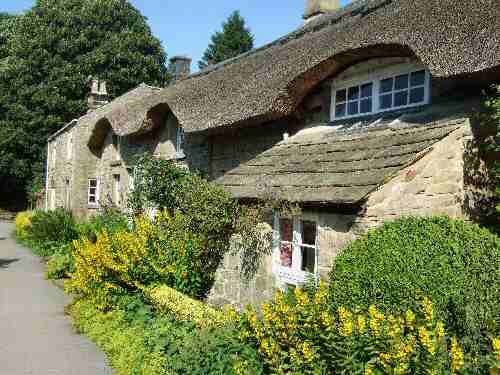
Anyone compiling a list of the most picturesque villages in Derbyshire would have to include Beeley. It is a pretty, unspoilt village sheltered by Beeley Moor with fantastic views in all directions. Arthur Mee wrote in his guide to Derbyshire, ‘At the gate of Chatsworth’s glorious park and set among the hills, Beeley has wonderful views whichever way we turn, hidden from those who rush by. Its roads go up and down and twist and turn as they take us by houses of old grey stone, by cottage and school and old grey hall, by a little green with a lovely lime, to an ancient church with sturdy tower close to the gabled vicarage.’
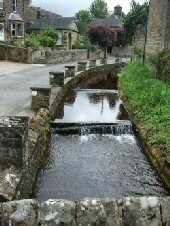
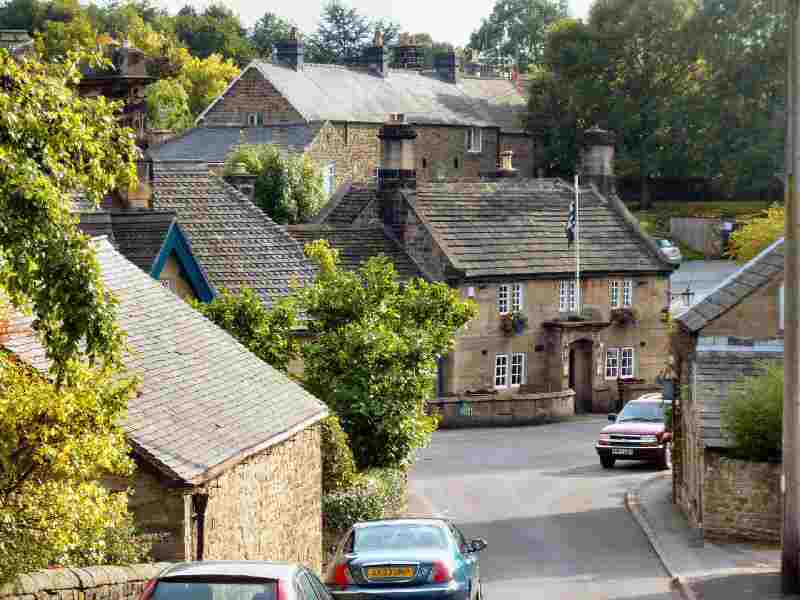
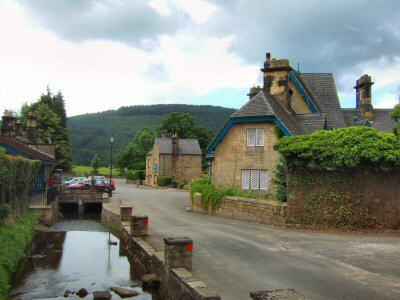
The delightful Beeley Brook further enhances the village scene as it chatters its way cheerfully alongside the road over several small waterfalls, past the Beeley Inn, formerly the Devonshire Arms, to a meeting with the River Derwent. Tastefully extended, The Beeley Inn, with its oak beams and real fires, fits in superbly with this gem of a village. It boasts some celebrated patrons, such as the writer Charles Dickens and King Edward VII, both of whom stayed at the inn. At the junction of the Chatsworth and Chesterfield roads, directly opposite the pub, stand three cottages built in a triangular pattern with very unusual Dutch-gabled roofs; the style is reminiscent of Edensor, another Chatsworth Estate village.
BYPASS
The pretty, almost secluded village of Beeley that we see today could have been very different in appearance. The old road to Chatsworth used to go through the heart of the village and left by Pig Lane, so named because of a group of pigsties by the side of the road, crossing James Paine’s Single Arch Bridge. Before the completion of the bridge in 1761, traffic crossed Mill Bridge, near the old ruined mill buildings in Chatsworth Park. Fortunately for Beeley, it has had a bypass for well over a hundred years, effectively shutting out all the hustle and bustle of the Chatsworth traffic hurrying along the winding road. Most motorists hardly give the village a passing glance, which even to this day remains quiet, peaceful, and relatively undiscovered.
DEVELOPMENT
It was only after the third Duke of Devonshire had bought Beeley Hill Top in 1747 that his successor embarked upon a grand plan to develop and landscape Chatsworth. Beeley then started to become part of the estate. Land and buildings were purchased as they came on the market, but this task took some time, and the sixth Duke completed it. Many of the properties have been sold off into private ownership in recent years as they became surplus to requirements.
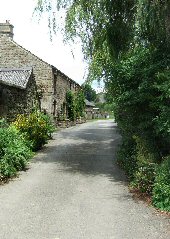
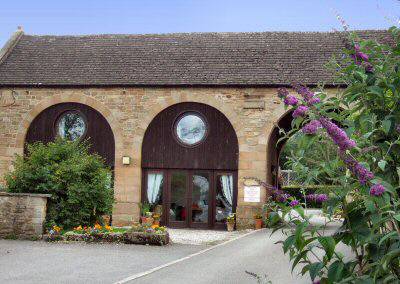
Beeley had acquired its present shape and size by 1800. Except for a small group of properties built in recent years on the Chesterfield Road, it has remained remarkably unchanged for over 200 years. The same does not apply to the use of the buildings: the school, schoolhouse, post office and reading room are all now private houses. Dukes Barn, built in 1791, to house the estate carts used to carry coal from Rowsley Station, is now a residential study centre.
FALLINGE EDGE STONE
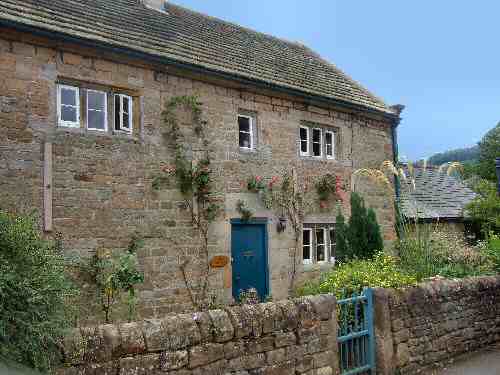
What makes the village so beautiful is that almost all the farm and domestic buildings are built from the same honey coloured sandstone, quarried locally, close to Fallinge Edge. The two quarries at Bruntwood produced stone not only of good appearance, but also of such hardwearing quality that it was used in many of the principal buildings in Manchester. Nearer to home, good quality gritstone, mined up on the moors, was also used in building Chatsworth House. The local stone quarries once gave employment to a large number of men.
THE VILLAGE
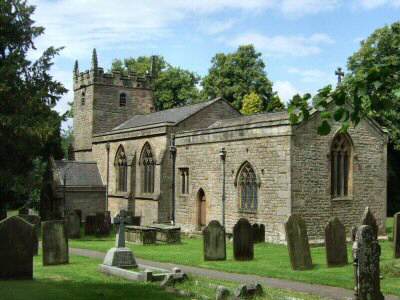
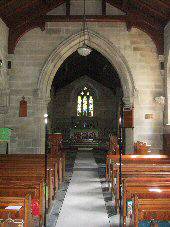
The ancient church of St Anne, close to the gabled vicarage – now a private house, is one of the oldest in Derbyshire. Its considerably mutilated round-headed doorway dates back to the middle of the 12th century. In the churchyard, the star attraction, at least as far as age is concerned, is a gnarled old yew – once a massive tree – said to be older than the church.
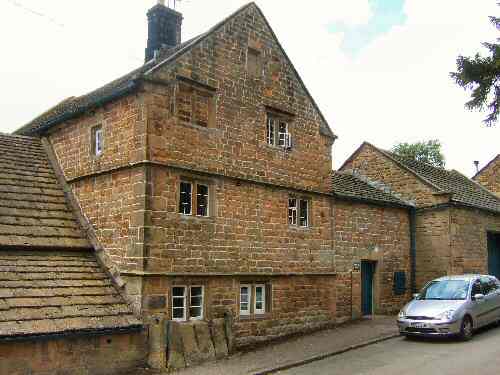
Beeley Old Hall is easily recognisable by its stout chimney. It was thought to be the original Manor House of the village until 1559, when John Greaves of the ‘Greaves’ bought it. Manor House status was then transferred to the ‘Greaves’, later known as Beeley Hill Top, where the arms of King James I can still be seen above a bedroom mantelpiece. It is one of the oldest houses in this part of Derbyshire, thought to date back to 1250. Both houses reverted to farmhouse classification in the 17th century. Opposite Beeley Old Hall stands Norman House, once the home of the ‘Norman’ family.
TEN FASCINATING FACTS ABOUT BEELEY
1. Beeley is still very much an estate village, housing people who work on the Chatsworth estate. It is in a beautiful setting and has been designated a conservation area.
2. The Peak District Boundary Walk passes through the village.
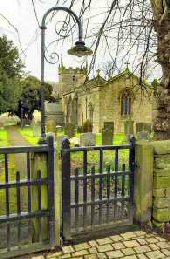
3. The Parish register dates back to 1538. At wedding services, tradition and superstition demand that the bride and groom must not approach by the west gate and must pay coinage to leave by the narrow east gate; the wider one is for funerals.
4. Beeley Moor became “Open Access” land for the public, following the Countryside and Rights of Way Act 2000. The area can be accessed from Beeley Village by footpaths through Beeley Plantation.
5. The Norman family, who owned farms at Fallinge and Doewood, were of an entrepreneurial nature and had a small lead-smelting mill on Smelting Mill Brook between Beeley and Rowsley, and a tanning yard on Beeley Brook in the village.
6. Coal pits on Beeley Moor fuelled the lead-smelting furnaces.
7. Surprisingly, many travel books featuring the Peak District do not mention the village, but refer only to Beeley Moor. On the heather-clad moor, some 1,200 feet above sea level, are over 30 prehistoric barrows and cairns.
8. It is Hob Hurst’s House, an unusual Bronze Age Barrow, that attracts most attention. A small ring of five stones stands on a mound surrounded by a rectangular bank and ditch. When the barrow was excavated in 1853, scorched human bones were found and two pieces of lead ore. Various legends have sprung up, including one that refers to ‘Hob’ as a kindly goblin who made his home in this barrow and gave assistance to the local community.
9. In a relatively remote area on Beeley Moor, Park Gate is one of the lesser well-known stone circles in the Peak District – the circle consisting of ten stones in a ring.
10. The moor has long been famous for its grouse-shooting and, in more recent years, for the notorious ‘carbon-copy’ murders for which Michael Copeland was tried and convicted.
BEELEY CHATSWORTH PARK WALK