INTODUCTION
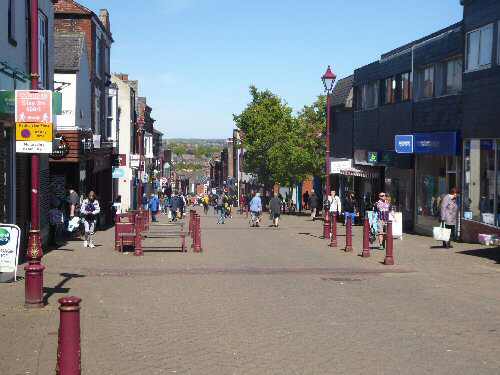
Ilkeston is the third-largest town in Derbyshire and stands on top of a hill above the Erewash Valley, close to the eastern border of Derbyshire. It owes its development mainly to industry, with coal, iron and hosiery all having played important roles at different times. A century ago, it was on its way to establishing itself as a spa town when a spring was discovered whose properties had curative effects on some ailments. Alas, the spring went dry, and all that remains to remember it by is the name of the main shopping street, Bath Street.
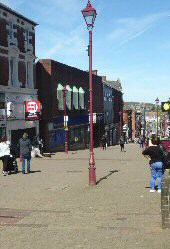
There is evidence that well before the Romans visited the area, people lived hereabouts. But the Saxons were probably the first to settle where Ilkeston is now situated. Farming was the main occupation, and for many years, there was little growth in the population.
MARKET CHARTER
In 1252, the Lord of the Manor obtained a market charter permitting a weekly market and an annual fair – markets on Thursday and Saturday, when a wide range of goods are on sale. Ilkeston Charter Fair is the flagship of the town’s outdoor entertainment. It is nationally recognised in the calendar of street fairs and is the largest in Europe.
INDUSTRIAL EXPANSION
It was not until the second half of the 18th century that Ilkeston expanded significantly when mining and hosiery played important roles in the development of the town. Labour was cheap in the East Midlands, and this helped encourage the expansion of the stocking frame and lace industry. The introduction of steam as a means of power enabled large factories to be set up, where a steam engine could power knitting machines. Coal mining was boosted by the opening of a network of canals, which linked with major rivers and opened up trading opportunities all over the country.
The 19th century saw rapid growth in the population and the completion of the conversion of Ilkeston from an agricultural settlement to an industrial town. A further boost to the industry came with the opening of the Erewash Valley Railway in 1847 as the demand for coal grew to feed the needs of the Industrial Revolution. With good communications, rich coal seams and iron ore, another major resource in the area, the population increased from 2,500 in 1801 to 25,000 one hundred years later.
COAL MINING
During the early part of the 1900s, coal mining was by far the major employer of men in the town and the textile industry of women. The closure of Oakwell Colliery in 1911, due to fire damage, left only Manners Colliery still operating in the Borough, and most local miners had to travel to find work at neighbouring pits. When coal mining went into decline later in the century, the diversification of employment in the town helped to soften the impact on Ilkeston’s economy.
ST MARY’S CHURCH
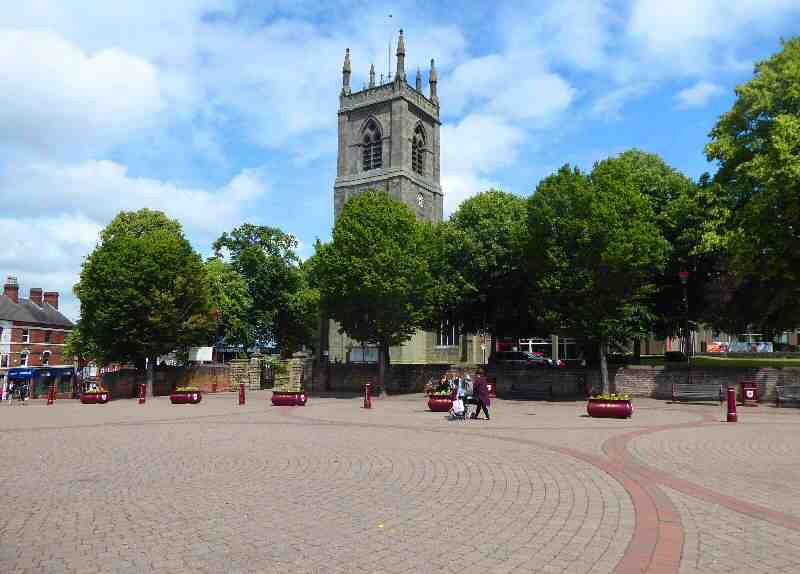
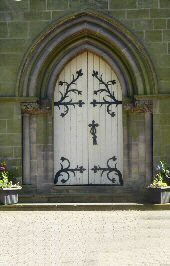
The dominating hilltop parish church of St Mary. A Grade I listed building dating back to about 1150 is the most impressive in the town: all that remains of the original building are three piers and arches, the church having been restored and enlarged over the years, and the tower rebuilt less than one hundred years ago.
TRANSPORT
The Borough Council introduced an electric tram service more than a century ago when open-topped trams ran through the town. A bid to have them covered in 1913 was rejected, and the people on the top deck had to continue to endure all the vagaries of the British weather for a further 18 years. Before roofed trolley buses replaced the trams. The Transformer Box by the churchyard wall supplied the electricity.
NOTABLE PLACES
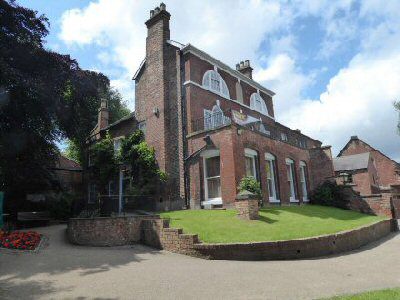
Tucked away in a quiet spot just off Bath Street at Dalby House is the Erewash Museum in a late Georgian house that a school once used. A social history museum and community art gallery, it also hosts a fun-packed programme of events and activities. The museum was declared Derbyshire Museum of the Year in 2011, 2012, 2016 and 2019. There are good views across the Erewash Valley from the garden towards the Bennerley Viaduct.
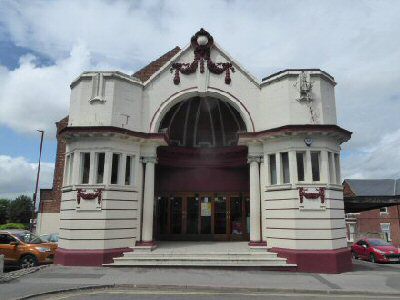
The Scala Cinema is located just off the edge of the marketplace on the corner of Pimlico and Burns Street. It was the town’s first purpose-built cinema. Built on the site of a graveyard, it is over 100 years old, having opened in 1913. A Grade II* listed building, it is regarded as one of the most important cinemas in Derbyshire. Its future was in doubt a few years ago, but Reel Cinemas has now refurbished it.
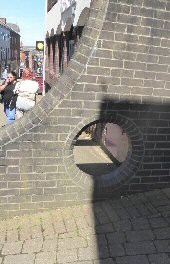
Since December 2018, visitors to TripAdvisor had been engaging in a bit of fun by turning a circular hole in a wall outside a bank into a major tourist attraction. Until TripAdvisor took action to stop pranksters from adding further posts. The hole was initially added as a safety feature so that anyone using the cash machine could see if someone was standing on the other side of the wall.
TEN FASCINATING FACTS ABOUT ILKESTON
1. Originally, Ilkeston Charter Fair was held in August. But, in the middle of the 19th century, it switched to October. The Statute Fair that took place at that time, to hire labourers, had gradually been given over to entertainment, and the events combined.
2. The Charter Fair is a highly popular event, attended by people from many miles around, when not only the marketplace but also the surrounding streets are filled with fairground rides and stalls
3. Bennerley Viaduct in the Erewash Valley is an important part of Ilkeston’s industrial heritage. A former railway bridge, it is 1400 feet in length and one of only two of its kind in the country. It is Grade II listed and has been recently refurbished, and is suitable for walking on foot or by bicycle.
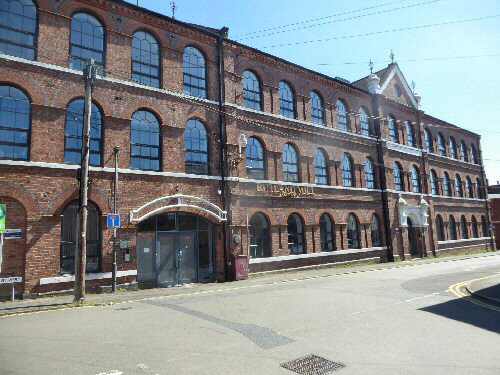
4. Across the Market Place from the church is the library, which opened in 1904 following a donation from Andrew Carnegie. At first, readers selected books from lists, but as borrowing increased, people were allowed to browse.
5. Ilkeston Town Hall was erected in Italian style, 20 years before, in 1887, before Borough status was conferred.
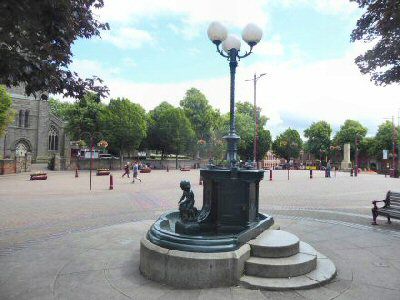
6. The Drinking Fountain and Horse Trough were donated to commemorate the award of Borough status.
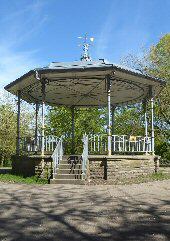
7. Victoria Park provides a pleasing mixture of formal and informal gardens, enhanced by a group of mature trees. Swimming is available at the leisure centre with a teaching pool as well as a main pool. Nearby Rutland Recreation Ground has seen many epic battles between Derbyshire and Nottinghamshire County Cricket Clubs.
8. Ilkeston is the birthplace of two current and very well-known actors: Robert Lindsay and Bill Roache. Mention the name of Bill Roache and most people would recognise him as Ken Barlow from Coronation Street. Robert Lindsay first made a name for himself as Citizen Smith in the popular BBC hit comedy in the 1970s. He has featured in many important roles on television and the stage ever since then.
9. Bill Roache was born in Ilkeston, the son of a doctor. In 1960, he was chosen to play the part of Ken Barlow in Coronation Street.
10. White Lion Square, on the southern side of the town, is named after the pub that once stood nearby. It was here that a toll bar used to operate to obtain funds to pay for the maintenance of the road.
SHIPLEY COUNTRY PARK WALK