PLAN YOUR DAY OUT
Location: On the A6, north of Belper on the road to Matlock.
Visit: The Great British Car Journey, where visitors experience an interactive nostalgic journey celebrating an era when British entrepreneurs and engineers were at the forefront of a transport revolution. It tells the story of the rise and fall of the British motoring industry, with over 150 classic cars on display. You can book in advance a drive in a classic car. For more information, visit: www.greatbritishcarjourney.com.
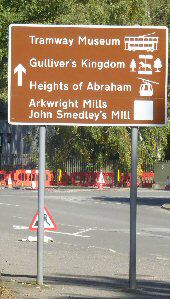
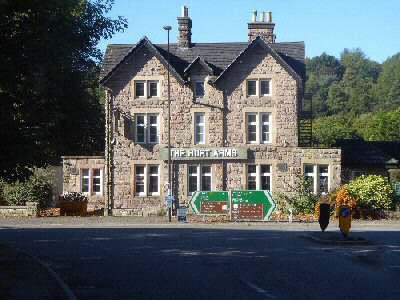
Refreshments: Bridge House Breakfast Restaurant; The Filling Station Café at the Great British Car Journey Museum is now open to all every weekday throughout the year; Anila Indian Restaurant and Hurt Arms reopens following refurbishment in 2026.
Walk: A special walk that takes you through Shining Cliff Woods, where, in the spring, bluebells cover the floor of the wood. Leaving the woods behind, you walk through beautiful open countryside with good views of the Derwent Valley, returning along the towpath of the Cromford Canal.
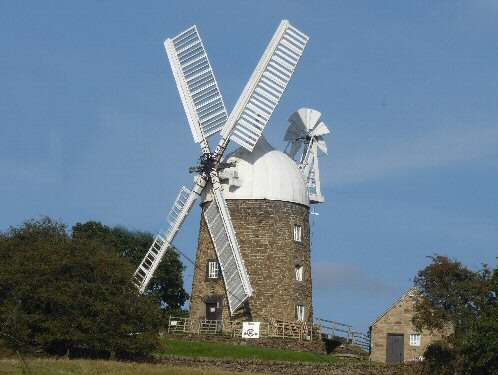
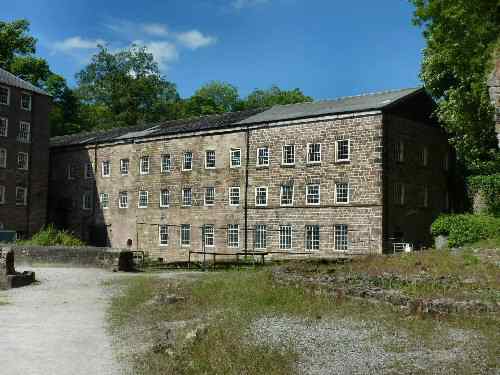
Special Places of Interest in the Locality: Heage Windmill is on the brow of a hill between the villages of Heage and Nether Heage in the district of Amber Valley. The Windmill is open to the public on a seasonal basis. – Arkwright’s Mill at Cromford Visitor Centre at Building 17 of the 15-mile-long Derwent Valley Mills World Heritage Site. It allows you to explore all the key heritage and wildlife sites using interactive touch screens. The exhibition continues with the story of the Derwent Valley’s global impact on the cotton industry, where the mill comes to life as part of the Arkwright Experience – Crich Tramway Village, home to the National Tramway Museum, is a unique open-air museum and heritage attraction in a picturesque setting in Cliff Quarry at Crich.
INTRODUCTION
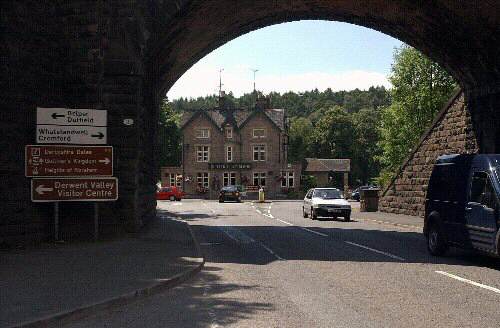
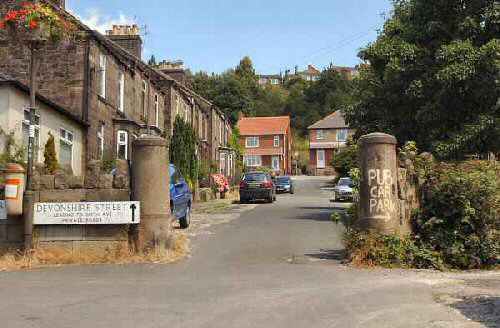
The village of Ambergate straddles the A6 and lies in a valley, now part of the Derwent Valley Heritage Corridor. It is a good starting point for a walk, either along the Cromford Canal or through the ancient woodland of Shining Cliff Woods and beyond.
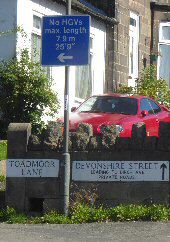
Ambergate is the product of the 19th century. It was the name given to a tollgate on a new turnpike road created in 1817, from where it probably got its name. It has gradually taken over from the earlier settlement of Toadmoor, and has grown from a tiny hamlet to a substantially sized village, the birth of the railway era and the industries it attracted as a result being the main reasons for its growth.
AMBERGATE RAILWAY STATION
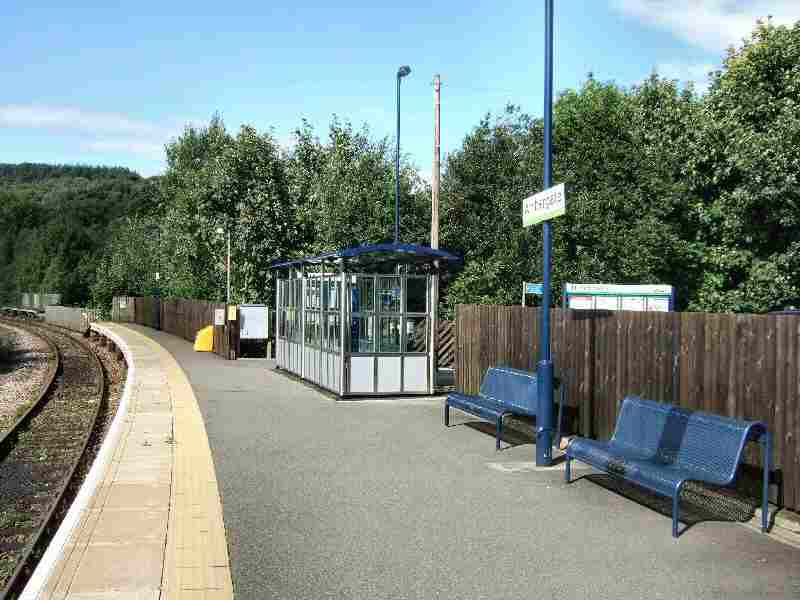
The first railway station built by the North Midland Railway, one of the three companies that four years later formed the Midland Railway, opened on 5 July 1840. Further developments took place as the business expanded. In 1863, a southern curve was added, followed 13 years later by a middle curve, creating an unusual triangular junction, with the platforms set around the triangle. In its heyday, Ambergate was one of the most important railway junctions in the Midlands, with nearly 50 staff employed, handling 240 trains a day. Now, a single platform serves the Derby-Matlock line.
GEORGE STEPHENSON
Attracted by the railway, lime works were established at Ambergate in 1841. The famous railway engineer, George Stephenson, who designed the ‘Rocket,’ built the Crich Mineral Railway in 1837 to carry limestone from Cliff Quarry to a battery of limekilns at Ambergate. It was about two and a half miles. For the major part of the route from the quarry, the line ran along the ridge, before descending ‘The Steep’ to reach its destination.
A weighbridge and braking scheme operated the system, as trucks loaded with limestone descended, empty trucks at the other end of the cable ascended. The end came in 1965, when obtaining a suitable type of low-cost coal proved challenging after the closures of local pits, and in complying with the requirements of the Clean Air Act.
The Hurt Arms was built in 1874 and named after the former Lords of the Manor, the Hurts, who lived at Alderwasley Hall. It took the place of the Thatched House Tavern, demolished by the railway company along with Francis Thompson’s original station to make way for expansion. For a time before the building of the church in 1891, services took place there and at the then White House public house.
RELIGION
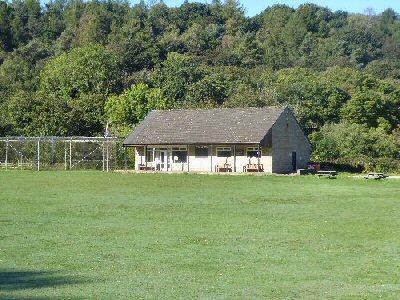
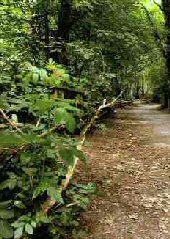
St Anne’s Church is separated from the Hurt Arms by the village’s smart little cricket ground, whose pitch is sunken well below the level of the road. At the side of this, Holly Lane leads down to Halfpenny Bridge, which crosses the River Derwent. As the name suggests, anyone crossing was required to pay one halfpenny at the Toll-house. Here, a path leads off the lane onto the Betty Kenny Trail and Shining Cliff Woods.
In the church is an exquisitely carved figure in marble of an angel protecting a child from a serpent. The story is that during the First World War, an elderly refugee couple from Belgium came to live in Ambergate. They had a son who was a sculptor to the King of the Belgians. He followed them over to this country with a half-completed sculpture he was working on for his hometown church. Sadly, his church was burnt down during the latter part of the war. But, fortunately, the people of Ambergate purchased the sculpture. Set on a rounded plinth of Derbyshire marble, in memory of the men who lost their lives in the war, it is on display at the church.
Ambergate’s Wesleyan Chapel opened in 1837, after the Methodists had endured quite a struggle with the Lord of the Manor to obtain permission to build. They had several refusals before; finally, after holding an all-night prayer meeting, a parcel of land to build on was allocated. The chapel closed and was relocated in 1926.
TEN FASCINATING FACTS ABOUT AMBERGATE
1. The world’s first small-medium electronic telephone exchange was brought into service in a house on Ripley Road at Ambergate in 1966. It replaced a manual system and provided a speedier and quieter service.
2. Close to Halfpenny Bridge, the River Amber flows into the Derwent and along the valley floor are Johnson and Nephew’s former wire works.
3. The Turnpike that stood by Halfpenny Bridge has gone. But the Turnpike Gateposts have been resited near the Ambergate Chip Shop.
4. Further into Shining Cliff Woods is Betty Kenny’s Tree, famed for its association with the nursery rhyme ‘Rock-a-bye-baby.’
5. Ambergate is within the Derwent Valley Mills UNESCO World Heritage site, and has historical connections with the railway pioneer George Stephenson.
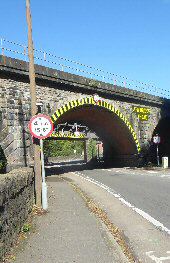
6. Unlike the majority of villages featured on this website, Ambergate is almost entirely a product of the Great Railway Age of the 19th century. The village did not exist until 1840, when the North Midland Railway Company built the first railway station.
7. The name Amber Gate previously referred to the tollgate for the Nottingham turnpike. But it was adopted for the newly built railway station.
8. Until then, the village was known as Toadmoor, from the Derbyshire dialect ‘t’owd moor'(the old moor) with no more than a few artisans’ cottages. Toadmoor Lane in the village acts as a reminder.
9. The canal towpath can be followed from Ambergate to Cromford Wharf, passing High Peak Junction, which is the start of the High Peak Trail. This 6-mile (10 km) section is a Biological Site of Special Scientific Interest (SSSI) and forms part of the Derwent Valley Heritage Way.
10. It is claimed that nowhere in England do the four methods of transport, road, rail, river and canal run as closely together as they do here. Although the canal is now only used for leisure purposes, the national railway line is one of the most scenically attractive in the country, but now runs no further than Matlock.
AMBERGATE WALK