INTRODUCTION
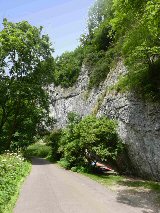
Millers Dale is a tiny hamlet, set in the heart of the Peak District, sharing its name with the Dale in which it lies. The scenery in this part of the Wye Valley is magnificent, with the impressive Ravenstor Cliff only a short distance down the road from the hamlet, on the route to the once infamous Litton Mill. The richness of flora and fauna along the dale sides has resulted in the area’s designation as a Site of Special Scientific Interest, and Derbyshire Wildlife Trust has several nature reserves in the area.
MIDLAND RAILWAY
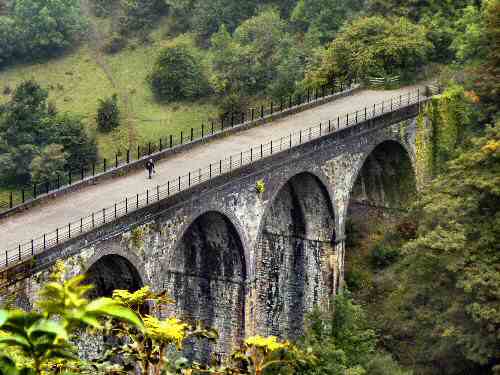
It was once a major junction on the Midland Railway Line, and Millers Dale was one of the largest stations on the line. The original station, opened in 1863, had three platforms, two on the main line for trains between London and Manchester and a bay for the branch line to Buxton. A further two platforms were added when the second viaduct opened in 1905. It was one of the few stations in England to have a post office on the platform.
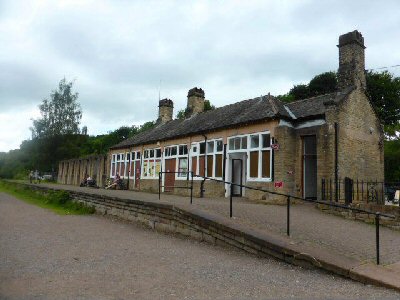
The railway closed in 1968, and the line remained unused for twelve years before being taken over by the Peak National Park. The track has been converted into a walking route, known as the Monsal Trail. It stretches from Wye Dale, near Buxton, to Coombs Road, near Bakewell. The station car park is convenient for those walkers who come by car to explore the magnificent scenery of the Wye Valley. The station itself now houses a Peak Park Rangers Centre, an information room and a café.
WALK CHOICES
Walkers can content themselves with a gentle amble down the Monsal Trail from Millers Dale, check out some of the neighbouring villages or take a walk on the high limestone plateau. For the even more energetic, the fearsome overhanging cliff at Ravenstor is a place where local climbers test out their skills, as well as in nearby Chee Dale.
MILLS
Corn mills once operated in profusion along the banks of the Wye, powered by the water from the river. There has probably been a mill at Millers Dale for over 900 years. Domesday Book indicates that a mill existed in this part of the valley at that time.
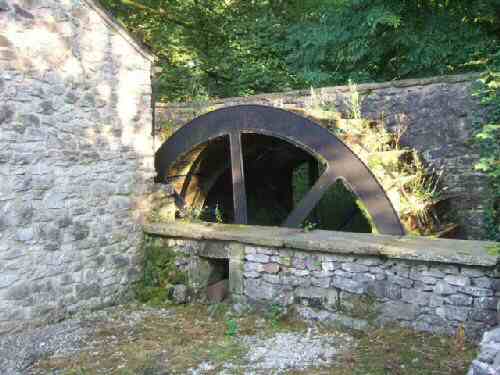
Miller’s Dale Meal Mill closed in the 1920s and remained derelict until demolition some fifty years later, to allow for the sinking of a borehole to supply water to the Chapel-en-le-Frith area. Stone from the original walls was used to house the borehole and its machinery. The water wheel was restored and placed adjacent to the pumping station. Stone walls enclose the whole site.
At the eastern end of the Dale is Litton Mill, originally founded in 1782. It was here that Robert Blincoe arrived as a child from a London poorhouse. He later wrote a harrowing tale of the cruelty and inhuman treatment meted out to the mill workers, many of whom never saw their families again.
MILLERS DALE
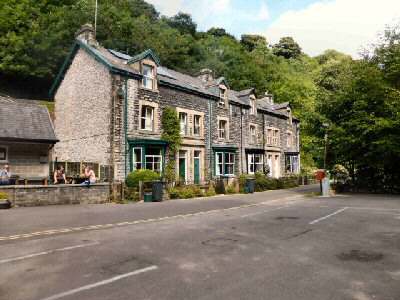
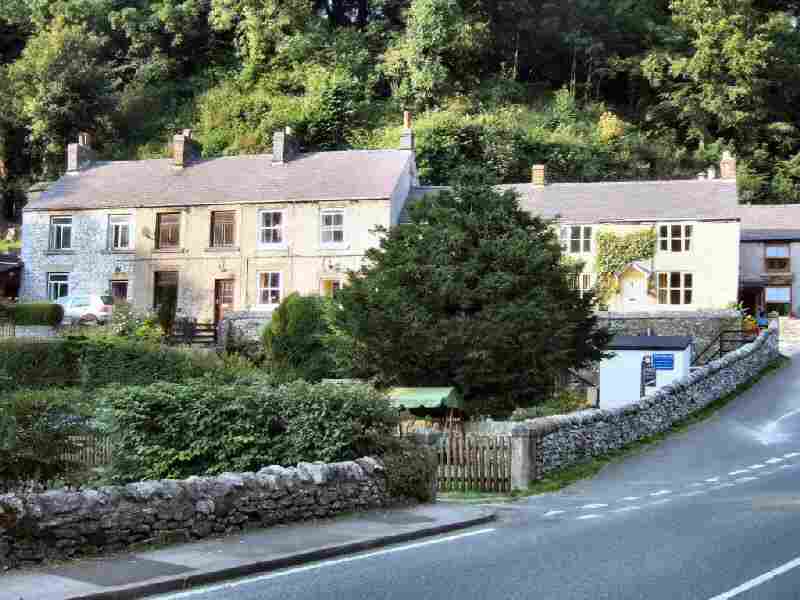
There are still several former railway cottages standing by the river, as well as the impressive Anglers Rest Public House. It has been in the licensing trade since 1753 and apart from providing a pleasant dining room and bar, also caters for those with muddy boots with a Hikers Bar.
TEN FASCINATING FACTS ABOUT MILLERS DALE
1. Miller’s Dale gets its name from the abundance of water mills that once thrived in the valley. There was probably a mill at what we now know as the hamlet of Millers Dale at the time of the Domesday Book.
2. The renovated Goods Shed at the railway station provides visitor information relating to the Trail’s railway heritage. There is also a café, car park, and accessible toilets.
3. Farmers from all over the Peak District met every morning at the station in time to catch the `Milk Train’. It conveyed two thousand gallons daily to the bottling plants in Sheffield and Manchester.
4. Hundreds of day-trippers got off the trains at Millers Dale from Manchester and Sheffield every day during the summer months, seeking the fresh country air of the Peak District. For 105 years, Millers Dale remained one of the busiest stations on the line.
5. The Old Corn Mill at the western end of Millers Dale, just beyond the viaduct, in recent years housed a firm called Craft Supplies until relocation. They became known internationally amongst woodturning enthusiasts and provided courses and demonstrations.
6. The arrival of the railway in 1863 provided much easier access to the rich limestone deposits. As a result, intensive quarrying began, and in 1876 a lime works opened near the station, with batteries of limekilns built alongside the track.
7. The old quarries are now nature reserves where wild orchids and other rare limestone-loving plants grow.
8. The two ancient railway viaducts straddling the main road stand testimony to the railway era. There are nearby remnants of old quarries and limekilns as reminders of the valley’s industrial past.
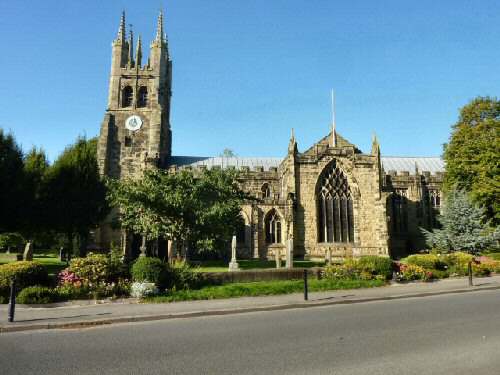
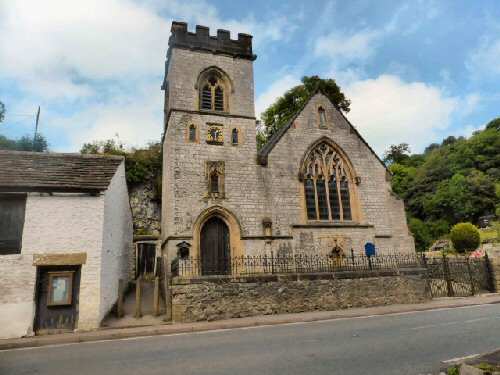
9. The square towered St. Anne’s Church has a date of 1879 on the clock tower, and was designed to serve as both school and place of worship by the Vicar of Tideswell, Rev. Samuel Andrew.
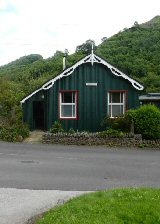
10. ‘Wriggly Tin’ – a well-remembered corrugated tin shack café just outside the railway station, has closed permanently.
MILLERS DALE WALK