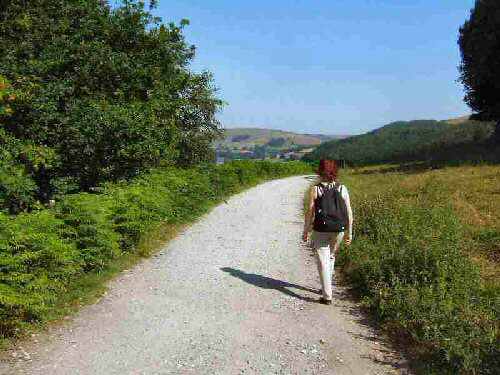
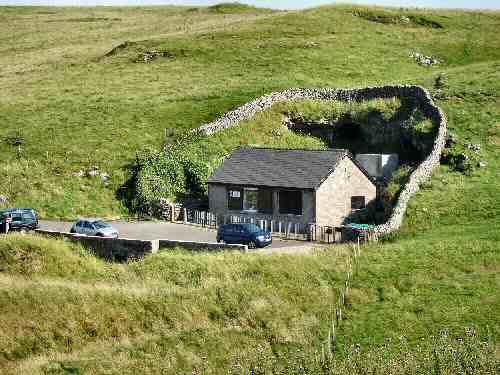
INTRODUCTION
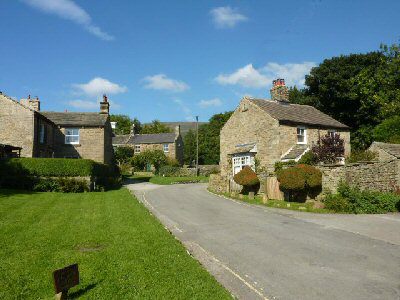
Edale is a picturesque village; its stunning location attracts thousands of visitors throughout the summer and on weekends in winter. In 2019, the Ordnance Survey announced that, according to their research, Edale was Britain’s favourite spot to start a walk. In the same year, The Sunday Times newspaper named Edale in the ‘Best Places to Live’ guide as the finest place to live in the Midlands.
For many years, the Vale of Edale had remained isolated. Its location, surrounded by the glowering heights of Kinder Scout to the north and a long ridge of hills to the south, made it difficult to reach. The River Noe finds a space through a narrow gap in the hills on its way towards Hope.
THE RAILWAY
Everything began to change when the railway arrived in the heart of the countryside. The Cowburn Tunnel cut through the rocks to provide the exit. Further east, the even longer Totley Tunnel opened the route to link Manchester and Sheffield. Car parking in the village centre is almost impossible, and what is available is used by locals and business users. However, a large pay-and-display car park is on the right as you turn off Edale Road near the railway station.
RIGHTS TO ROAM
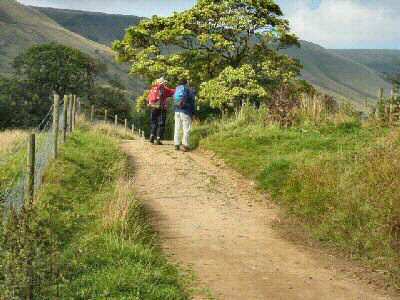
Rights to roam the privately owned moor above Edale were severely restricted until the law changed in the 1950s. Now that access to roam has been negotiated, subject to specific bylaws, the moors are very popular with walkers. However, Kinder Scout, a plateau spanning five square miles and reaching a maximum elevation of 2,088 feet, can be hazardous. The weather can suddenly change from bright sunshine to thick mist, making it impossible to find your way without a compass. But the Vale of Edale offers a splendid alternative for those who come unprepared to walk on Kinder and others who prefer more gentle exercise.
PENNINE WAY
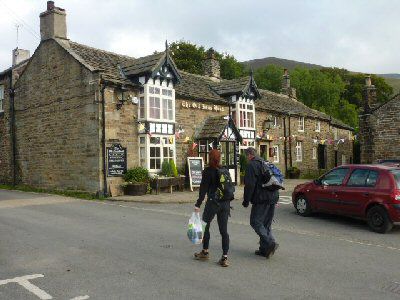
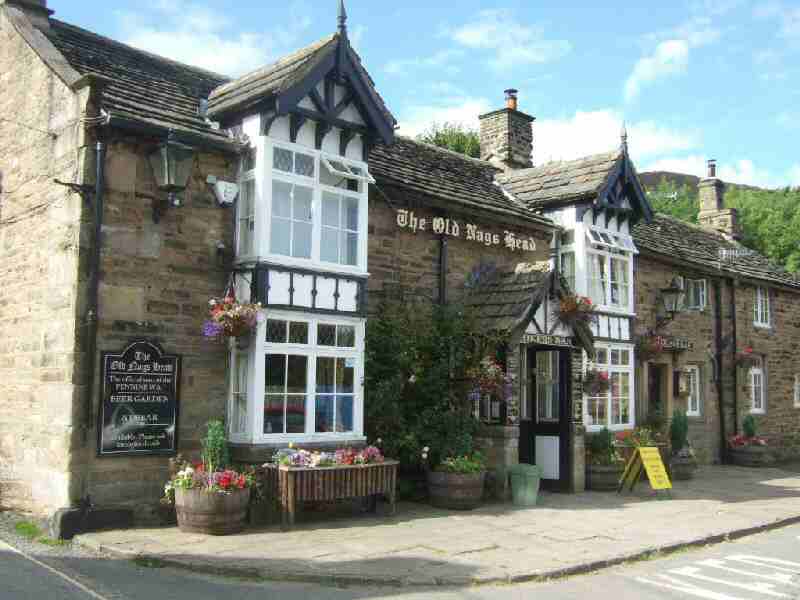
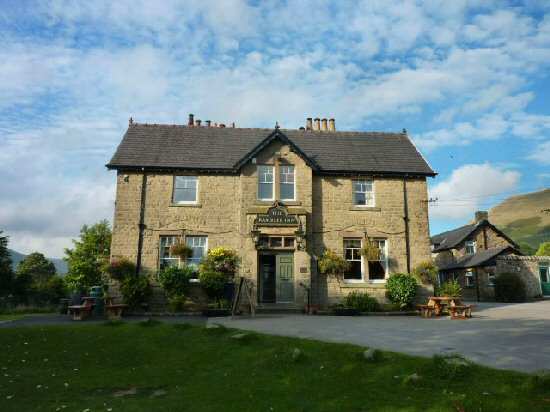
Tom Stephenson’s classic long-distance walk, the ‘Pennine Way’, has its official starting point at the Old Nag’s Head, built in 1577, in the centre of the village. It follows the Pennine Chain for over 250 miles northwards to the Scottish Border at Kirk Yetholm. It attracts 10,000 walkers yearly, which is a good test, even for the most experienced.
FRED HEARDMAN
The Old Nag’s Head is where former landlord Fred Heardman, known to his friends as ‘Bill the Bogtrotter’, set up the Edale Mountain Rescue Team of volunteers. Many walkers had cause to be grateful to Fred and his friends before the official mountain rescue service began. He also set up an information service, now discontinued, at the Peak National Park Information Centre at Fieldhead. The impressive Moorland Centre replaced it, but as of March 2025, there are no longer National Park-operated visitor facilities available. The Moors for the Future Partnership remains in the same building, but is only visited by appointment.
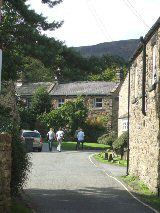
People still remember Fred for devising the demanding annual Four Inns Walk, which started at the Isle of Skye Inn, near Penistone, north of Sheffield and ended at the Cat and Fiddle near Buxton, calling at the Snake Inn and the Old Nag’s Head. Sadly, three Rover Scouts died on the walk during bad weather in 1964. The Isle of Skye Inn is now derelict; the Cat and Fiddle Inn closed in 2015 and is now Britain’s highest-altitude whisky distillery. The Snake Inn is no longer a public house.
COTTON MILL
A cotton mill was built in the 1790s at Nether Booth on a site originally occupied by a corn mill. It was one of only two such mills situated east of the Pennines. At one time, up to 80 people worked at the Mill. They included women who walked over daily from Castleton, except in bad weather when they bought provisions and stayed the night. It ceased operations in 1934 and is now a Landmark Trust holiday accommodation outlet.
BARBER BOOTH
David Taylor, a wandering Methodist preacher and a colleague, having lost their way walking through a blinding snowstorm, saw a light shining in a solitary house. They knocked at the door and walked in. The occupier, John Hadfield, grabbed the sword he had used at the Battle of Prestonpans from the mantelpiece and prepared himself for battle. Upon seeing this, David Taylor said, ‘Peace to this house’. Not only did this allay Hadfield’s fears, but shortly afterwards, prayers were said, and he agreed to have the house used for Methodist services. A new chapel now stands in Barber Booth close to the original site.
TEN FASCINATING FACTS ABOUT EDALE
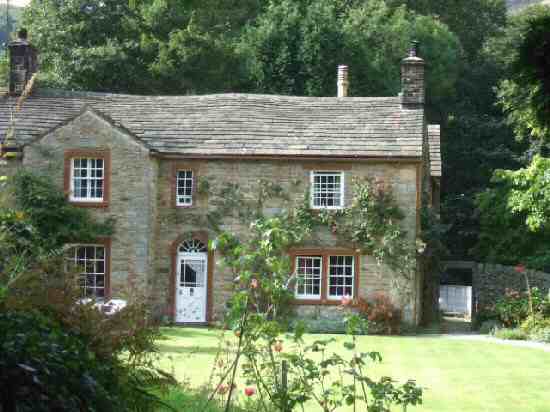
1. Accommodation is available at Edale’s public houses, various cottages, and the youth hostel. Edale is also a renowned camping village, boasting two significant campsites and numerous others in the surrounding area.
2. The Great Ridge, located on the western side of Castleton, is a dominating feature that separates the Hope Valley from the Vale of Edale and Kinder Scout. It is where the limestone of the White Peak and the gritstone of the Dark Peak meet.
3. Before the village had a church, the villagers worshipped at Castleton. To get there, they crossed the Great Ridge at Hollins Cross, the lowest point on the ridge and a meeting point of paths from the Castleton and Edale directions.
4. The Sheffield-Edale Rambler Folk Train has been running for over ten years. It departs Sheffield on the fourth Tuesday of every month. It involves a band playing on the regular 19:14 trans-Pennine train heading towards Manchester Piccadilly.
5. Nicholas Cresswell and his partners built a cotton mill at Nether Booth in the 1790s, constructed from locally quarried gritstone, a characteristic material used in many of the village’s buildings.
6. Most of the workers at Edale Mill lived in mill cottages built for them by Cresswell. The less fortunate walked from Castleton but stayed at the Mill overnight in severe weather conditions.
7. The Kinder Barrel Race consisted of teams of eight individuals carrying a beer barrel. Initially, it was from the Snake Pass Inn over Kinder Scout to the Nag’s Head in Edale. A party followed this. The Snake Pass Inn is now used for holiday accommodation only, and a new route set, starting and finishing in Edale.
8. In 1951, the UK’s first National Park was founded, and the opening of the moorlands increased the need for mountain rescue teams. Since then, the Edale Mountain rescue team has continued to grow in strength, saving many people in desperate situations.
9. Fred Heardman, the landlord at the Nag’s Head, established the Edale Mountain Rescue Team, a volunteer-based group. He retired in 1960 and died in 1973. There is a plantation near Edale named Fred Heardman’s Plantation.
10. Many of the area’s place names feature the word ‘booth’, which initially referred to temporary shelters for sheep farmers. These gradually became more permanent over the years, with small hamlets developing, including Upper Booth, Barber Booth, Grindsbrook Booth, Ollerbrook Booth, and Nether Booth.
VALE OF EDALE WALK