INTRODUCTION
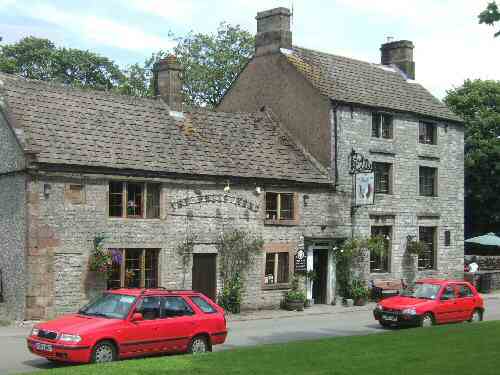
Situated in limestone country at the head of beautiful Lathkill Dale is the sturdy little village of Monyash. The attractive green and the village pub and café form the village centre, where visitors like to sit and relax. Four ancient trackways, now converted into metalled roads, radiate from the green, lined by houses and buildings of all sorts and sizes.
ST LEONARD’S CHURCH
The parish church of St. Leonard’s dates to the 12th century and is encircled by tall lime trees planted in the 18th century by the Reverend Robert Lomas. It is one of the prettiest churches in the county. Unfortunately, it is not the limes for which the vicar is remembered, but the tragic end to his life. One dark and stormy night, when he was returning from Bakewell the worse for drink, he fell off his horse over a cliff into Lathkill Dale and was killed. The cliff from which he fell is now known as Parson’s Tor.
According to local folklore, a local person predicted this terrible event after he had witnessed Rev Lomas and a crowd of drunken lead miners attack a Methodist preacher who was addressing a meeting. The villager was so upset at what he had seen that he forecasted the vicar would die a dreadful death.
HISTORIC MONYASH
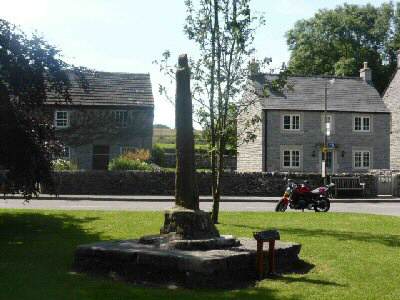
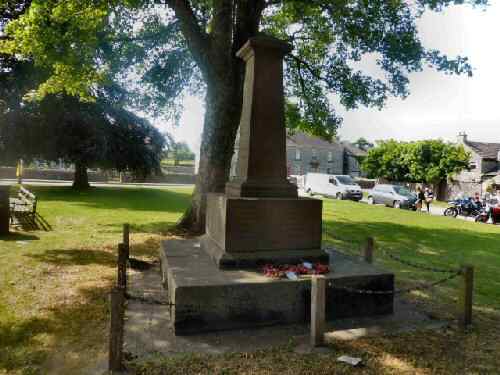
Monyash was an important lead mining centre for the High Peak to encourage the industry’s growth. A charter was granted in 1340 to hold a fair and weekly market. Today, a village market occurs on the green, where the old market cross still stands, on the spring bank holiday weekend. The former village stocks form the base of the cross. But the importance of Monyash goes back much further. People from prehistoric times have been attracted to the area, as evidenced by the stone circle at nearby Arbor Low, the ancient trackways and burial mounds.
The availability of water from a bed of clay about 100 yards square, on the edges of which rose 23 springs, was almost certainly the primary factor why people settled here. Relics of an ancient flint tool factory, perhaps Derbyshire’s first industry, have been found locally, most now housed in Sheffield City Museum. The Roman Road, known as ‘The Street’, passed the village on the western side.
Only Fere Mere, once the village’s source of drinking water, remains of the five meres that initially existed to retain water in what was otherwise a dry limestone area. Before Cow Mere was covered, farmers drove their livestock to drink according to an agreed schedule with other farmers. Meres are round ponds, usually with concrete bases, to prevent the water from seeping away. The making of which was once an essential industry in Derbyshire.
QUAKER MOVEMENT
Monyash was a stronghold for the Quaker movement for over 100 years. In 1668, John Gratton, the most famous of the Midland Quakers, came to live in the village, where he remained for 40 years. Apart from being imprisoned for his faith, he suffered grievously at the hands of his fellow men. As this extract from a book about his life relates, ‘…I got on top of the wall and spoke to the people, but a company of rude fellows set on to stone us; the stones flew above my head and rattled in the tree, yet hit me not. But a woman who happened to sit near me, a great stone hit her and wounded her…’ The Quaker Meeting House in the village is no longer in use.
INTEGRATED RURAL DEVELOPMENT PLAN
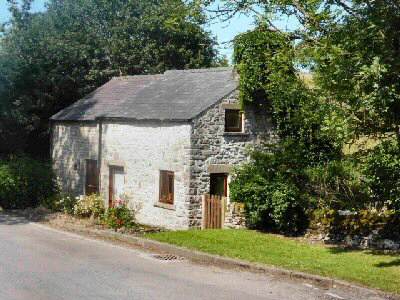
Between 1981 and 1984, a research project, the Integrated Rural Development Plan, was undertaken in the village to create new business opportunities and community initiatives to improve the environment. This project appears to have been very successful, judging by the improvements that have taken place since then. There is now a new village hall, opened in 1986 by the Duchess of Devonshire, a children’s play area, the old toll bar has been saved from dereliction, and the Quaker Chapel has been repaired. Perhaps the most impressive achievement came in 1989, when, impatient with the cramped conditions at the local school, the villagers raised the money required. They did most of the work to provide an extra classroom and a store.
TEN FASCINATING FACTS ABOUT MONYASH
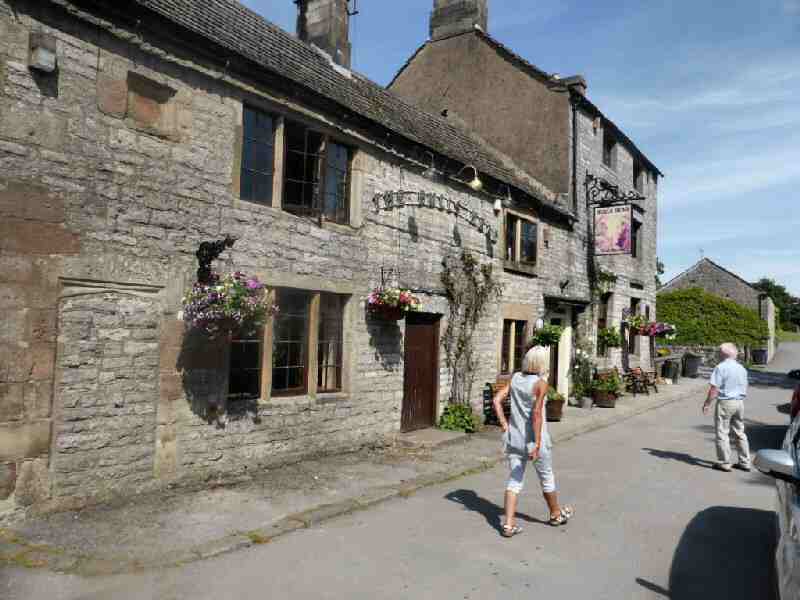
1. Formerly an important lead mining centre, Monyash had its own Barmote Court. It sat at the Bull’s Head at Easter and Michaelmas to settle mining disputes, hear complaints of theft and trespass, and lead miners’ grievances. The judgments were based on custom and precedent handed down over the years. The court eventually transferred to Wirksworth, where it still sits ceremonially once a year.
2. Most village houses date from the 18th or early 19th century.
3. The Bull’s Head, partly built in the 17th century, is probably the oldest building in the village. Next door, the former blacksmith’s shop is now a popular tearoom.
4. Jack Mere, one of the original five meres, has been covered and converted into a car park. Opposite Fere Mere is Chandler’s House, where candles for mining and domestic use were made, with tallows supplied by local butchers.
5. The wide grass verges near Chandler’s House acted as a ropewalk and, much later, as a place to stack incendiary bombs before transportation to an ammunition site during the Second World War.
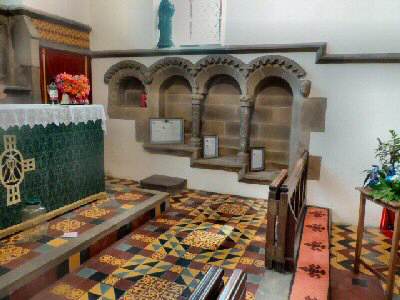
6. Inside St Leonard’s Church, at the southwest end of the chancel, is a late 12th-century three-arched sedilia and piscina, considered the finest in Derbyshire. The sedilia is where the priest, deacon, or sub-deacon participating in services sits. The piscina was used to wash the vessels at Mass.
7. The church’s large iron-bound wooden chest, which was used to contain the priest’s vestments, books, and the altar plate, is probably from the 14th century.
8. One Ash Grange is just over one mile from Monyash, where the Cistercian monks of Roche Abbey in Yorkshire once had a farm and manor. The claim that monks who had been unruly were sent there as punishment is probably incorrect. Later, it was the home of John Gratton, the Quaker preacher.
9. Near Parson’s Tor, impure forms of limestone were mined. They were then polished and turned jet black. After being cut, they were used for ornamental purposes and known as Ashford Marble.
10. Henry Watson founded the Ashford black marble works in 1748 at Ashford-in-the-Water. The marble was top-rated in Victorian times and was exported all over the world.
MONYASH AND LATHKILL DALE WALK