INTRODUCTION
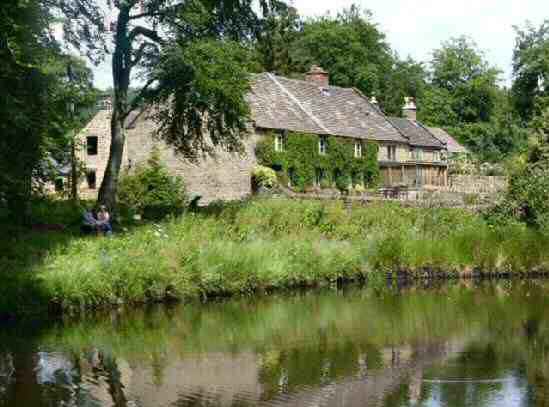
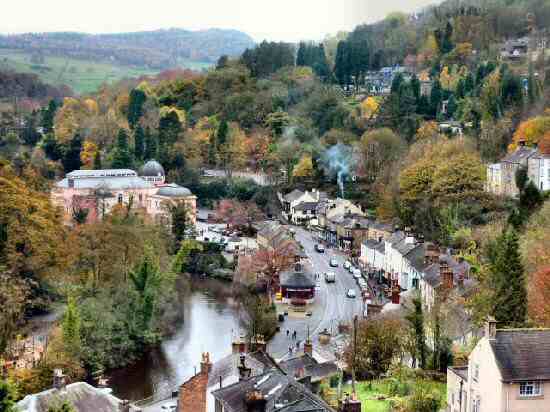
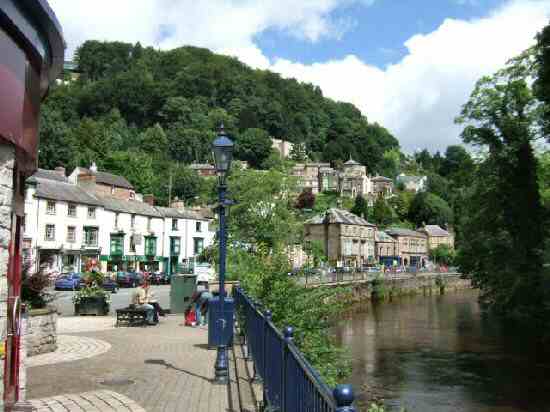
Nestling beneath limestone cliffs with the River Derwent flowing below, in a beautiful wooded valley, is the popular tourist centre of Matlock Bath. It has been a tourist attraction ever since visitors came to bathe in the thermal waters.
WATER CURE
The name Matlock Bath, in fact, dates from the establishment of the first bath in the late 1690s. It was a little more than a stone structure filled by a thermal spring, with a constant temperature of 68 degrees Fahrenheit. As the number of visitors who came to benefit from the medicinal qualities of the warm spring water increased, some developments to improve the facilities took place.
At first, progress was slow, the amenities were poor, and access from the south was very difficult. However, two factors hastened the business development. Road improvements made Matlock Bath more accessible after 1780, and the French Revolution prevented foreign travel for the rich.
Writers compared Matlock Bath’s beautiful scenery to that of Switzerland and, together with the thermal qualities of the water, added to the attraction of the area. As facilities started to improve, the visits made by Queen Victoria in 1832 and 1844 further enhanced its reputation. When she visited in 1844, she ascended the Heights of Abraham on a donkey.
COMMUNICATIONS
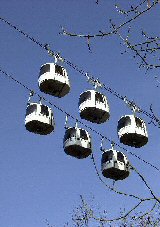
Nowadays, visitors usually use the cable cars that first started to operate in 1984, or take the more strenuous option and walk.
Everything changed with the arrival of the Midland Railway, bringing day-trippers by the thousand. It quickly drove away the so-called’ persons of quality’ to neighbouring Matlock Bank, where John Smedley had opened a hydropathic establishment, in much more genteel surroundings, well away from the hordes.
LITTLE SWITZERLAND
In the Victorian days, Matlock Bath was known as ‘Little Switzerland’ and had the railway station built to Swiss design. Part of the railway station is now the Whistlestop Countryside Centre, where the Derbyshire Wildlife Trust provides hands-on activities, designed to help children of all ages and abilities discover and understand the natural world around them. This centre reopened recently, having been closed for several years.
PLACES TO VISIT
The site previously occupied by the hydro is now an aquarium. The former thermal pool provides a home for large mirror carp and other assorted fish, rather than the bathers of yesteryear, who hoped to relieve themselves of rheumatism.
Housed in the Grand Pavilion is the Peak District Mining Museum, the only one of its kind in the world. It tells the story of lead mining from Roman to recent times, interestingly and innovatively, with climbing shafts and tunnels providing a real insight into what working down a lead mine was really like.
Close by is the Temple Mine, which provides an opportunity to go underground on a guided tour to learn more about the history of mining. The reconstruction enables visitors to see the mine as it was at the beginning of the century. It is advisable to check when tours of the mine are available, as it is not always open at the same time as the museum.
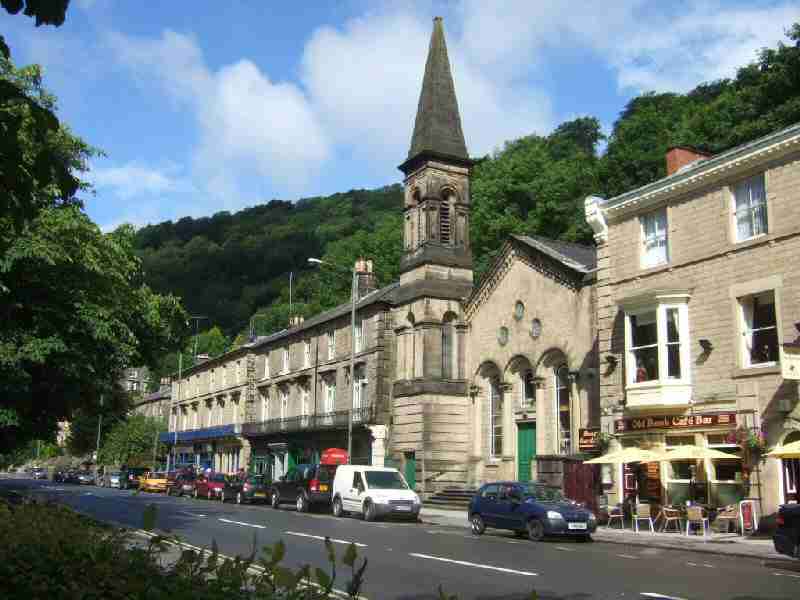
The church of the Holy Trinity is a fine building of the early Victorian period. Where, in the car park next to it, once stood the Royal Hotel, which replaced the Old Bath Hotel in 1878. Unfortunately, a fire destroyed it in 1929.
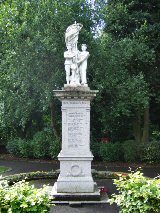
A dramatic setting provides a natural backdrop for Gulliver’s Kingdom, a fantasyland for children. Originally a model village, it has grown into a theme park, providing fun and entertainment, particularly for families with young children.
THE VILLAGE
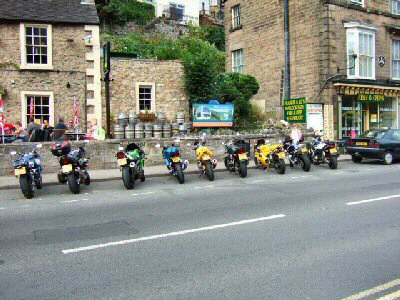
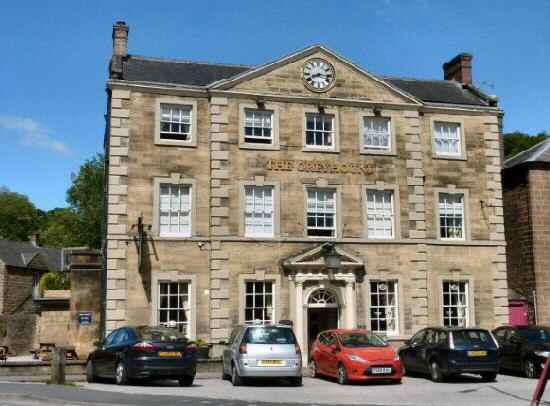
One of the oldest buildings on the main road through the village is Hodgkinson’s Hotel. It dates from 1780 and, in former days, was a coaching stage point. On the eastern bank of the river, over Jubilee Bridge, are the Lovers Walks that provide a relaxing stroll in contrast to the bustling main street.
Matlock Bath is a popular haunt for serious rock climbers who test their ability against the sheer rock face of High Tor. Visitors who want a short walk with superb views guaranteed should try the walk from the railway station car park through the coach park to join a path rising above the River Derwent. Keep close to the fence on your left until the path ends. Then descend a steep path through Hagg Wood to the Derwent Gardens and the centre of the village. This walk with its magnificent views is fabulous at any time of the year, but best of all on a sunny day when the trees are not in full leaf. A word of warning, the steep descent through Hagg Wood can be slippery in wet weather and positively dangerous when frosty.
ILLUMINATIONS AND VENETIAN NIGHTS
The highlights of the year are the Illuminations and Venetian Nights, which start in early September and continue until the end of October. The riverbanks, decorated by illuminated displays and the cliffs floodlit, offer a truly memorable show. The climaxes of the Venetian Nights, on Saturdays and Sundays, are when decorated boats, coloured lights twinkling, glide down the river – a magical experience enjoyed by people of all ages. On selected nights, fireworks displays take place, which attract large numbers of visitors. Special car parking arrangements are in force during peak periods.
TEN FASCINATING FACTS ABOUT MATLOCK BATH
1. Matlock Bath lies between Matlock Dale to the north and Cromford to the south, and lies within the confines of a deep limestone gorge.
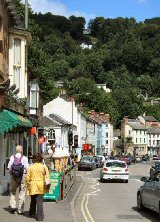
2. Few places in England pack so many shops, pubs, cafés, and restaurants in such a small area, together with numerous attractions. It is a beautiful location where walkers benefit from fantastic views and serious rock climbers with stiff challenges.
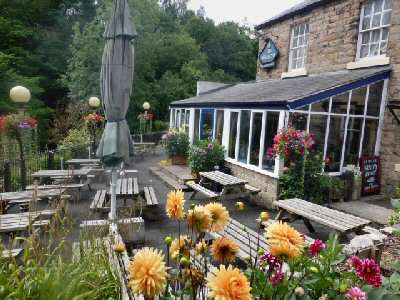
3. The Fishpond Hotel stands on the site of stables by a sloping walkway, which originally led to the former Old Bath Hotel. It now provides a route to the car park.
4. Opposite the Fishpond Hotel, in the fishpond, at the southern end, immersed in the water, is an old and very faded milestone.
5. Many exotic varieties of fish and marine life stock the aquarium, in what used to be Matlock Bath Hydro. The aquarium is on the site of the Fountain Baths, the third thermal bath, which opened in 1786. The present building dates to 1882.
6. Rose Cottage on North Parade was in existence by the 1790s and may have been the home of the bathkeeper.
7. High Tor Grounds are a popular picnic and recreation area with many outstanding views and woodland walks.
8. On the opposite side of the Valley from High Tor, rising majestically on the southern slopes of Masson Hill, are the beautifully landscaped woodlands of the Heights of Abraham. Most people take a scenic cable car ride to get there rather than a long, strenuous walk.
9. Jubilee Bridge was commissioned by the Butterley Company and erected in 1887 to celebrate Queen Victoria’s Golden Jubilee.
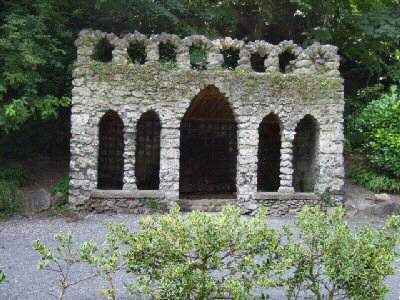
10. Lovers’ Walks has been in continuous use as a pleasure ground since at least 1742. It is in the English Heritage Register of Parks and Gardens of Special Historic Interest, and English Nature considers its flora to be significant enough to include the area in the Matlock Woods Site of Special Scientific Interest.
MATLOCK BATH WALK