INTRODUCTION
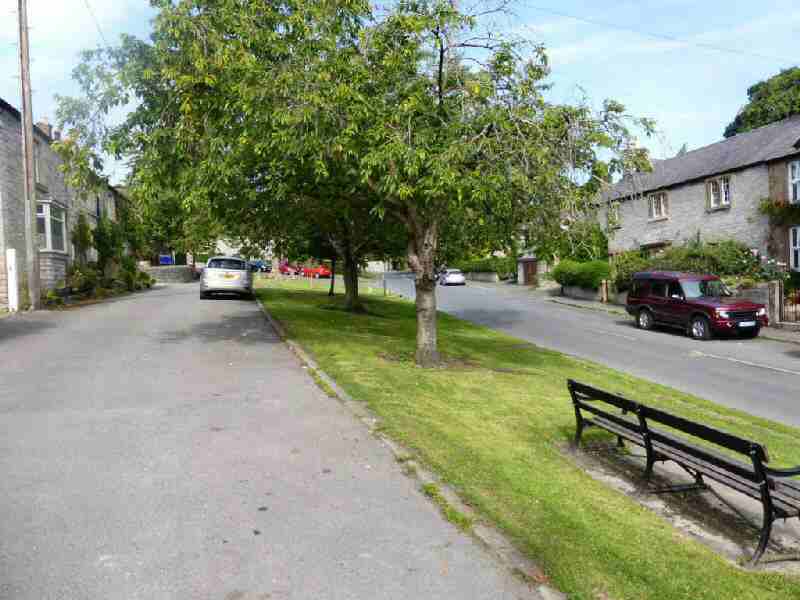
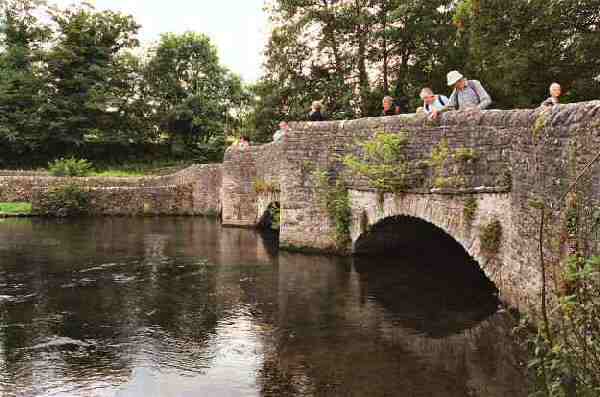
Sheltered by Longstone Edge from the cold north winds, the attractive limestone village of Great Longstone winds its way along a minor road linking Monsal Head and Hassop. Its comparative isolation from significant tourist routes is why it has remained relatively undiscovered by visitors. But the situation is changing: it is no longer a one-street village – much discreet development has occurred, and newcomers have moved in. With the opening of the Monsal Trail to walkers and the increase in leisure time, more people now visit the village to enjoy its quiet charm and hospitality.
The Great and Little Longstone villages, separated by about half a mile, have many fine 18th-century homes built during an era of prosperity from lead mining and shoemaking. Like so many villages in the White Peak, Great Longstone owes its existence primarily to lead mining. The presence of water where limestone and shale meet is a factor in the village’s location. Good farmland was another attraction, as miners supplemented their incomes from their underground activities by keeping livestock.
It is not just the mining of lead; chert extraction commenced in the late 18th and early 19th centuries. More recently, Fluorspar has been extracted mainly on the Stoney Middleton side of Longstone Edge. The intensive quarrying for lead and Fluorspar has left the slopes on the northern hillside somewhat less impressive than the southern.
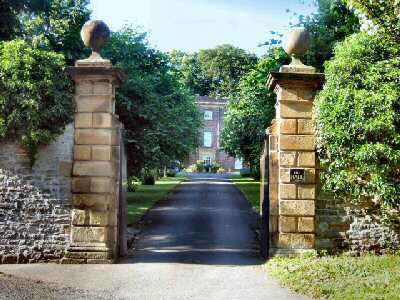
In the 1860s, Great Longstone was on the London-Midland railway line between St Pancras and Manchester. The pretty little woodland station, the last stop before crossing Monsal Dale Viaduct, still stands but is now only passed by walkers, cyclists and horse riders. At the rear is Thornbridge Hall, a minor stately home.
Despite the controversy over the Monsal Dale Viaduct building, it is now considered an essential feature of historic and architectural interest. There was widespread protest when the railway line was closed after 100 years, and the demolition of the viaduct was planned. The answer came in 1970 with the award of a preservation order.
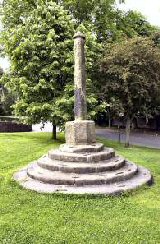
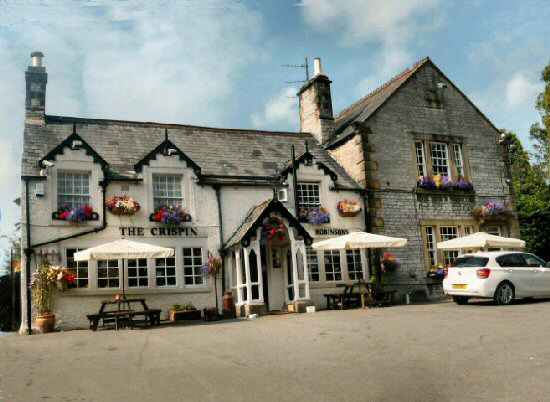
A line of trees on the western side of Great Longstone guides you towards the village green, where there is a medieval market cross. Here, markets took place to sell local produce, and an annual fair occurred during Wakes Week. Nearby, The Crispin is a large, comfortable old pub named after the patron saint of shoemakers. The current pub sign provides a reminder of those days when shoes were made in the village.
Longstone Hall is the most impressive building in the village; it sits across the road from the Manor House. It was surprisingly rebuilt in brick in 1747 by Thomas Wright when every other building in the village was stone. Sir Richard Levinge made the same choice at Parwich Hall, which seems very strange in an area where stone predominates and is readily available – part of the old house built in 1600 remains. The Wrights, one of the oldest families in Derbyshire, owned the hall for over 400 years. However, it is no longer in their ownership.
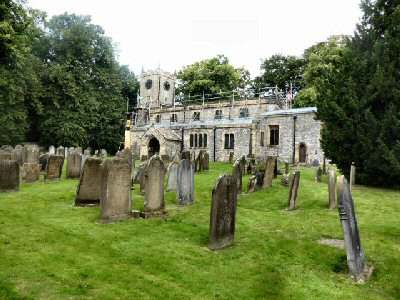
The foundations of St. Giles Church date back to the Normans. It is an interesting old church with a splendid 15th-century roof with fine moulded beams. A tablet in the church commemorates Dr Edward Buxton. Although he had retired from practice, he returned at the age of 73 to provide a service to the villagers when a typhoid epidemic affected every house but one. He did this without asking for a fee, and everyone in Great Longstone survived. He prescribed ‘wort’: a beer before fermentation processes are complete, brewed daily at a Church Lane Farm.
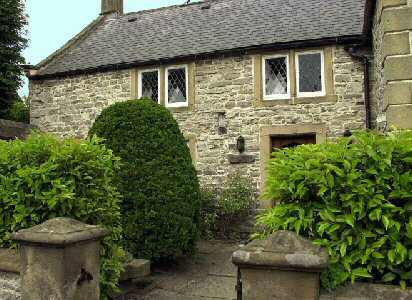
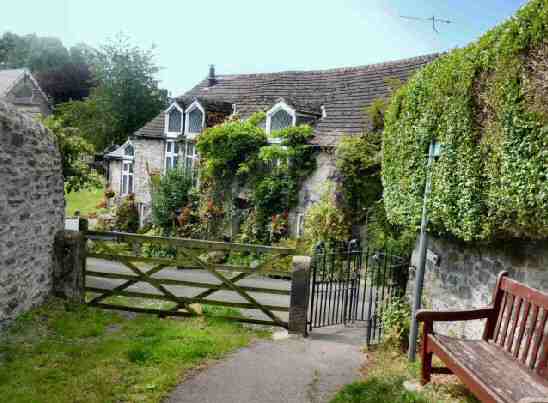
The doctor lived at Church Lady House, a late medieval building containing at least one cruck frame. It is said to be haunted by a lady dressed all in black. The adjacent building was once a barn belonging to the house, serving various purposes, including as a theatre. It is now a private residence.
TEN FASCINATING FACTS ABOUT GREAT LONGSTONE
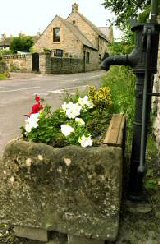
1. At the bottom of Moor Lane is the last surviving village pump. In the past, many other pumps were in the village, but not all supplied pure water.
2. Close by the pump, the cottages that occupy Bullfinch Square are said to be former lead miners’ homes.
3. The new White Lion is on the village’s eastern side, near the Village Hall. The hall is well-used by numerous community groups in the village. The vicarage, rebuilt in 1831, was once the White Lion Inn.
4. From Monsal Head, you get a fantastic view of the viaduct. Yet John Ruskin, the poet and conservationist, ranted when it was built: ‘The valley is gone – and now every fool in Buxton can be in Bakewell in half an hour and every fool at Bakewell in Buxton.’
5. Less than half a mile from Monsal Head is the village of Little Longstone, with its charming little cottages and well-kept gardens. Built wholly of stone, it has a popular pub, the Packhorse Inn and a 17th-century Manor House.
6. The Pack Horse Inn has been providing refreshments for weary travellers since 1787. Originally two miners’ cottages, it is on the old packhorse route that runs from Chesterfield through Little Longstone before climbing up towards Monsal Head to join an ancient Roman Portway.
7. The Longson family has lived in Little Longson for over 800 years: a record few can equal anywhere.
8. Miners are a tough breed of men. They objected in Napoleonic times when calling up notices to join the army was considered unfair. It was every parish’s duty to provide a fixed number of conscripts. The lots drawn were considered disproportionate, and miners from Great Longstone, Castleton, Bradwell, Tideswell, Eyam, and other villages marched to Bakewell, where the justices sat. They took picks, forks, shovels and anything else they could lay their hands on. They made a great bonfire on arrival and ceremonially burnt all the call-up papers.
9. In the 17th century, Flemish weavers settled in Great Longstone, establishing a thriving stocking industry that contributed to the village’s economy.
10. Longstone Moor, rising to approximately 1,296 feet above sea level, northwest of Longstone Edge. Natural England describes it as ‘the largest example of limestone heathland in the Peak District National Park.’
GREAT LONGSTONE WALK