INTRODUCTION
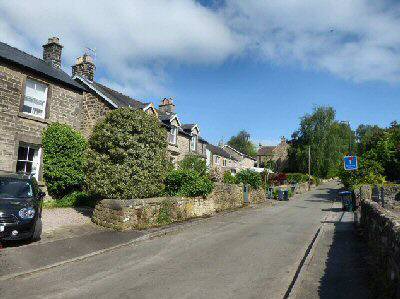
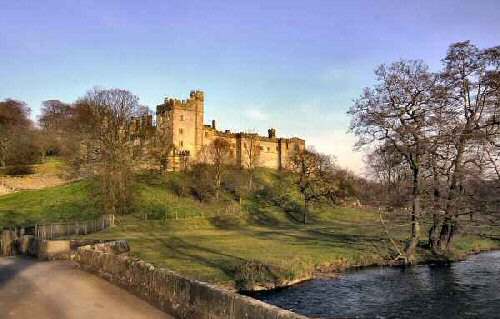
The village of Rowsley stands at the junction of the valleys of the River Derwent and Wye, with wooded hills on either side. It was the beauty of its setting in the 19th century which attracted artists, poets and anglers. Though the fantastic scenery remains relatively unspoilt and still attracts scores of visitors, a new attraction has arrived in recent years. The stylish Peak Village Shopping Complex, which successfully blends into the landscape, draws visitors to the village who both want to shop and enjoy the lovely setting in which it stands.
Excellent walks radiate from the village on paths to Chatsworth and Haddon or up the steep hillsides to the moors of Stanton and Fallinge. The Derwent Valley Heritage Trail also runs through Rowsley.
GREAT AND LITTLE ROWSLEY
There are two Rowsleys, not surprisingly called Great and Little. But, perhaps more unexpectedly, it is the latter that has the larger population. Greater Rowsley is much the older part of the village. It has several handsome gritstone buildings of an unusually warm shade. The arrival of the railway in 1849 brought about the development of Little Rowsley. Today, both are united as one parish in Derbyshire Dales.
PAXTON’S STATION
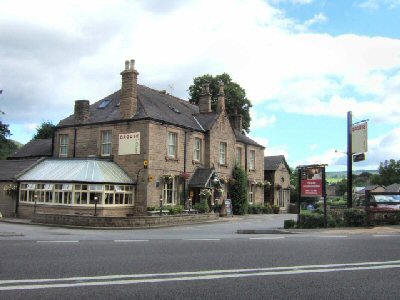
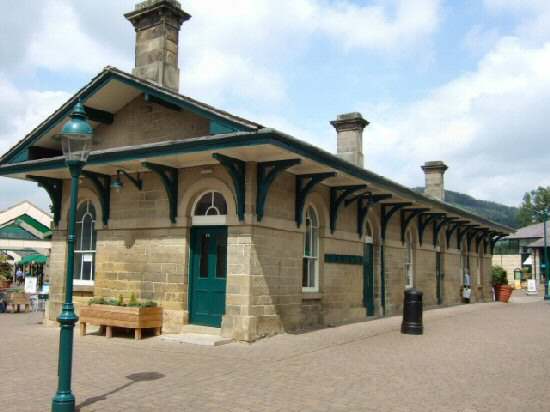
Paxton built an impressive Italianate Railway Station along with four stone cottages to house railway workers. The Station Hotel, now renamed the Grouse and Claret, was erected nearby, and everything was ready to extend the line through the valley. Unfortunately, there was a problem. The Duke of Devonshire was adamant that he would not allow the line across Chatsworth Park. If that was not bad enough, the Duke of Rutland also refused an alternative plan for the railway to run across his estate at Haddon. All the railway company could do at the time was to run trains between Rowsley and Ambergate.
The problem was solved when the Duke of Rutland eventually agreed to the plans of the Midland Railway to build a track out of sight, in a cutting behind Haddon Hall. A new station, a quarter of a mile to the south, was constructed, and instead of the line running up the Derwent Valley, it ran along the Wye Valley. Leaving Paxton’s splendid station isolated in the wrong valley. It was not until 1867 that the line finally reached Manchester.
ROWSLEY STATION
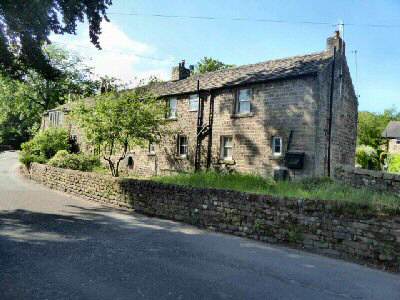
Rowsley Station, though, was very popular with tourists and welcomed hundreds of visitors bound for Chatsworth. They usually completed their journeys by horse-drawn carriage. Passing the Midland Cottages on Chatsworth Road, where the railway workers lived, and the Methodist Chapel erected in 1910.
In 1967, when Dr Beeching closed the line, the extensive marshalling yard and locomotive shed became redundant, and Rowsley lost a major employer. For a few years, an engineering business used the yard. Soon afterwards, the site became a blot on the surroundings. Transformation then took place with the arrival of the Peak District’s first and only Factory Shopping Outlet.
Following the actions of a band of determined enthusiasts, who formed the Peak Railway Society, trains recommenced running from Matlock to Darley Dale Station in 1991. Six years later, the line was extended to Rowsley South Station. A journey on the train is an ideal way to see the best of the valley and beat the traffic jams, and you can even extend your journey further. From Matlock Railway Station, you can travel by rail to London and many other destinations.
CAUDWELL’S MILL
A mill has stood in the village since at least the 16th century. The latest, Caudwell’s Mill, was founded in 1874 and continued to operate for 104 years. When it closed, a group of enthusiasts got together to save what was the only complete Victorian water turbine–powered roller mill in the country. They had a fight on their hands, as according to the Millers’ Manual Association, milling machinery no longer needed must be destroyed to prevent re-use. After a lot of persuasive talking, an agreement was reached to waive the ancient right and allow a small amount of flour to be produced, and the mill was used for exhibition purposes. Sadly, it went into voluntary liquidation and closed in 2023, but a visit to the site is still of interest.
THE VILLAGE
The Duke of Rutland was Lord of the Manor of Rowsley, and many of the properties are still in the family name. He built the school and teacher’s house in 1840, and the church 14 years later. Also, the Rutland family had a row of cottages erected in Wye Terrace for the workers at Caudwell Mill – a task aided by a good supply of high-quality building stone from local quarries.
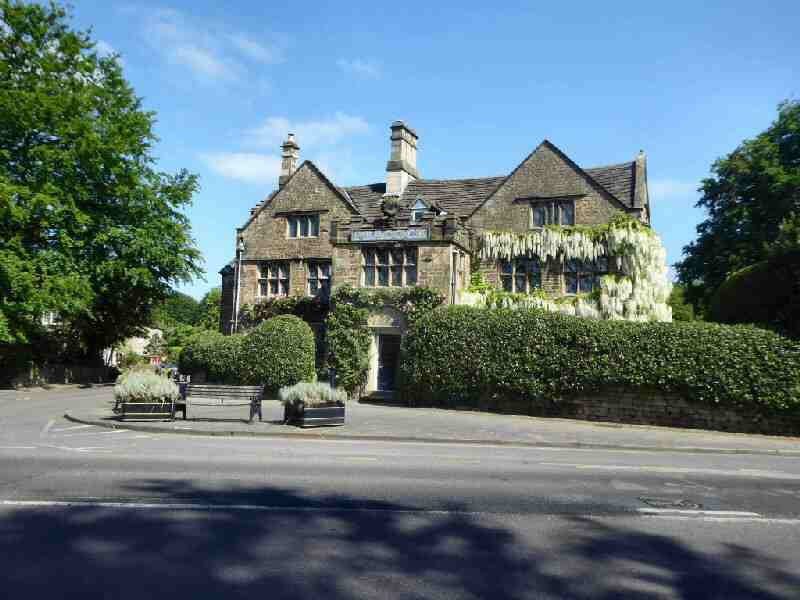
Almost certainly the best-known building in the village is the Peacock Hotel, with a stone peacock sitting above the door. It was built in 1652, in Jacobean style, by John Stevenson of Elton, agent to the Manners Family, as a gentleman’s residence. It later served as a farmhouse before it eventually became a hotel. In its time, it has accommodated many famous residents, including Royalty.
ROWSLEY AND STANTON MOOR WALK
TEN FASCINATING FACTS ABOUT ROWSLEY
1. The Peak Well or village fountain opposite the Peacock Hotel in Church Lane was carved by Trevis Bath towards the end of the 19th century, with a Lion’s Head spout. He also carved the stone peacock above the front entrance of the hotel.
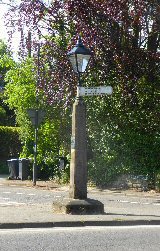
2. The rather unusual lamp, which stands in the middle of the road at the junction with the lane that leads over the River Wye and up to Stanton Lees, was given by John Holmes, a farmer and blacksmith, ‘in gratitude for 60 years at nearby Bridge Farm’.
3. The Peacock Hotel is famed for its excellent fly fishing on the nearby Wye and Derwent.
4. The oldest surviving structure in the village is the bridge over the Derwent, which was originally a 15th-century packhorse bridge, widened to carry increasingly motorised traffic in 1925.
5. The Grouse and Claret was formerly the Station Hotel, but was renamed due to the demise of the railway. A grouse and claret is the name of a specialist dry fly used in trout fishing in the locality.
6. Peak Village is the Peak District’s first and only factory outlet shopping centre, set in beautiful surroundings at Rowsley. Built on a derelict industrial site known to the villagers as ‘The Pit.’
7. Peak Village was considered a considerable enhancement by many of the local people as it replaced an eyesore. It has free parking and a diverse selection of outlets, as well as the Woodlands Fitness Centre and an exquisite nature reserve that fits in well with the beautiful countryside that surrounds it.
8. Since Peak Village and Derbyshire Wildlife Trust set up the nature reserve by the side of the shopping village in September 2019, the area has been transformed into an excellent habitat for wildlife. As well as a special place for the local community and visitors.
9. The village school was a gift from the Duke of Rutland in 1840, as was the Church of St. Katherine of 1854-55, which stands on higher ground up Church Lane towards Haddon Woods.
10. East Lodge Hotel is set amidst 10 acres of beautifully landscaped water gardens and was originally the Hunting Lodge to nearby Haddon Hall, the Derbyshire seat of the Duke of Rutland. Now a multi-award-winning restaurant and hotel.
ROWSLEY AND STANTON MOOR WALK