INTRODUCTION
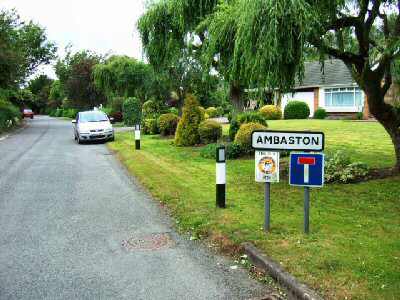
The pretty village of Elvaston, dominated by its castle and gardens, together with Thulston and Ambaston, makes up the parish of Elvaston. Despite its proximity to the southern fringes of Derby, the area remains rural with several working farms in the neighbourhood. Thulston, the largest of the three, does have some modern development. It has the only pub, Elvaston has the church, the village hall, the castle and the grounds. Ambaston is tucked away close to the River Trent and must rank as one of the most peaceful in the county. It can only be reached by road via two relatively narrow and meandering lanes from Elvaston and Shardlow.
The first recorded settlers in the parish were the Saxons, but they were not the first to live in the area. Gravel workings at the neighbouring village of Shardlow have revealed Iron Age artefacts. At the time of the Domesday Survey, Elvaston was just a church, corn mill, blacksmith and 52 acres of land in the possession of Geoffrey Alselin, one of the barons who held land for the King.
THE STANHOPE FAMILY
The estate passed through the hands of several families following the Norman Conquest. However, in the early 16th century, it was acquired by the Stanhopes, in whose hands it remained for nearly 400 years. During the Civil War, the Stanhopes, a staunch Royalist family, found themselves sandwiched between Derby and Nottingham, who both supported the Parliamentarians, when the house and gardens were ransacked by soldiers searching for arms.
ELVASTON CASTLE AND GROUNDS
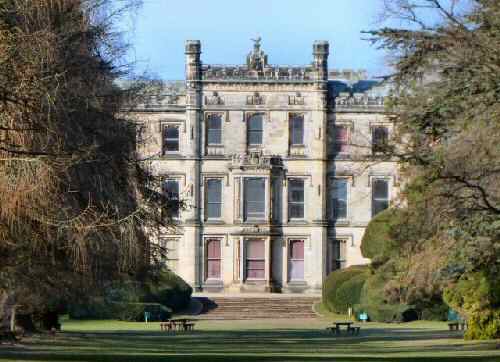
The present-day Gothic-style castle was designed in the early 19th century by the architect James Wyatt for the 3rd Earl of Harrington. The Earl also wanted ‘Capability’ Brown to landscape his 200-acre estate. But Brown declined, saying, ‘The place is so flat and there is such a want of capability in it.’ Following the death of the 3rd Earl, his son gave the task to William Barron, a 25-year-old Scot who had trained at the Botanical Gardens in Edinburgh and was looking to establish a reputation as a landscape gardener.
The first problem Barron had to deal with was the waterlogged ground, which he solved by creating drainage ditches. But it was only after five years that the soil was finally ready for planting. By this time, the Earl was becoming impatient to see results, and Barron planted fully grown trees, keeping them alive and healthy by transporting them vertically with their branches outstretched and their rootballs intact.
To the north of the castle, Barron created an ornamental lake with islands and rockwork. On the southern side, he developed half a dozen formal gardens. To compensate for the lack of an interesting view, he enclosed the gardens with high hedges to create a view within the gardens themselves. In contrast, he designed two striking open avenues, 50 feet wide and 400 yards in length.
By 1850, Barron had planted examples of every species of European conifer then known, 11 miles of yews, a yew tunnel, a pinetum, a kitchen garden and a lime avenue leading from London Road to the Golden Gates.
PUBLIC OPENING OF GARDENS
Until after the death of the 4th Earl, the gardens remained a private place, but his brother, who succeeded him in 1851, opened the gardens to the public. Despite having to pay a high admission price for those days, thousands of people visited, often travelling considerable distances.
The estate remained under the control of the Harrington family until 1939. It was then left vacant until 1969, when it became the first country park in England. For a short period of time, the house acted as a teacher training college.
THE VILLAGE
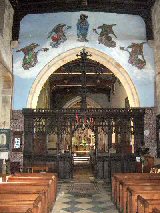
Close to the castle is St Bartholomew’s Church with its fine perpendicular west tower. Only a short distance from the church is Elvaston Cricket Club’s impressive tree-lined ground and a new pavilion.
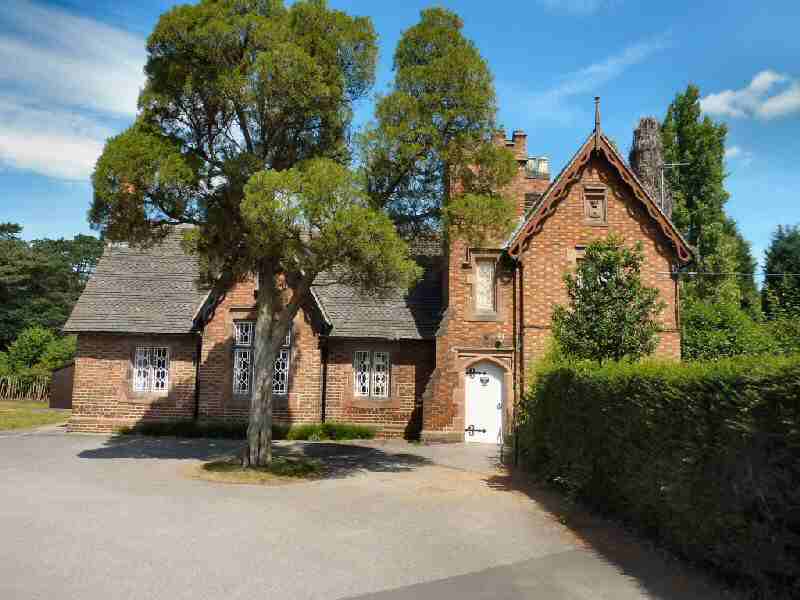
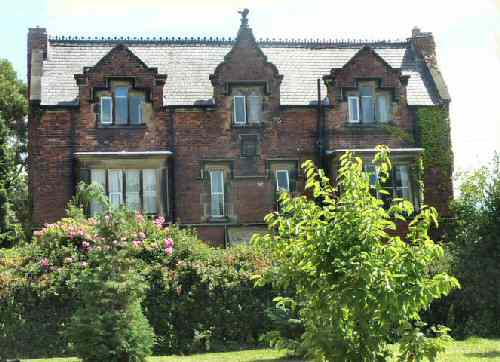
There are several other interesting buildings in the village, including the Village Hall, built in 1852, and previously used as a Church of England School. The Clockhouse, a three-storeyed building constructed as a ‘Refuge for the Aged Poor’, is now a retirement home. The former vicarage, Thurlaston Grange, is an attractive listed building dating from the Georgian period.
TEN FASCINATING FACTS ABOUT ELVASTON
1. The Country Park has over 200 acres of woodland, parkland and formal gardens and is the home of the Elvaston Local Nature Reserve. The land to the north of the park has staged events, including the County Show and Elvaston Steam Rally.
2. The film “Women in Love” created a lot of local interest at the time of its production. Elvaston Castle acted as the interior (fight) and exterior (drowning)Scenes.
3. Elvaston Castle Country Park offers facilities for horse riding with a 2.2-mile bridleway linking to the multi-user river path route that runs to Derby.
4. Originally, Elvaston consisted mainly of estate workers’ cottages, with a village school (now the Parish Hall).
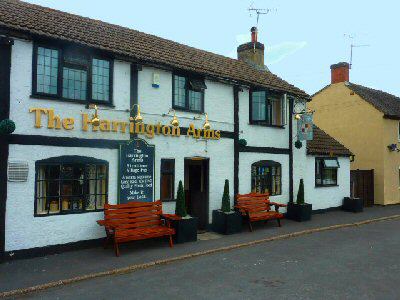
5. The Harrington Arms at Thulston was originally the Bricklayers Arms, and the public house in Ambaston was named the Harrington Arms. Unfortunately, the latter had such a bad reputation for drunken and bawdy behaviour that the Earl closed it and transferred the name to Thulston.
6. Ambaston is one of the oldest villages in Derbyshire and pre-dates the Roman era.
7. During World War II, Elvaston Castle operated as a teacher training college following the evacuation of the College in Derby, until it closed in 1947.
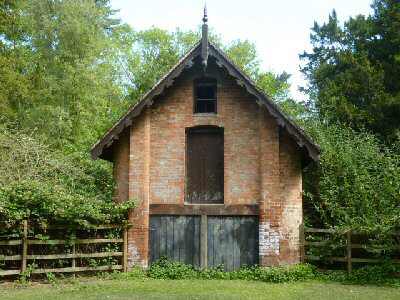
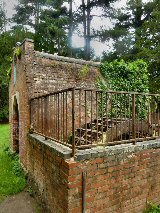
8. The Moorish-shaped pump house delivered water from the lake to a water tower in the courtyard and from there to the fountains in the garden.
9. Elvaston Nature Reserve is connected to the more formal gardens and estate by waterways that feed Elvaston’s Lake and gardens.
10. Borrowash Weir, on the northern side of Elvaston Park, some seventy miles inland, was in the news in November 2010, when a salmon was pictured on camera trying to leap the weir. A few years later, a fish pass was installed there, which at the time was the largest in the Midlands.
ELVASTON CASTLE WALK