INTRODUCTION
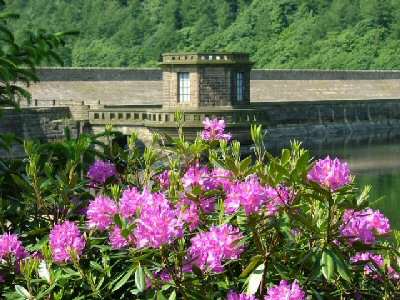
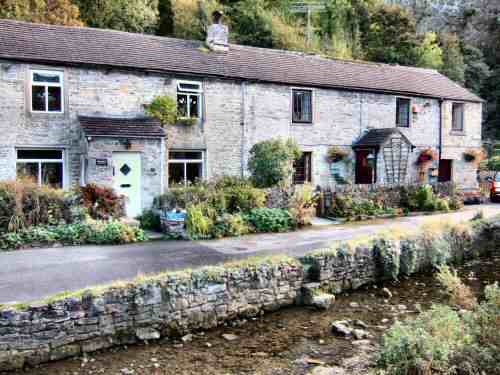
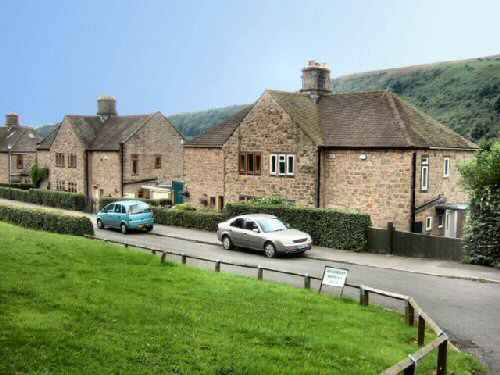
The tiny hamlet of Yorkshire Bridge, in the Upper Derwent Valley, lies in the shadow of the dam wall of the Ladybower Reservoir. Rows of houses built to re-house the inhabitants of the former villages of Ashopton and Derwent occupy a gently sloping site. Both villages and the surrounding land were submerged when the reservoir was completed and filled with water.
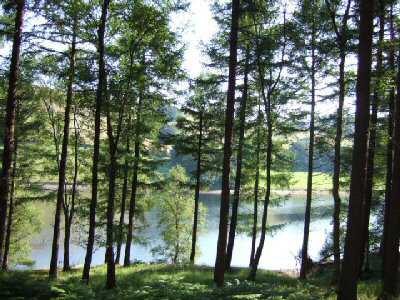
Often referred to as the ‘Lake District of the Peak’. The Upper Derwent Valley is surrounded by magnificent countryside where water and woodland, topped by high moors, predominate. In recent years, forestry has become an important factor, and the sides of the valley have been clothed in conifers. Not surprisingly, the area has become so popular that over two million people visit each year.
YORKSHIRE BRIDGE
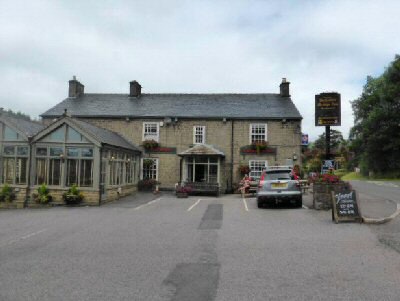
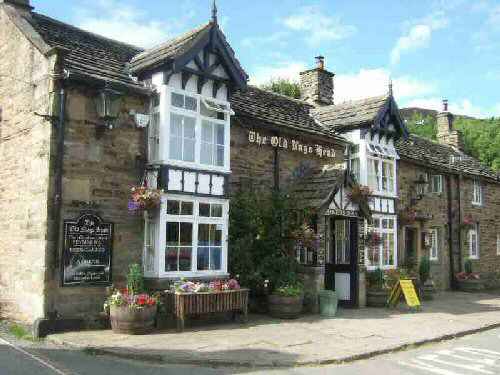
Yorkshire Bridge has its own pub of the same name, and the bridge spanning the River Derwent also bears the same name. The Yorkshire Bridge Inn dates to at least 1826, and takes its name from an old packhorse bridge which was the last crossing point on the River Derwent before the Yorkshire border. Today, Yorkshire Bridge is a tiny hamlet within the parish of Bamford, consisting of three rows of attractive gritstone cottages built on the sloping east bank of the Derwent.
Despite all the references to Yorkshire, you are still in Derbyshire; the boundary between the two counties is more than two miles away to the north east. The visitor centre at Fairholmes, situated further north below the wall of the Derwent Dam, tells the story of the drowned villages and the birth of the hamlet of Yorkshire Bridge.
RESERVOIR CONSTRUCTION
There were already two reservoirs in existence before the construction of Ladybower; the Howden and Derwent were both completed by 1916. The 1.25 million tonnes of stone used in construction were transported to the site by rail on a specially constructed narrow-gauge line from Bamford. In the 1930s, when the construction of Ladybower started, it reopened. In 1944, the Peak District National Park Authority purchased the line. It is now a bridleway and footpath.
The Upper Derwent Valley was a desirable location for the storage of water, with its long, deep valley and narrow points for dam building. This, combined with a high average rainfall, low population level, and heavy demand for water from the industrial towns that surrounded the Peak District, made the case for reservoir construction. The Derwent Valley Water Board was set up in 1899 to supply water to Derby, Nottingham, Sheffield and Leicester and the Howden and Derwent Reservoirs were constructed.
LADYBOWER RESERVOIR
At that time, the water demand was satisfied, and although plans existed for further reservoirs, no action was taken. But demand grew, and the decision to build one very large reservoir to be called Ladybower was taken. It entailed the flooding of the villages of Ashopton and Derwent and caused considerable unrest. However, the project went ahead, and the villagers moved to new houses at Yorkshire Bridge.
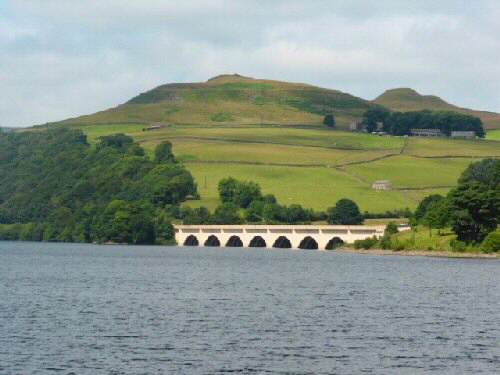
Ashopton Viaduct was built to carry the Snake Road to Glossop, and the Ladybower Viaduct to carry the road from Yorkshire Bridge to the A57. The ancient Derwent packhorse bridge, which had a preservation order on it, was painstakingly moved stone by stone and rebuilt at Slippery Stones at the head of the Howden Reservoir. The graves in the churchyard were excavated, and the bodies reburied in an extension to Bamford churchyard.
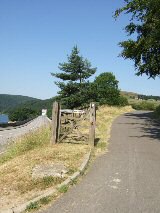
A few properties built on slightly higher land, including the Shooting Lodge and the former Roman Catholic School, survived. Although the majority were demolished and flooded, the church spire was left eerily poking out above the water, but this too was blown up in 1947. The reservoir’s opening ceremony was carried out on Tuesday, 25 September 1945, by King George VI. In order to mark the occasion, a commemorative monument stands close to the dam wall.
A SHEEPDOG NAMED TIP
Perhaps the best-known inhabitant to have lived at Yorkshire Bridge was a sheepdog named Tip. Her master, Tagg, was a prominent local sheep farmer who helped found Hope Valley Sheepdog Trials, and during his later years lived at Yorkshire Bridge. He won a succession of prizes throughout the country with his sheepdogs. He even sold one to an American for one thousand pounds, a lot of money in those days.
On 12 December 1953, Tagg, aged 85, went out for the last time with his faithful border collie, Tip, and vanished completely. Despite an exhaustive search, neither he nor his dog could be found. It was not until 15 weeks later that Tagg’s remains were discovered by chance, with the faithful Tip now completely exhausted, lying about five yards away. Somehow, Tip had managed to survive heavy snow, biting winds and freezing temperatures on one of the most hostile stretches of moorland in the country.
Tip was carried back to the rescuer’s lorry and later transferred to a caring home, where she gradually recovered from her ordeal. Once the story became known, Tip became famous not only in this country but abroad as well. A year later, in May 1955, she died. However, the hearts of those who had heard the story were so greatly touched that a memorial was erected at the western end of Derwent Dam, in her memory.
TEN FASCINATING FACTS ABOUT YORKSHIRE BRIDGE AND LADYBOWER
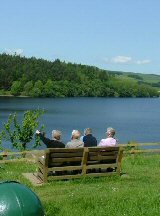
1. The area around Ladybower offers some of the most delightful walking country in the whole of the Peak District, with the craggy escarpments of Derwent Edge and Bamford Edge rising spectacularly to the north and Win Hill to the south.
2. The River Derwent is Derbyshire’s and the Peak District’s principal river. It flows first through Howden, Derwent, and Ladybower Reservoirs before continuing south. Between them, the reservoirs provide most of Derbyshire’s water and a significant portion of South Yorkshire’s water.
3. Yorkshire Bridge is named after the packhorse bridge, which crosses the River Derwent to the south of the dam wall to Ladybower Reservoir.
4. At the western end of the dam wall is a small sculpture that forms part of the Bamford Touchstones Sculpture Trail, established by the residents of Bamford to mark the millennium. The Touchstones illustrate air, water, earth, and fire, and they are on a five-mile walk around the edges of the village.
5. The Yorkshire Bridge Inn, at the hamlet of the same name, was built at the same time as the dam to house its workers. Today, it is an award-winning four-star country house hotel, very popular with walkers and other visitors.
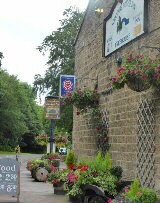
6. The Ladybower Inn, located on the A57 next to Ladybower Reservoir, dates to the 18th century when it opened as a packhorse inn. The inn was re-sited more than 100 years ago from a site further up Ladybower Brook.
7. Ladybower Wood is a Derbyshire Wildlife Trust Nature Reserve noted for its ancient woodland. On leaving the woods, the wide-ranging views over the reservoir and the surrounding countryside are superb.
8. The Derwent Valley Reservoirs were used to train the Dambuster bomber crews during World War II, as the towers and dams bore an uncanny resemblance to their intended targets, the Ruhr Valley Dams in Germany.
9. The method used to breach the dams in the Ruhr Valley involved what was known as the ‘bouncing bombs’ technique, which involved the bombs skimming along the water before reaching their targets. A plaque and memorial museum in the west tower of Derwent Dam retells the story of the Dambusters, which many will have seen on film.
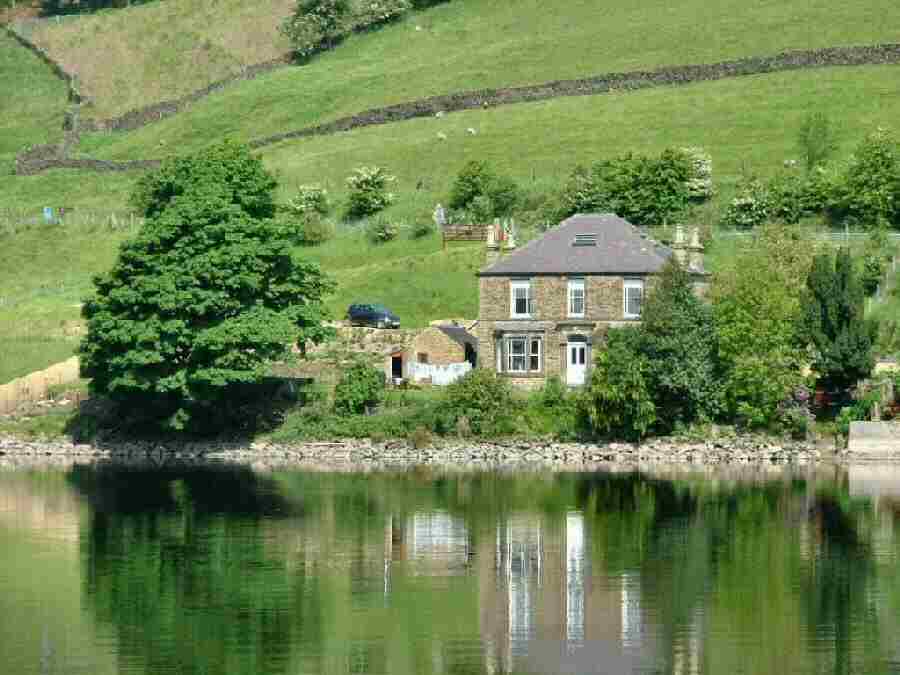
10. One person refused to move home when the valley flooded, Miss A Cotterill of Ginnett House. She remained there until she died in 1990, at the age of 99, the waters of the reservoir lapping at the front garden steps.
YORKSHIRE BRIDGE AND LADYBOWER WALK