INTRODUCTION
Swarkestone is a small, quiet South Derbyshire village with a population of less than 200, set on the banks of the River Trent. Where nearly 275 years ago it was the scene of one of the most momentous incidents in English history, often referred to as the ’45’.
From the time when James II, the last Stuart King of England, went into exile in France in 1688, the Jacobites had attempted several times to regain the throne. All had failed, and in 1745, it was the turn of Prince Charles Edward Stuart, frequently known as Bonnie Prince Charlie, to try to overthrow the English Monarch. Support for the cause was half-hearted, but enough clansmen joined for the march south. The English were unprepared for an invasion; most of the troops were abroad, and King George, fearing the worst, was preparing to return to Germany.
On 4 December 1745, Charles Edward Stuart and his army reached Derby. They planned for the capture of the strategically important Swarkestone Bridge. It was the only bridge on the River Trent between Burton and Nottingham.
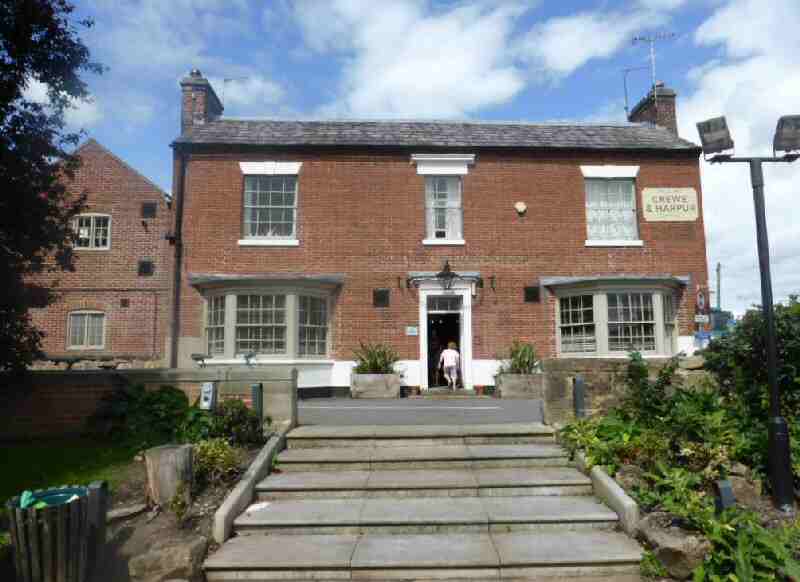
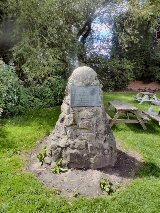
Charles and his supporters were unaware of the panic the uprising was causing in London, and there were no signs of help coming from France or a revolt in support of Charles. A meeting was held at Exeter House in Derby, when the Jacobite generals decided to retreat, despite the protestations of their leader. If the march had continued, it would probably have been successful, and the whole course of British history would have changed. In memory of this important event, a cairn has been erected at Swarkestone Bridge, in the gardens of the Crewe and Harpur Arms, to mark the southernmost point reached by an advanced party of Bonnie Prince Charlie’s army.
SWARKESTONE BRIDGE AND CAUSEWAY
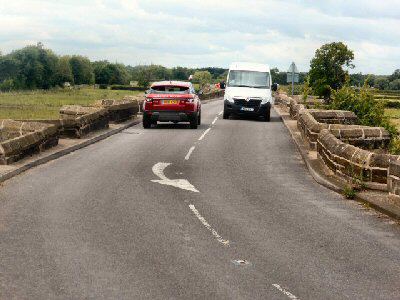
Swarkestone Bridge and Causeway, at a length of three-quarters of a mile, is the longest stone bridge in England and holds Grade I listed building status. There has been a bridge here for 800 years, and at one time, a bridge chapel and toll house stood partway across the bridge. It is still today an important crossing place and has become increasingly busy with traffic in recent years. The narrowness of the bridge has led to frequent accidents, often requiring repairs to the bridge wall.
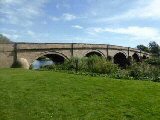
According to local legend, the building of the Swarkestone Bridge in the 13th century is attributable to two sisters who saw their lovers drowned trying to cross the River Trent on horseback. They crossed the flooded meadows safely, but then either missed the ford altogether or were swept off by the strong current. The horrified sisters saw all this happen through a hall window and vowed to ensure no one else met the same fate. They spent the rest of their lives building the bridge and died penniless as a result.
RIVER TRENT
The River Trent was a busy waterway before the Trent and Mersey Canal opened to its full length. Boats traded between Burton and Nottingham, reaching as far afield as Gainsborough. But the completion of the canal in 1777 slowly killed off the riverboat trade.
A few years after the Jacobites retreated, the Crewe and Harpur Arms were built next to the River Trent. It is a fine old coaching inn, and at one time, a stable block completely encircled its present-day car park. It not only stabled carriage horses but racing horses as well. Derby then had a Racecourse based near Lowes Farm, on the northern side of the village.
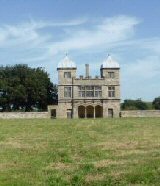
SUMMER HOUSE
The most unusual building in the village is the Summer House, sometimes called ‘The Grandstand’. It has a grass-covered rectangular enclosure in front. No one is quite sure what its use was; bull-baiting and jousting are suggestions. More likely, the much gentler pursuit of bowling took place there. It is now in the hands of Landmark Trust and is let for holiday accommodation. Little remains of the hall, which stood just south of here, but the Old Hall Farm, built out of part of its remains, still exists.
CHURCH OF ST JAMES
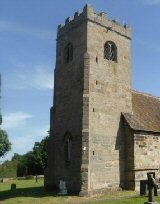
The tiny Church of St James contains some superb carvings. Sir Richard Harpur, who was one of Queen Elizabeth’s judges, lies in his judge’s gown, on a fine alabaster tomb, with his wife Jane. They both lived at Swarkestone Hall.
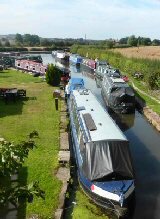
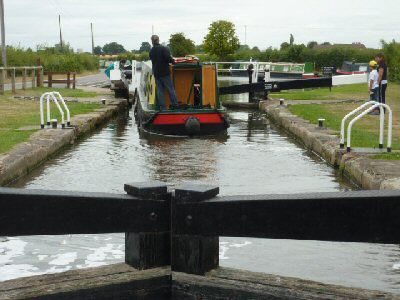
TRENT AND MERSEY CANAL
James Brindley from Derbyshire, who could not read or write correctly, but had a brilliant brain, astounded other engineers. Initially, they laughed at his ultimately successful proposal to find an economical way of transporting coal from the Duke of Bridgewater’s estate at Worsley to Manchester.
He did this by building an aqueduct over the River Irwell. It stood on three grand stone arches, 17 feet up, with a towpath alongside the canal for the horses to pull the boats the 900 yards to the other side of the river. Brindley’s inventions continued, and his most celebrated enterprise was the Trent and Mersey Canal, known as the Grand Trunk. It connected canal systems throughout the country.
Brindley died before he could complete the final piece in his canal network that revolutionised trade in the country. Hugh Henshall, his brother-in-law, completed the work on the concluding section of the Trent and Mersey Canal. A milestone marks every mile along the route to Preston Brook. At Swarkestone Junction, the former lock house is now a private residence, and the old toll bar cottage is the home of Swarkestone Boat Club.
TEN FASCINATING FACTS ABOUT SWARKESTONE
1. Swarkestone Bridge carries vehicles over the River Trent onto a stone causeway over the flood plain, and once formed an ancient highway between Derby and Coventry and was one of the key routes in England.
2. Until the 17th century, Swarkestone Bridge was the only bridge to cross the River Trent between Burton-on-Trent and Nottingham, and for about 300 years, it was the main crossing of the Trent in the Midlands. It is a testament to its construction that it is still in use in the 21st century.
3. During the Second World War, the bridge had gun emplacements and tank traps installed in preparation for a possible German invasion.
4. In the 1620s, Swarkestone Hall, a fine country house, comprised a gatehouse, 45 rooms, a wine cellar and a dovecote. Damaged during the Civil War, and although repaired, it seems to have been little used from around 1715 and demolished soon afterwards. An impressive pair of stone gate piers survives by the A5132.
5. The Rolling Stones posed in front of the Summer House, more formally known as Bowl Alley House, for a record sleeve. In the early 1980s, Landmark Trust tastefully restored it for holiday accommodation.
6. It was at the Lowes, situated on a ridge overlooking the village, where archaeological excavations in 1955 and 1956 made some remarkable discoveries. The first was of a Bronze Age burial; a year later, archaeologists found even more striking evidence of structures by the Beaker People of about 2000 BC, along with a small amount of Neolithic pottery.
7. Lowes Farm, originally built as racing stables by Sir Harry Harpur in 1777, with an exercise yard laid nearby, when races took place on Sinfin Moor. Soon after his death, a conversion of the stables into a home occurred, and latterly into apartments.
8. Market gardeners Samuel Jackson and Co., with their vast complex of greenhouses, provide some local employment. The Garden Restaurant and Coffee Shop at Swarkestone Nurseries won the Derby Telegraph Café of the Year award in 2012.
9. To the south of the river, the Swarkestone Sailing Club headquarters are near the Sand and Gravel Works.
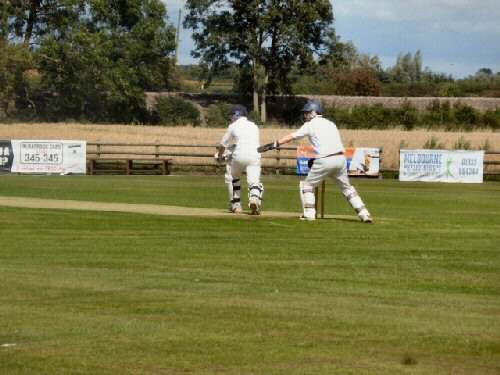
10. The village has a thriving cricket club, which won the Derbyshire Premier League Championship in 2013, 2016, 2022 and 2023.
SWARKESTONE TRENT AND MERSEY WALK