INTRODUCTION
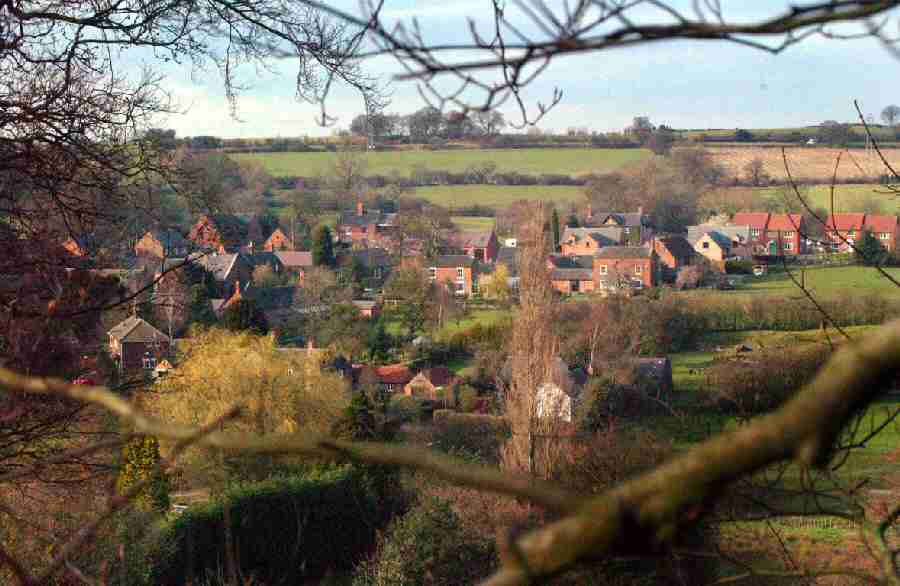
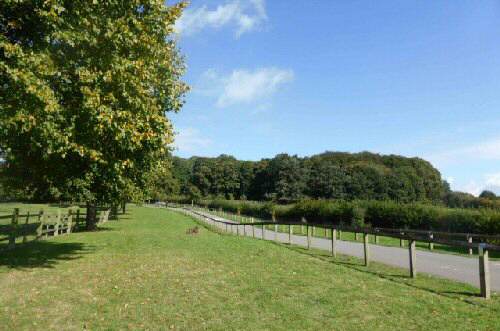
A more peaceful and pleasant spot than Dale Abbey is hard to find in the whole of Derbyshire. Yet it is less than three miles from the suburbs of Derby to the west, and even closer to a vast area of housing and industrialisation on the eastern side.
DALE ABBEY STORY
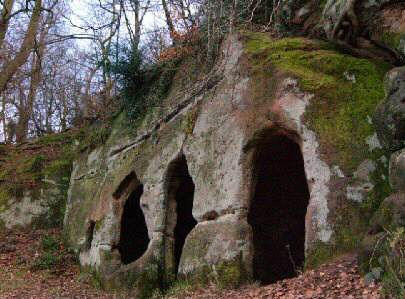
The story of Dale Abbey, or Depedale as it was initially known, begins when a Derby baker, Cornelius, had a dream — the Virgin Mary appeared and told him to go to Depedale, to live a life of solitude and prayer. At that time, it was a wild and marshy place and the hermit carved out a home and chapel in a sandstone cliff.
Here, he continued to worship in solitude until one day the smoke from his fire alerted Knight, Ralph Fitz Geremund, the owner of the land. Intending to drive the intruder away, he rode over. But on hearing the hermit’s story, he was filled with compassion, allowing him to remain and bestowing on him the tithe money from Borrowash Mill. It enabled the hermit to build a small chapel and home on the site of the present church.
After the hermit’s death, word spread of the religious significance of the place and following several attempts, Dale Abbey was founded in about 1200 by an order known as the White Canons because of the colour of their habits. The Abbey remained until 1538, when the greater part was demolished by the command of Henry VIII, at the time of the Dissolution of Monasteries Act.
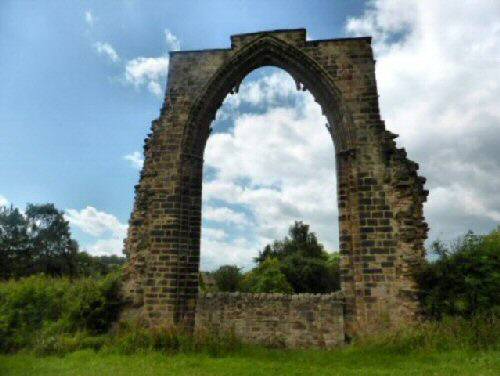
Local builders eagerly seized upon the stone from the Abbey. Little but the great 13th-century east window remains, which probably has much to do with the ancient belief that if the arch fell, the villagers would have to pay tithes. Now, the Abbey ruins are designated as an ancient monument.
ALL SAINTS’ CHURCH
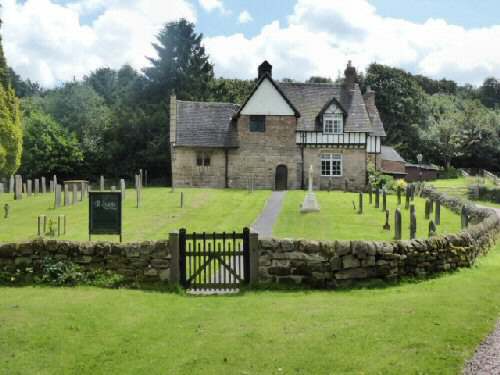
Parts of All Saints Church date back to 1150, when the hermit started to build his chapel and house on the site, which is the reason why the church is the only one in England to share its roof with a farm. At one time, it shared it with the abbey infirmary and later with the Bluebell Inn, when the connecting door from the church was said to lead from ‘salvation to damnation.’
The church is very unusual, and nothing seems quite to fit, which is part of its charm. Despite its diminutive size, it has reputedly the largest chalice in England, and a Jacobean cupboard used as a communion table, which is in front of the reading desk instead of behind it. The pulpit leans at a sharp angle, and it is possible to sit in one of the box pews with your back to the minister! Services are held regularly on Sunday afternoons to which visitors are welcome.
GATEWAY CHRISTIAN CENTRE
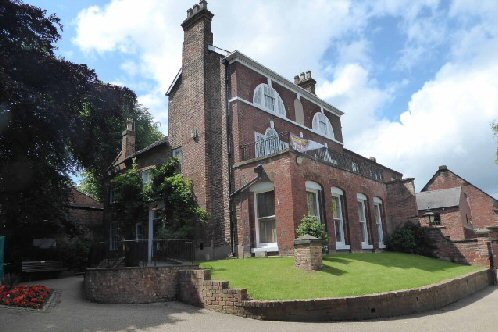
The Gateway Christian Centre, situated in the main street called ‘The Village,’ was originally the Methodist Chapel before becoming redundant and was purchased by the Parochial Church Council. It is now used to continue the Abbey’s tradition of hospitality and is open to visitors for refreshments every Sunday afternoon, as well as acting as a community centre. At the rear, the path passes the remains of the Abbey Gatehouse, at one time used to house prisoners moving between Nottingham and Derby.
HERMIT’S CAVE
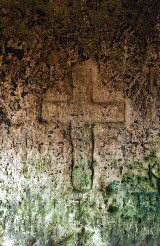
Hermit’s Wood is an ancient woodland and lies to the south of the picturesque village of Dale Abbey. It probably formed part of the original forest that once covered the whole area. Here are to be found many fine beech and oak trees, as well as abundant wildlife and over 60 species of flowering plants have been recorded. The Hermit’s Cave is now designated as a Scheduled Ancient Monument. It is worth taking a good look at the view from near this point. On the hill to the north can be seen the Cat and Fiddle Windmill, the only one of its kind left in Derbyshire.
THE VILLAGE
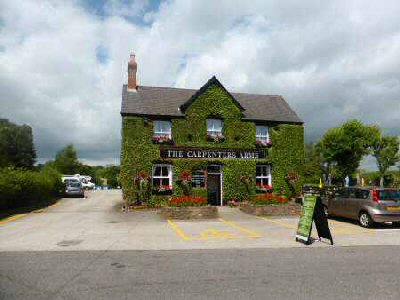
The Carpenters Arms on Moor Lane opposite Village Street dates back in part to the late 1600s. Poplar Farm, on the main street, goes back even further to the 1500s. It is a lovely old half-timbered building with a brick extension, with the outbuildings converted to living quarters.
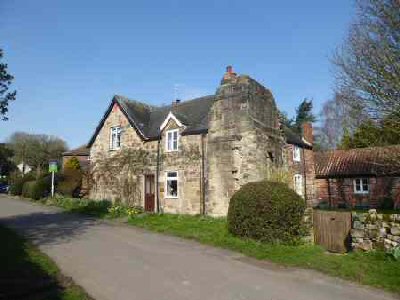
Tattle Hill is said to have got its name from neighbourly ‘tittle-tattle’ amongst the householders. By the side of the road is a thatched barn, once the up-market residence of four cows. Abbey House contains some of the remains of the Abbey’s refectory and fireplace with foundations at the rear. Across the road from the church are the remains of a monastic pond.
TEN FASCINATING FACTS ABOUT DALE ABBEY
1. Cornelius, a Derby baker, was told in a dream by the Virgin Mary to go to Depedale, to live a life of solitude and prayer. He did not know the way, but overheard a mother at the village of Stanley tell her daughter to take their cattle to Depedale. Whereupon he asked for directions and was told to follow the girl to what became his home.
2. Following the Act of Dissolution in 1539, Sir Francis Pole of Radbourne took possession of the contents and sold them mainly to churches.
3. Morley Church took possession of some of the stained and painted glass, floor tiles and an entire porchway. Items from the old Abbey also moved to Radbourne and Chaddesden Churches.
4. The slabs walked on by the canons for hundreds of years can be found in the grounds of the church at the Moravian Settlement at Ockbrook.
5. Many of the stones from the Abbey have been incorporated into other buildings and sites in the village.
6. It is claimed that the tenor bell of Derby Cathedral originally belonged to Dale Abbey and was sold at the Dissolution of the Monasteries.
7. The demolition of the Abbey brought an end to almost four centuries of monastic life in the village.
8. The north-west corner of the village is separately named as Dale, while the north-east corner is named Dale Moor.
9. Dale Abbey is recorded as the site of the “Wedding of Allan-A-Dale”, in the stories of Robin Hood.
10. All Saints’ Church shared its building with a public house. As the church was so small, “The clergyman used to dress in the bar of the Blue Bell inn and enter the church through a now-blocked door.”
OCKBROOK AND HERMIT’S CAVE WALK