INTRODUCTION
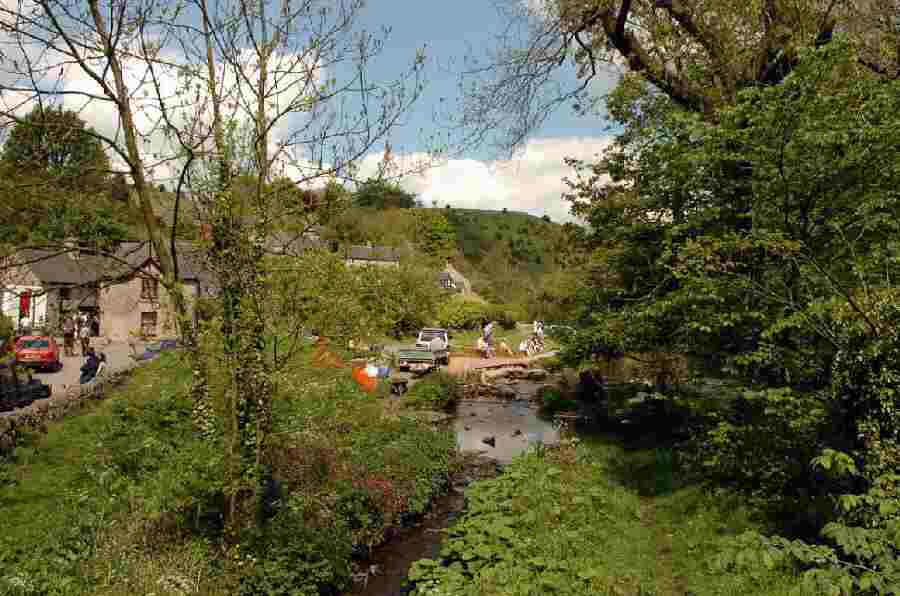
Milldale is a delightfully positioned hamlet at the northern end of Dovedale. It attracts walkers like few other places of its size in Britain. Most come to explore the beautiful Dove Valley, with its famous Stepping Stones and strange rock formations. But, there are many other excellent walks in the area that either start or pass through Milldale.
There was a mill in Alstonefield Manor in the 13th Century. Presumably situated in the hamlet of Milldale, where records show that there was a mill to the north of Viator’s Bridge by 1775. The mill ceased to operate in the late 1870s, but 50 years later, it was still standing, although derelict by that time.
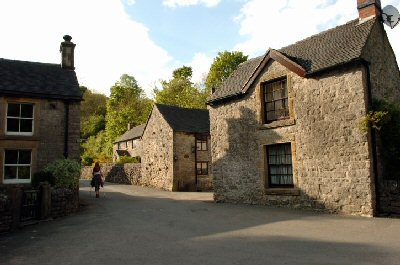
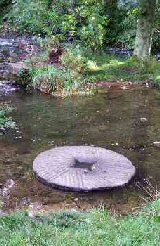
The mill processed and crushed calamine, mined at Chrome Hill and Parkhouse Hill, near Glutton, south of Buxton. Drug firms used the higher quality calamine and lower grades for brass making. In the 19th Century, it was utilised to grind colours for paints. The remaining millstone wheel is still in view, lying by the riverbank. The buildings to the left of what used to be the mill stables are now a National Trust Information Centre.
VIATOR’S BRIDGE
The ancient packhorse bridge, over the River Dove, crossed by hundreds of walkers on a fine day at the weekend, at any time of the year, is the most famous of all in the Peak District. It is known as the Viator’s Bridge, and was made famous in the English classic The Compleat Angler by Izaak Walton. In the fifth edition, published in 1676, Charles Cotton of nearby Beresford Hall wrote an addendum about fishing, introducing the reader to two travellers – Charles Cotton (Piscator) and Izaak Walton (Viator).
In the days when the two travellers would have approached the narrow bridge at Milldale, it would not have had any walls and must have looked quite frightening to cross. Bridges then were designed with low parapets to allow horses carrying panniers to cross without obstruction. Viator commented on seeing the bridge: ‘Why! A mouse can hardly go over it: ’tis not twelve fingers broad.’ Milldale Bridge is now known as Viator’s Bridge, and its name is clearly in view to all who cross.
NANCY BENNINGTON
A familiar figure by the bridge used to be Nancy Bennington, who set up a stall selling mineral waters, sweets, and postcards. When she saw walkers approaching the bridge, she would hurry across to open the gate and hold out her hand for a tip. In her younger days, she had operated her business from Reynard’s Cave, a three-mile round trip and a steep climb away. Nancy was a great character, known by the rich and famous who had visited the valley. In 1937, the Manchester Evening News described her as ‘The grand old woman of Dovedale.’
THE VILLAGE
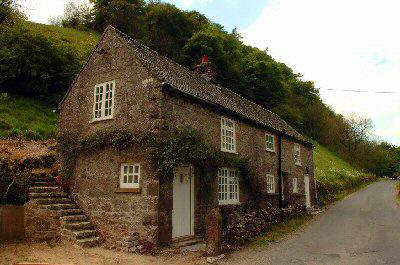
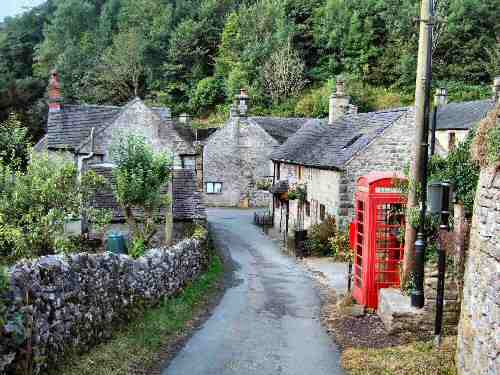
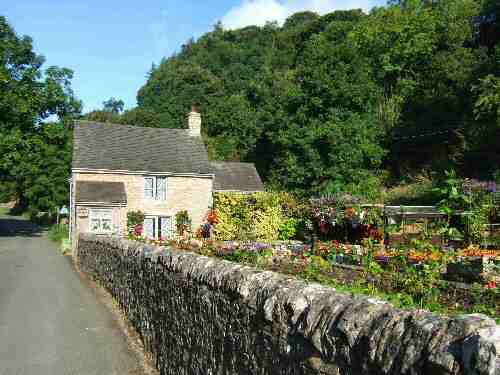
Milldale consists of only a dozen or so cottages, the oldest of which dates back to the 17th Century, and the others probably the 18th Century. There is no public house in the village, but only a short distance away at Hopedale is the Watts Russell Inn. The other alternative for Milldale residents, in pre-car days, would be to go up Millway Lane, the old road to Alstonefield, for liquid refreshment. Things could have been different. In 1898, William Hambleton applied unsuccessfully for a drinks licence. However, all was not lost, and Milldale did have its hotel, but of the temperance variety!
REFRESHMENTS
Mr and Mrs Bailey, who lived at Dove Mount, served refreshments to ramblers for 48 years. In 1966, about 150 members of the Manchester Ramblers Association held a special ceremony to thank them for their services. Nowadays, refreshments are available (see Facebook page) from a small shop window at Polly’s Cottage, named after a former occupant.
PRIMITIVE METHODIST CHAPEL
The Primitive Methodist Chapel, built in 1835, holds occasional services. On Christmas Eve 1998, 62 people squeezed into the tiny chapel, but in the year 2000, numbers were even greater, and eighteen had to stand outside. The notice outside reads ‘Methodist Chapel – Look Around You – Come Inside – Give Thanks.’
LODE MILL
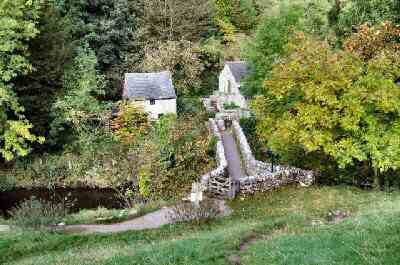
A short distance upstream at the entry to Wolfscote Dale is Lode Mill, where a one-arch stone bridge crosses the river. The bridge is of 19th-century construction. Previously, it was forded at this point; in 1658, a woman drowned there. The mill, built in 1814, continued in operation until 1929, grinding corn for local farmers. The miller’s son then transformed it into a joinery business. He converted the drive shaft from the mill to drive a circular saw using waterpower from the river. On the opposite side, looking down over the Wolfscote Dale path, is Dove Cottage.
TEN FASCINATING FACTS ABOUT MILLDALE
1. Milldale gets its name from the two mills that once operated in the area, which employed local people. Dale refers to its position in the valley.
2. Milldale is part of Alstonefield parish. Where just over 100 years ago, the Harpur-Crewe family from Calke Abbey owned most of the houses.
3. Just one property was owner-occupied – now known as Duck Cottage. An earlier 18th-century building passed down through the Hambleton family was rebuilt in 1890 by William Hambleton. He and his brothers failed to get an alcohol licence in 1898, so it opened as a temperance hotel, run by his wife, Mary.
4. William Hambleton’s grandson, Len Hambleton, opened a shop there in 1963, but it closed in 1990. Today, it is a holiday let.
5. Ochre Mill, located in the centre of Milldale, was a water-powered mill used for a variety of purposes during its existence and powered by water diverted from the River Dove.
6. Situated on a small island in the middle of the River Dove, the mill dates to the 17th Century. Demolished in the mid-19th Century, the original millstone is visible in the river, and on careful inspection, some of the foundations.
7. The mill produced powder for making red lead paint, which is probably where the name Ochre Mill derives from, as the pigments used to make the red paint came from grinding red ochre. It also processed and crushed calamine.
8. The stables for the former Ochre Mill now contain the National Trust Information Centre. They sit behind the remains of the old sheep wash last used in 1965.
9. Lode Mill, to the north of the village, was a multipurpose water-powered mill used for lead smelting. This process involved grinding and separating lead ore from limestone — the mill also ground corn for local farmers.
10. There is a Peak District National Park car park, a five-minute walk up the road from Milldale to Hopedale. Public toilets are available in Milldale by the National Trust Information Centre.
MILLDALE AND DOVEDALE WALK