INTRODUCTION
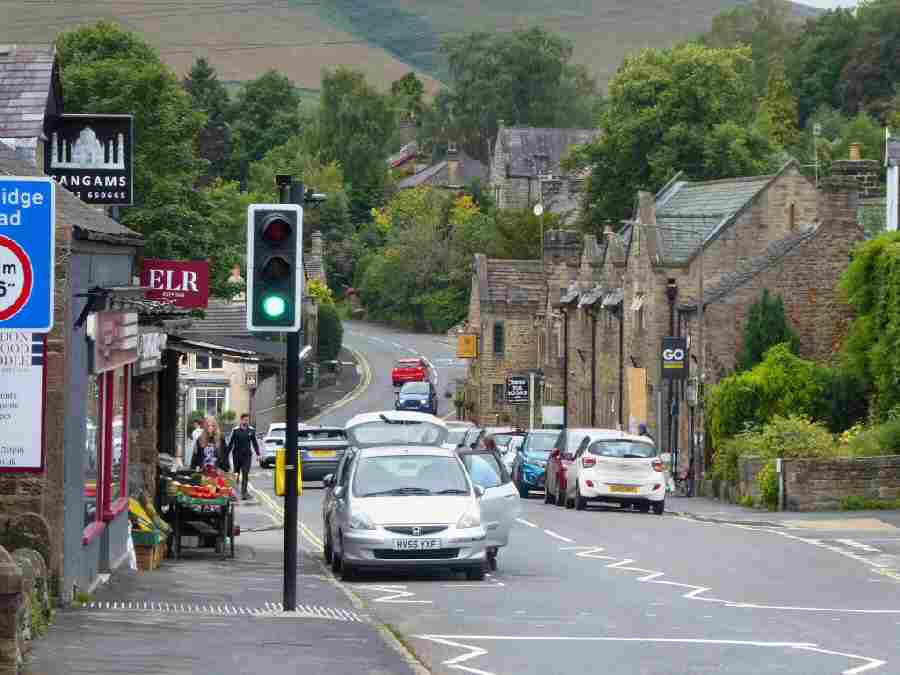
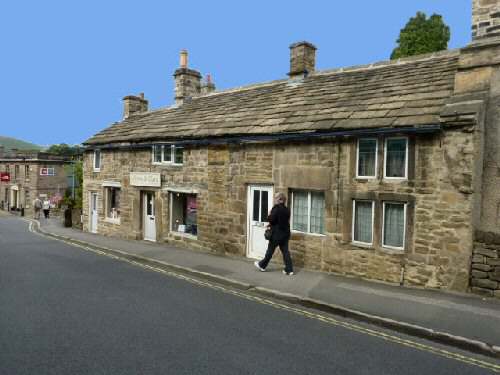
Hathersage today is a large, attractive village with hotels and shops lining the main street. To the north, Stanage Edge rises steeply and to the south flows the River Derwent. In the 19th century, the scene was very different. Five chimneys belched out black smoke, Hathersage being the centre of the needle, pin and wire drawing industry.
Brass button manufacture also took place. It started at Dale Mill in 1720; packhorses brought the metal from Sheffield before returning it in the form of brass buttons, which were much in demand. In 1847, Samuel Fox designed his Fox Frame lightweight umbrellas. Those industries, along with their smoke, vanished around 1900, although four mills remain, but now with different uses.
WIRE DRAWING
In the mid 1700s, the rural quiet gradually began to change with the arrival of the wire drawing industry. It was nearly 100 years before the industry really took off, following the Great Exhibition, when orders started to come in rapidly. A somewhat cynical observation was that a wire drawer was easy to identify because he had several missing fingers. Even more serious were the working conditions for ‘grinders’ who seldom lived much over 30 years of age. The dust from the rapidly revolving millstones over which they toiled got into their mouths and lungs until they contracted the dreaded ‘grinders’ disease’.
Conditions were gradually improved, particularly as a result of a Royal Commission investigating the working environment. The grinders, however, did not always take the precautions advised, as they claimed these slowed productivity. When the industry finally came to an end, Hathersage once again returned to its former peace and quiet.
CHARLOTTE BRONTË
Hathersage has strong literary connections. Charlotte Brontë’s best friend at school was Ellen Nussey, whose brother was the vicar of Hathersage. In 1845, Charlotte stayed at the vicarage with Ellen for about three weeks to prepare for the return of the vicar and his wife from their honeymoon.
During her stay, Charlotte took the opportunity to explore, walking on the moors and visiting many of the houses scattered around the area. Her famous novel ‘Jane Eyre’ was set in Hathersage. She used the name of the landlord of the George Inn, a Mr Morton, who greeted her when she first arrived, as the name for her fictitious village.
ROBIN HOOD
The famous outlaw Robin Hood is said to have been born at Loxley, only eight miles from Hathersage. His lieutenant, Little John, is reputedly buried in Hathersage churchyard, in a grave measuring 11 feet from headstone to footstone. The grave, opened in 1784, revealed a thigh bone 30 inches in length, which would make the occupant over seven feet tall. For many years, a great bow and arrow hung in the church.
On Stanage Edge is Robin Hood’s Cave, which he is supposed to have used as a hideaway and the Hood Brook flows through the village. Yet it is Nottinghamshire and not Derbyshire which has reaped the commercial benefits from this legendary figure.
ST MICHAEL AND ALL ANGELS’ CHURCH
Standing on the hillside above the village is St Michael and All Angels’ Church, which contains a fine collection of 15th-century brasses of the Eyre family. In the porch is a large 600-year-old stone said to have once marked Little John’s grave. The churchyard is well tended, and the Lychgate is particularly impressive.
CAMP GREEN
Close by the church is Camp Green, which dates to 850AD; the circular mound was a fortification built by the Danes. At the bottom of Church Bank is a well-preserved example of a Pinfold that provided a secure lockup for straying livestock. It was the Pinders’ responsibility to round up stray animals and not release them before the owner had paid a fine.
GOSPEL STONE
Set low in the wall, and difficult to see, about 50 yards above Dale Crescent is an inscribed Gospel Stone, where the priest stood at Rogationtide to bless the crops.
TEN FASCINATING FACTS ABOUT HATHERSAGE
1. Hathersage is a tourist destination overlooked by the ringed cliffs of Stanage and Millstone edges and the ancient Iron Age hill fort of Carl Wark. It provides superb walking and climbing opportunities, enhanced by good road and rail communications from Sheffield and Manchester.
2. The first indication of human habitation in the area exists just south of Stanage Edge. Here, there are the remains of Bronze Age circular stone-walled huts or ring-banks, cairns, and field systems, east of Dennis Knoll.
3. Only a short distance away is the hillfort known as Carl Wark, where there is a massive stone wall believed to date from the Iron Age.
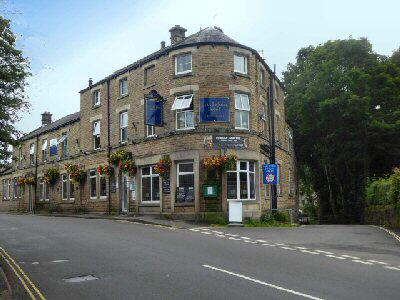
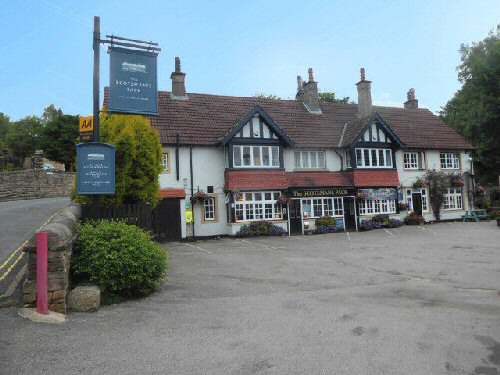
4. At the northern end of Hathersage is the present Scotsman’s Pack Inn, built in the early 1900s. But there has been an inn on the site since the 14th century, helping to serve the packhorse trade between Manchester and Sheffield.
5. A ‘Scotchman’ or ‘Scotsman’ is a name given to a pedlar, not necessarily from Scotland, which is how the inn derived its name.
6. The George Hotel is a former coaching inn, to the right of which, close by the footpath, is a 19th-century cheese press.
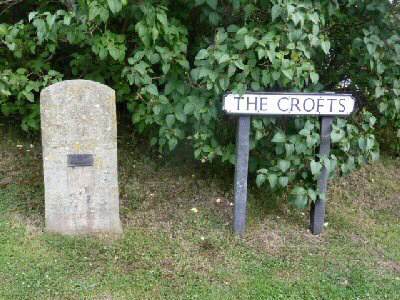
7. Just above at the entry to The Crofts, is an ancient milestone indicating ’10 miles to Sheffield’.
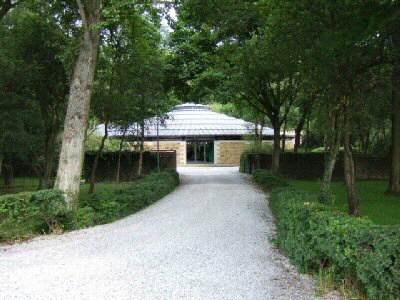
8. The David Mellor Cutlery Factory is in The Round Building off Grindleford Road, a purpose-built facility for cutlery production. It has been described by Sir Michael Hopkins, one of the leading figures in the introduction of high-tech architecture into Britain, as ‘a minor masterpiece of modern architecture.’ A country shop, museum and café are on site. David Mellor, though, is not just famous for cutlery. In 1966, he designed the national traffic light system, which is still in use to this day. He also created a square pillar box for the Post Office and other items of street furniture.
9. The open-air swimming pool at Hathersage measures 100 feet by 33 feet, with the water temperature maintained at 82°F (28°C). The poolside amenities include warm showers, lawns, and scenic views.
10. Stone quarried locally proved ideal for making millstones and grindstones. Close by Bolehill Quarry, to the east of Hathersage, are stacks of abandoned cylindrical millstones lying on the ground, left there because of faulty construction and the fall in demand. Nobody wanted to take them away due to their great weight. The three primary purposes that millstones served were for grinding grain into flour, grinding stones for the cutlery trade, and for pulping timber for paper production. Stones for pulping timber for the paper industry were exported all over the World between the 1890s and the 1950s, with a few still being exported as late as the 1970s.
HATHERSAGE AND NORTH LEES HALL WALK