INTRODUCTION
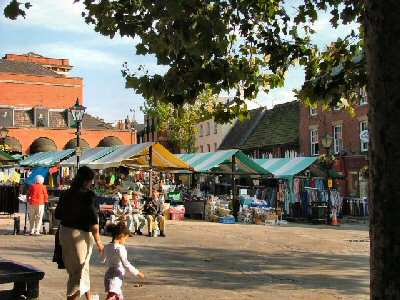
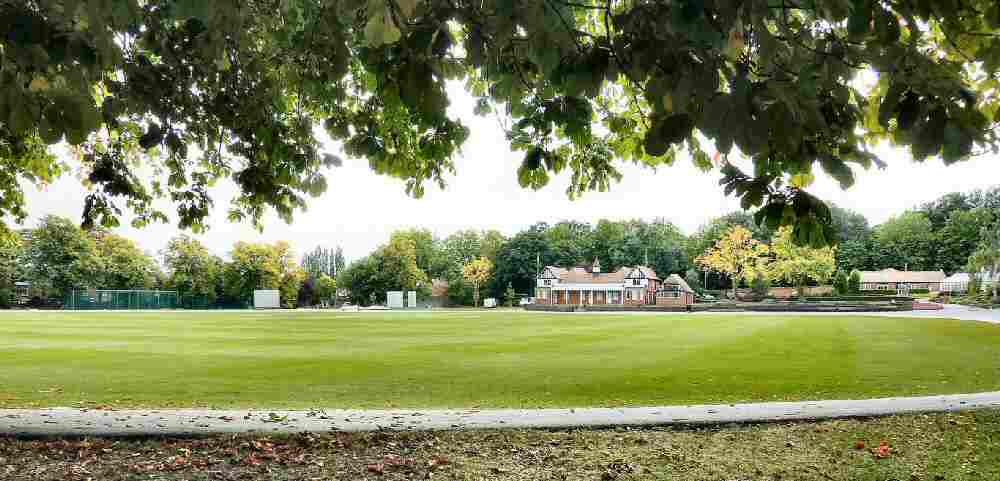
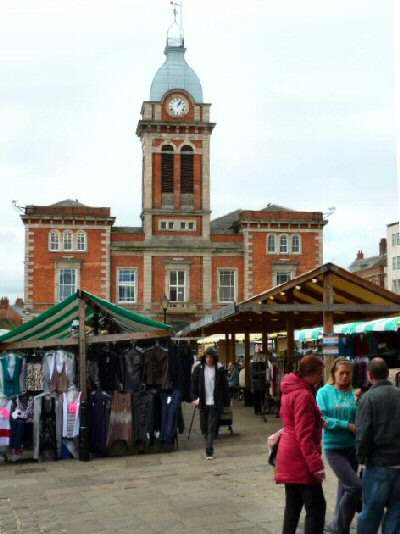
Chesterfield is a busy redbrick town, with stalls doing a lively trade on market days: a delightful Queen’s Park cricket ground, and an unusual church spire. Second only to Derby in population in the county, it is quite different in style and character to any of its neighbours in the Peak District National Park.
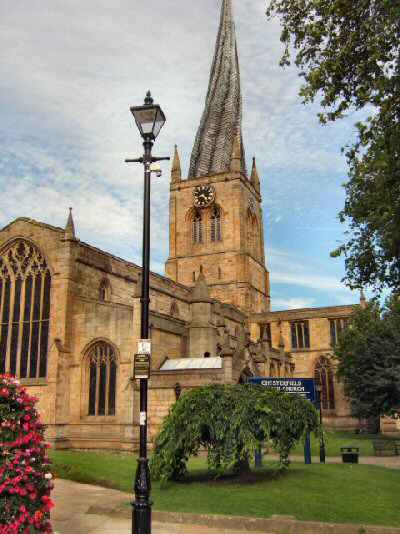
THE CROOKED SPIRE
The crooked spire does the most to make Chesterfield famous. It is the first thing newcomers usually look for upon arrival in the town. The spire to St Mary and All Saints Church started its life straight, but is now at least nine and a half feet out of line and leans a bit further every year. It gives the impression that it could fall in the next strong gale, but having stood for over 600 years, it has been relatively safe for a long time. A report from several years ago raised some safety concerns, but the spire was not the issue; the transept roofs were the problem.
Experts say the spire is crooked because the lead and timber are incompatible, which causes the wood to warp due to the sun’s heat on the lead casing. Built during the Black Death, it is thought that the original craftspeople may have died. As a result, less experienced men completed the job, and they made the mistake of using green wood. Whatever happened, it has proved to be a masterstroke in increasing Chesterfield’s name awareness and marketing potential for the tourism trade.
INDUSTRY
Chesterfield’s early prosperity stemmed from its role as a market town serving the entire North East Derbyshire region. The area around the town was rich in minerals, and the extraction of coal, ironstone, and lead increased the town’s importance as a regional centre.
The expansion of Chesterfield began with the Industrial Revolution. With its mineral resources, it was well-positioned to capitalise on the town’s geographical location, situated close to the country’s centre. The Chesterfield Canal and later the railway opened markets much further afield than North East Derbyshire.
THE MARKET PLACE
In 1901, due to much-needed boundary changes, Chesterfield was no longer restricted to a small central area, significantly limiting its growth. Houses had been crowded together in alleyways and yards, poorly constructed and lacking adequate sanitation. Lifting the restrictions allowed the town to expand and grow much more freely. In recent years, the marketplace and its environs have been awarded Conservation Area status.
Initially, the marketplace extended further to the east, where the Shambles is today. It was once called the ‘Flesh-Shambles’, where the butchers had their market. It is a fascinating area for exploring, with narrow medieval streets lined with shops and cafés. But everything would have been so much different had the Borough Council’s plans for redevelopment not met such stern local opposition, the Shambles would have disappeared.
QUEEN’S PARK CRICKET GROUND
Only a short walk from the town centre, beautiful Queen’s Park acts as a magnet to local people and visitors. The jewel in the crown is its widely acclaimed cricket ground. But, it appeared that after celebrating its centenary in 1998, the ground would be lost to First Class Cricket forever, because the facilities were regarded as inadequate. Fortunately, Derbyshire CCC returned in 2006, after the ground had undergone a £4.7m facelift. A First Class County Cricket festival is now held annually at the ground at the end of July/beginning of August. It is one of the highlights of the county cricket club’s year.
TEN FASCINATING FACTS ABOUT CHESTERFIELD
1. The story of Chesterfield dates back over 2,000 years to its days as a Roman fort close to the edge of the Roman Empire. In the Middle Ages, its excellent transport links helped it become a prosperous market town, serving north-eastern Derbyshire and beyond. The area’s natural resources encouraged the growth of important industries, particularly leather making and iron working.
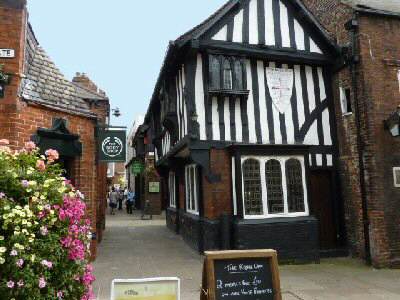
2. Along Irongate, a narrow lane in the Shambles, is the Royal Oak, one of the town’s oldest public houses. It is a 16th-century timber-framed building. The notice board outside claims that it was first mentioned as an inn in 1722, and before that was a rest house for the Knights Templar, a band of Crusaders. However, there is doubt as to the authenticity of this notice.
3. The Market Place Pump, erected in 1826, was a meeting point where, in the past, speeches took place, and even riots started.
4. The Market Hall, built in 1857, did not initially fare well and received considerable criticism. Over the years, views have changed, and it is now an essential part of the market scene.
5. Chesterfield Town Football Club typically competes in the lower divisions of the Football League. Everything was different in 1997, when they had their moment of glory, reaching the FA Cup semi-finals.
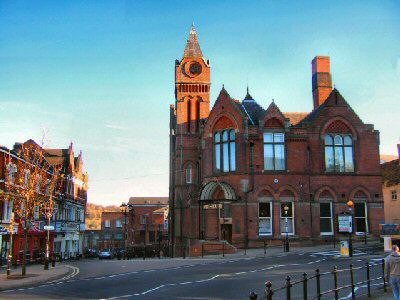
6. Chesterfield Museum and Art Gallery tells the fascinating ‘Story of Chesterfield.’ It is closed at the time of writing (February 2026) for an extensive programme of refurbishing and reimagining the Grade 2 listed Stephenson Memorial Hall, which is home to both the Museum and the Pomegranate Theatre.
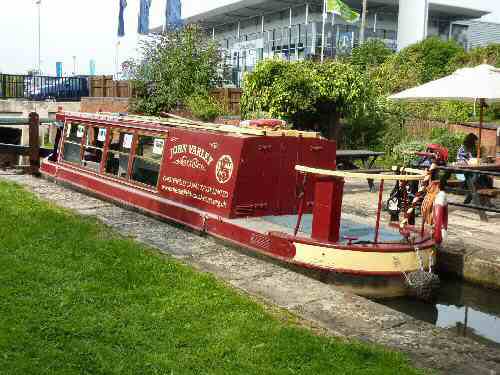
7. The Chesterfield Canal opened in 1777, providing the town with easier access to other parts of the country; however, the railway soon superseded it.
8. The canal is 46 miles long and stretches from Chesterfield to the River Trent. Although only part of the canal is navigable, the towpath, known as the Cuckoo Way, is available for walkers. The strange name appears to have derived from unique vessels which used the canal and were known as cuckoos.
9. In 1838, railway pioneer George Stephenson relocated to the outskirts of Chesterfield. He was involved in many successful engineering projects. An advocate of sound training, he was a strong supporter of providing good educational facilities in the town, and engineering became one of the leading industries in the area.
10. Chesterfield has one of the largest open-air markets in the country. It began with the granting of a Charter by King John in 1204. A special celebration took place in 2004 to celebrate its 800th anniversary. The ancient charter also granted the Lord of the Manor the right to hold Tuesday and Saturday markets, and an annual fair, which lasted for eight days each September, marking the town’s status as one of the major market towns of England.
WINGERWORTH GREAT STUBBING POND WALK