INTRODUCTION
According to legend, Alfreton takes its name from Alfred the Great, who drove the Danes from their settlements in this part of the country and repaired much of the damage done. The town’s name is Saxon in origin. It can be interpreted as “Alfred’s,” which has led to the connection with Alfred the Great, supported by evidence that a settlement existed here in Saxon times.
Initially, agriculture dominated the settlement, supplemented later by brown earthenware and stocking manufacturing as the main trades. But the real growth came with the discovery of coal, and mining commenced in earnest. Most working-age men were employed down the mines until the industry declined, and the last colliery in the area closed in March 1969.
The redundancy of 2,500 miners in the area was a devastating blow. But the situation became even worse with the closure of the British Steel Plant at nearby Riddings. Strenuous efforts to attract other industries to the area took place. With the help of a good transport network, the town is now thriving again.
THE TOWN
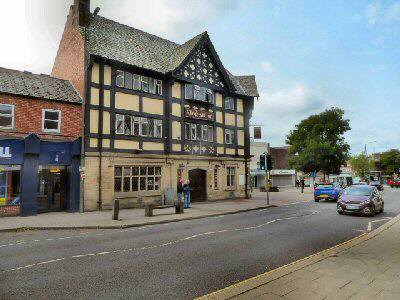
Alfreton has some attractive examples of 18th-century architecture, including the old George Hotel and Alfreton Hall, which add real character to a stroll along Church Street. Built circa 1724-25, Alfreton Hall was the home of George Morewood and the Palmer Morewood family, owners of many local coal mines. In 1963, the County Council acquired the estate, and it is now part of a splendid public park with swimming and sports facilities.
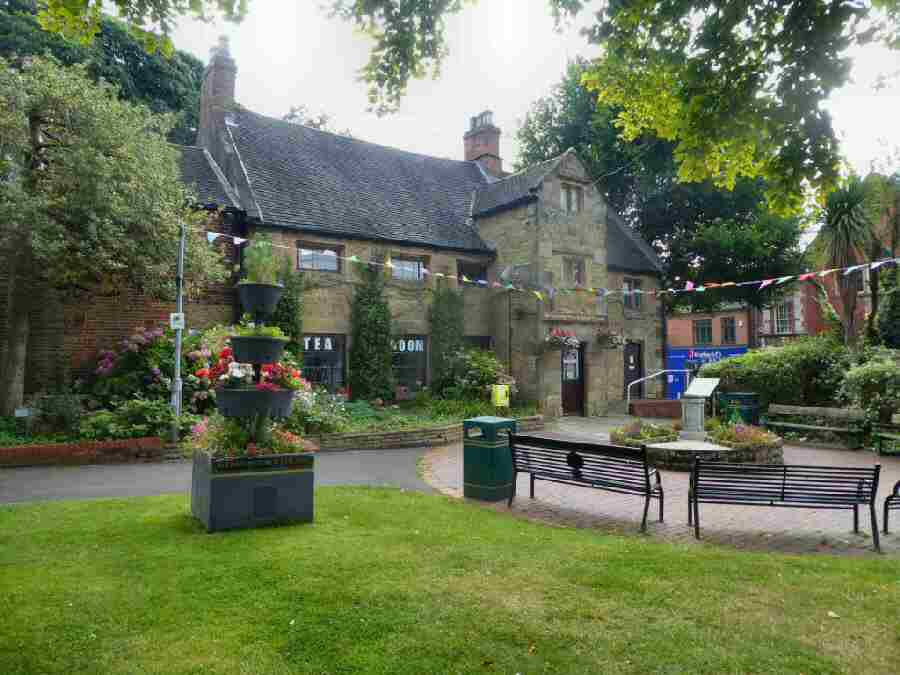
At the end of the main High Street shopping area, Alfreton House, built in the mid-1650s with its lawn and fine beech trees, attracts attention. Apart from housing various offices, it also hosts delightful tearooms. The former Town Hall and Post Office premises on the other side of the road are now occupied by shops.
ROBERT WATCHORN
One man who made a big difference to Alfreton in the first half of the 20th century was Robert Watchorn. He was born in a small cottage in the town on 5 April 1858, the second son of a family of nine. His parents were poor, and at 11, he went to work down the pit. Despite working long hours, he still managed to attend night school, and at the age of 22, he decided to emigrate.
On reaching America, he was so anxious to glimpse the Statue of Liberty that he missed breakfast. After landing, he went to a café on Ellis Island for a meal and was cheated out of his money by a waiter, who called him a liar. As a result, a fight broke out, causing a police officer to intervene. The policeman found the money that the waiter said he had never received in his possession, and an unpleasant experience was over, but not forgotten. When Robert Watchorn became Commissioner for Ellis Island, many years later, he again met the friendly policeman he had encountered on his arrival in the country and promoted him.
Watchorn rose through the ranks rapidly. When he retired in 1909, he was the Supervising Inspector General of Immigration to the United States. He was held in such high esteem that the King of Italy once sent for him to thank him for the kindness and understanding he had shown to Italian immigrants. The king told him: ‘Any man who has done what you have done for my people holds an honourable position far ahead of kings.’
In his retirement, he founded the Watchorn Oil and Gas Company of Oklahoma and became very wealthy. After losing his son in the First World War, he and his wife Alma gave most of their fortune away. But Alfreton remained deep in Watchorn’s affections, and it benefited by nearly £100,000, an enormous sum in those days. In 1927, the Watchorn Memorial Primitive Church, and later, a school, a manse, and cottages were built, all in memory of his mother. In remembrance of his son, a sports ground and pavilion. Watchorn also had the Lincoln Library built, now a Masonic Hall.
WAR MEMORIAL
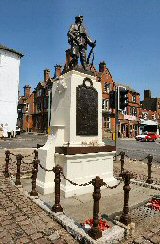
A prominent feature at the top of King Street is the War Memorial, erected and dedicated in 1926. The initial sum of money collected for the erection of the memorial during the hard times of the 1920s was modest. Hearing of the difficulties, Robert Watchorn helped fund the project.
HOUSE OF CONFINEMENT
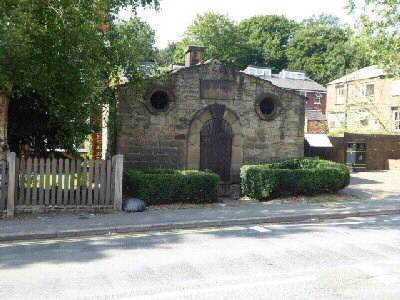
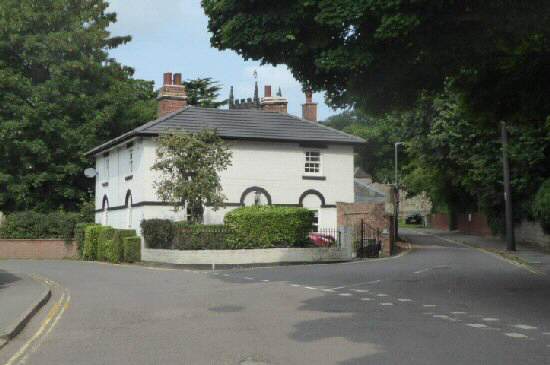
The House of Confinement stands by the roadside on King Street. It is an almost unique example of a parish lock-up. Built about 1820, it has a stout oak, iron-studded door, small circular windows and a stone slab roof. A passage leads to two cells, one for men and the other for women. After a short stay, serious offenders moved to the County Gaol in Derby.
TEN FASCINATING FACTS ABOUT ALFRETON
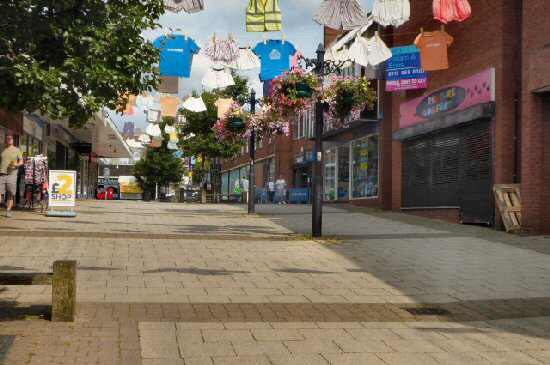
1. A market charter was granted to the town in 1252 to hold a weekly market; this is now indoors due to traffic congestion. Initially, Alfreton spread from the marketplace to the south down Town Street, now known as King Street, and to the west along Church Street. In recent years, the town centre has moved to the east, with the establishment of new shopping developments.
2. The town centre has been redeveloped and partly pedestrianised. A new leisure centre built in the 1970s ranked as one of the best in the Midlands.
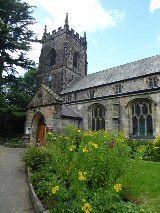
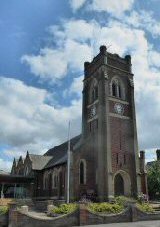
3. The parish church of St Martin contains monuments to the Morewood family and dates from the 13th century.
4. Before the coming of the railways, Alfreton was an important coaching centre. Initially, the route to the north went down Meadow Lane to Westhouses and Shirland. Until a new road was cut through the yard of the George Inn, leaving the hotel on one side of the road and its stables on the other.
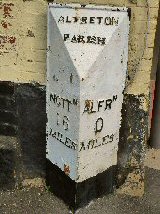
5. Turnpike companies were legally required to provide milestones, which resulted in a local curiosity in the form of a cast-iron marker on the town crossroads with the notation ‘Alfreton 0 Miles’.
6. In the 18th century, Alfreton was Derbyshire’s chief coal-mining centre and the county’s third-largest town. Ironworking was another important local industry.
7. According to Census figures, in 1801, the area’s population stood at 2,301 but had risen to 21,232 by 1931.
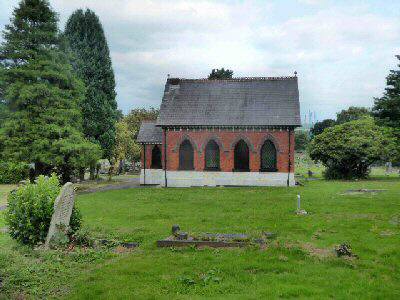
8. Alfreton Heritage Centre’s home is a cemetery chapel on Rodgers Lane. It holds an extensive collection of local artefacts, documents and photographs.
9. The re-emergence of railways as an essential form of public transport led to the re-opening of the Alfreton Parkway Station on the eastern side of the town, which provides a link to London St. Pancras.
10. Beyond the town but within the ancient Manor stands Carnfield Hall, a privately owned Grade II listed country house open for guided tours and events. Saved from demolition and restored following structural damage caused by coal mining. It was the subject of the Country House Rescue series on Channel 4 in 2010.
ALFRETON PARK WALK