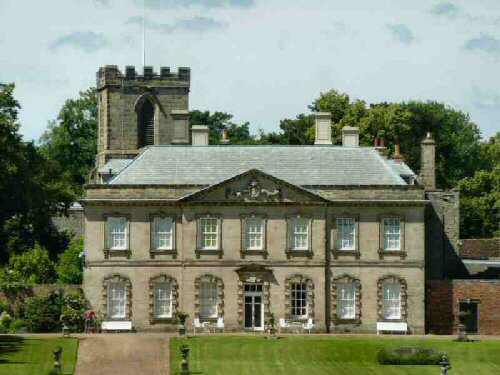
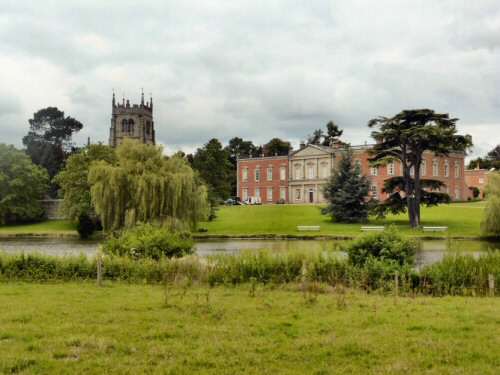
INTRODUCTION
Stanton-By-Bridge is a quiet, retiring little village, apart from on the eastern side, where the busy A514 disturbs the air of peace and tranquillity. The road is particularly busy at weekends when racing is taking place at nearby Castle Donington, and the roar of engines is heard throughout Stanton if the wind is blowing in that direction.
Stanton means ‘stony farm or estate’, and it is not surprising that there are several abandoned quarries around the village. Over 20 villages share the name of Stanton in the country, several of which are in Derbyshire. To distinguish the village from others of the same name, over the centuries it has been named Stanton Juxta Pontem, Stanton at Swarston Bridge, and nowadays as Stanton-by-Bridge.
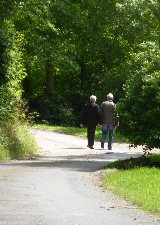
There is no shop or pub in the village to disturb the peace, but it has not always been so quiet. Cock fighting – after Sunday worship – and quarterly horse racing once took place. Nowadays, walking and sailing seem to be the main recreational activities. Tucked away from the village on what was once a gravel extraction site, Swarkestone Sailing Club is on the Swarkestone to Ingleby road on the north side of the village.
SWARKESTONE BRIDGE AND CAUSEWAY
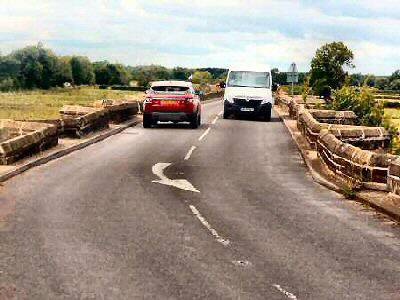
The present name of Stanton-by-Bridge seems to be fully justified. Travellers passing through the village, who see only the east end, are much more likely to remember crossing the narrow Swarkestone Bridge and Causeway. In any event, Swarkestone Bridge and Causeway seem somewhat misnamed, because the boundary with Swarkestone is mid-stream at the river bridge end. It means that only part of the bridge and none of the Causeway is in Swarkestone.
A Scheduled Ancient Monument and a Grade I listed building, the bridge and the Causeway are reputedly the longest stretch of medieval bridgework still in use in the country. Together, Swarkestone Bridge and Causeway stretch for about three-quarters of a mile above flat meadowland, which is prone to flooding. The gritstone used in construction probably came from a quarry in Stanton parish.
GRASS TRIANGLE
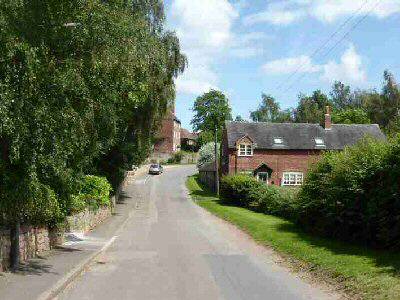
A grass triangle of land at the junction of the main street with the A514 is the site of an oak tree planted to commemorate the Diamond Jubilee of Queen Victoria in 1897. From this point, the road runs off to the west down the village’s main street, before narrowing considerably after passing Manor Farm on the edge of the village. Apart from local traffic, the road is little used. It is possible, even on a sunny day, to walk the half mile or so from one end of Stanton to the other without encountering hardly any pedestrians or moving vehicles.
VILLAGE STREET
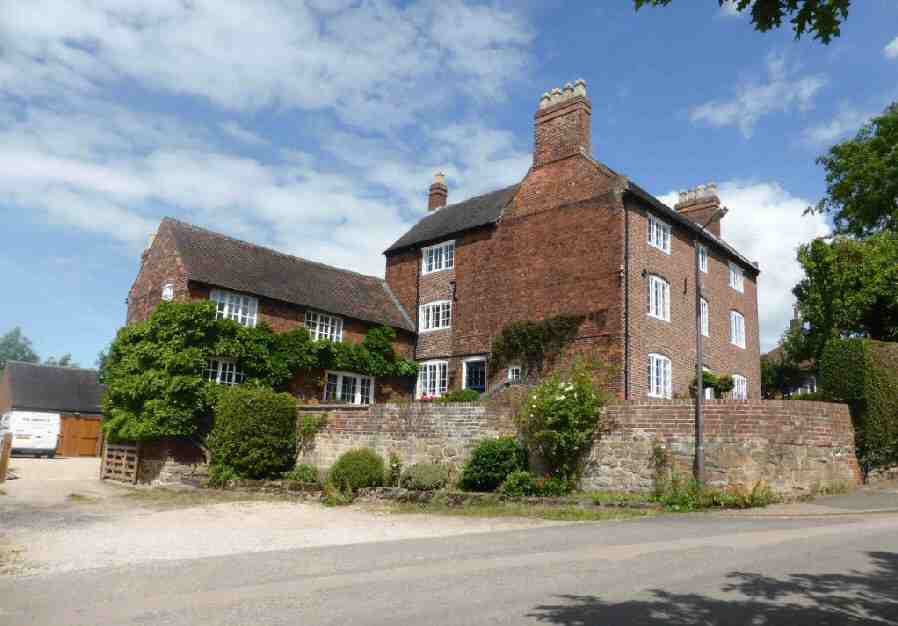
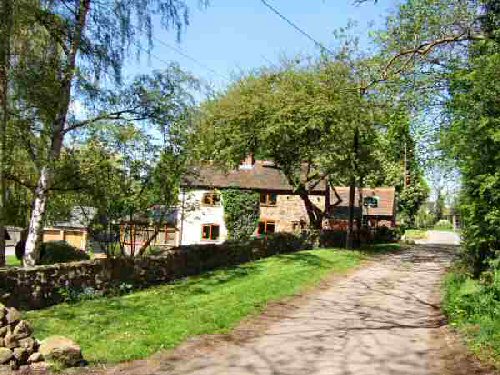
The village street is composed of several old farmhouses that have mostly been converted into private dwellings and a mixture of old and new properties. Hollies Farm is quite imposing, standing on a slightly elevated site, behind a small triangular green, from where a lane leads off to join the road to Ticknall and beyond. Stanton is an excellent starting point for walks in the area covering Melbourne, Kings Newton, Ticknall, Ingleby and Repton.
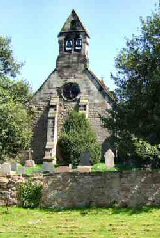
ST MICHAEL’S CHURCH
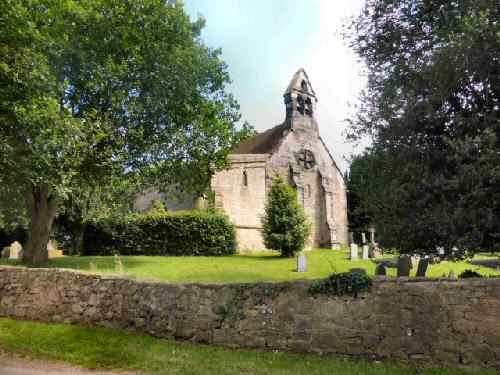
St Michael’s Church at the west end of the main street is quite compact and described by Pevsner as ‘small and low.’ It incorporates structural evidence dating back to the Anglo-Saxons and has a fine Norman doorway on the south side. The former Rectory is a rather grand property with a far more impressive entry than the Church. Girls from the Women’s Land Army were billeted there during the Second World War.
VILLAGE HALL
Across the road from the Church, in about 1840, Sir George Crewe gave a plot of land to the village for the building of a school. The school had an extension built in 1876 to accommodate children from Swarkestone. In 1913, a classroom was added for infants. However, falling numbers led to the school closing in 1951. Three years later, the school buildings were purchased and refurbished by the villagers and opened as the village hall. The Duke of Devonshire performed the opening ceremony only two weeks after a village fete had raised enough money to clear the total amount still owing on the building.
NUCLEAR BUNKER
The most unusual building in Stanton is a former secret nuclear bunker. Built during the height of the Cold War, it was for use by the military for monitoring purposes following a nuclear war. In 1968, it was closed before being reopened a second time in 1975 and then closed again in the 1990s. A secret no longer, the bunker was put on the market in recent years, much to the surprise of the auctioneers who initially thought someone was having a joke – they had not sold a nuclear bunker before! It is situated close to the A514 Derby to Swadlincote road on the east side of Stanton Hill.
TEN FASCINATING FACTS ABOUT STANTON-BY-BRIDGE
1. Stanton-by-Bridge is set on a ridgeline and was first established around its Church. It was one of several Anglo-Saxon settlements in South Derbyshire bordering the floodplain of the River Trent.
2. Stanton and Melbourne sit on the southernmost outcrop of Millstone Grit in Derbyshire.
3. Several small quarries once supplied the surrounding area with building stone. Many of the quarries had medieval origins.
4. The Hills is identified as a quarry on a plan of 1608. The seven-acre site has numerous hollows and humps. But, it is difficult to ascertain how much is spoil and not a natural contour. It is now largely wooded
5. Ward’s Lane (formerly Rolleston’s), which runs from Swarkestone Bridge and Causeway to Kings Newton, was once the main road south. It is now a rural access road.
6. At one time, a bridge chapel and toll house stood partway across the Causeway.
7. Over the last two to three hundred years, the Causeway has been widened, partly rebuilt and reinforced to accommodate modern traffic. Despite this, the narrowness of the bridge has caused many accidents, with rebuilding having to be undertaken.
8. Swarkestone Bridge and Causeway is probably best remembered for one of the most noteworthy incidents in English history when an advanced party of Jacobite troops reached the bridge in 1745, only to be recalled by their leader. Prince Charles Edward Stuart, frequently known as Bonnie Prince Charlie, was looking to overthrow the English Monarch, but support for the cause was poor, and the mission was abandoned.
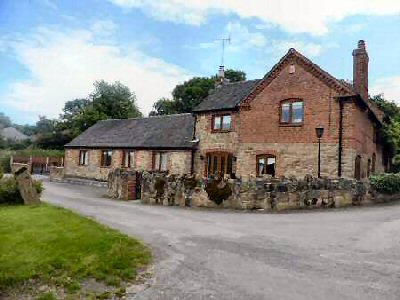
9. Many of the farm buildings in Stanton-by-Bridge started life as smaller stone buildings. Then, in later years, rather than being rebuilt entirely, they have been extended, sometimes using stone but more often brick.
10. The oldest of Stanton’s farms, St Bride’s, lies a mile to the South of the village and may be in the region of 1,000 years old. In the outer wall of the house next to the door is a tiny Norman tympanum, ‘part of the remains of a cell, grange or chapel attached to Burton Abbey’ according to the Department of the Environment (now the Department for Environment, Food & Rural Affairs).
STANTON-BY-BRIDGE WALK