INTRODUCTION
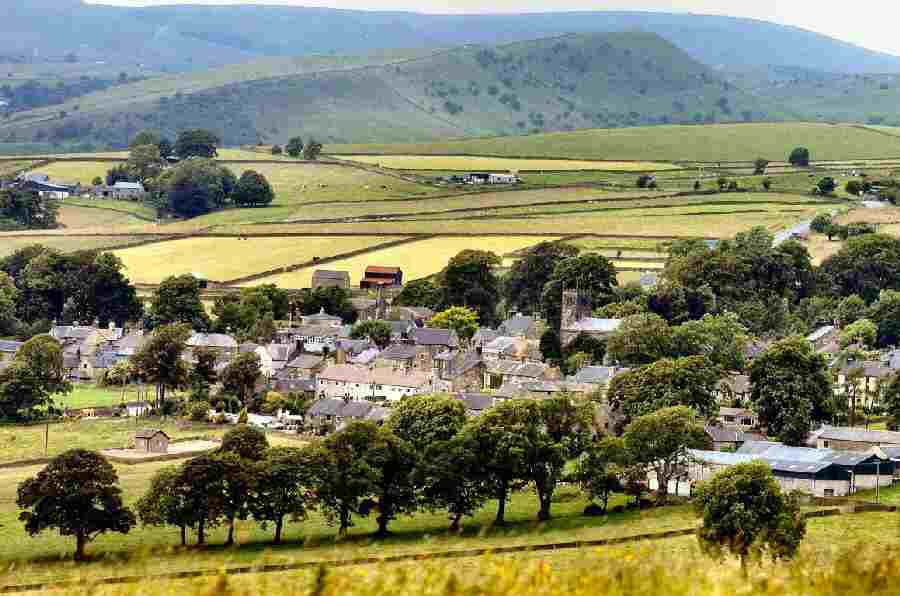
Longnor Visitor Guide describes a village set in lonely moorland countryside, six miles southeast of Buxton, near the Derbyshire border. It is an ancient village and sits astride a narrow ridge of gritstone, where the River Dove flows to the north and the River Manifold to the south, attracting many visitors. They come to explore the upper reaches of these two famous river valleys and the rugged scenery surrounding them.
Little was heard of Longnor in what was a wild and rugged area at the northernmost boundary of Staffordshire before the first written reference to the founding of St Bartholomew’s Church in 1223. According to tradition, however, a church was built in the village around 700AD, following the establishment of a Christian community.
AGRICULTURAL BASE
Agriculture was the main occupation of the few people who lived there. But by the mid-1600s, there were four annual fairs and two weekly markets. The opportunities to trade had the effect of attracting an increasing number of people to Longnor. Consequently, its importance rapidly increased. Local farms provided food for the table, and new trades sprang up. On market days, the streets thronged with people buying and selling goods.
MARKET TOWN ERA
The population continued to rise, and by 1841, Longnor had become a market town. There were a dozen busy alehouses, a police station with cells, and several schools. Shops opened, and hawkers and itinerant workers stayed in lodging houses around the village. But it was not without its problems despite the increase in trade. Rowdiness and criminality were quite common, no doubt fuelled by the busy alehouses in the town. A cell at the local police station provided a place for some wrongdoers to take a more sober view of the reasons behind their incarceration.
Longnor held its position as a small market town until the disappearance of the coaching age. As gradually easier access to other towns and cities improved, businesses relocated to Buxton and Leek. The town’s population peak came in 1851, when the census return showed a population of 561 people. But the 1911 census showed a decline, with only 334 people recorded. By the onset of the 20th century, although agriculture remained important, increasing mechanisation meant a smaller labour force was required, and workers migrated to newer industries.
EXCELLENT FACILITIES
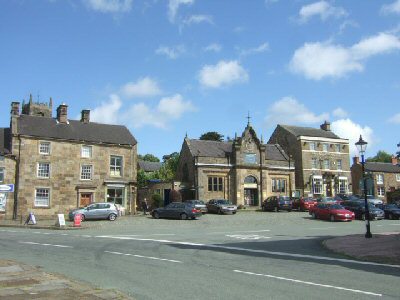
Despite losing its status as a market town, Longnor still retains the character of a small town, boasting facilities that are the envy of many other villages in the area. The marketplace, however, is now much smaller than it was initially. At the upper end of the steeply cobbled marketplace, the market hall dates to 1873, rebuilt at the direction of the Harpur-Crewe family, ‘Lords of the Manor.’ An association that began in the 15th century and lasted for many years. A ‘Table of Tolls Payable at Longnor Markets and Fairs’ is on the board outside the market hall.
CREWE AND HARPUR ESTATE
Sir Vauncey Harpur-Crewe, who paid for the building of the Market Hall, had an agent who collected the dues for livestock and produce sales at the market and fairs. The agent’s base was the Crewe and Harpur Arms, built in 1684 as a coaching inn, at the bottom of the marketplace. Today, the Crewe and Harpur caters for large groups on a self-catering basis.
At that time, the Crewe and Harpur Estate owned parts of the village and several farms, but they have now been sold. Their moorland estate in the Staffordshire Moorlands was given to the National Park Authority in lieu of death duties in the mid-1980s. The area is now a very important wildlife centre.
TEN FASCINATING FACTS ABOUT LONGNOR
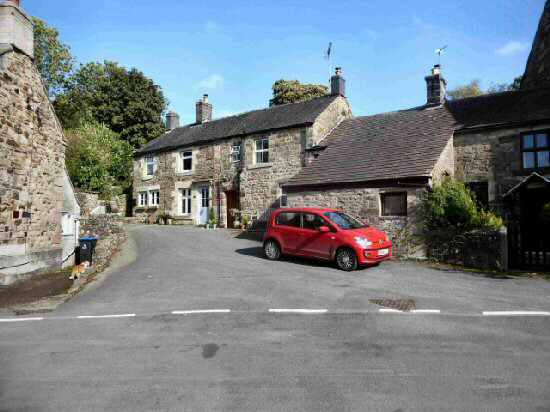
1. The Horseshoe Inn, which dates to 1609, is no longer a pub but is now available for holiday rentals.
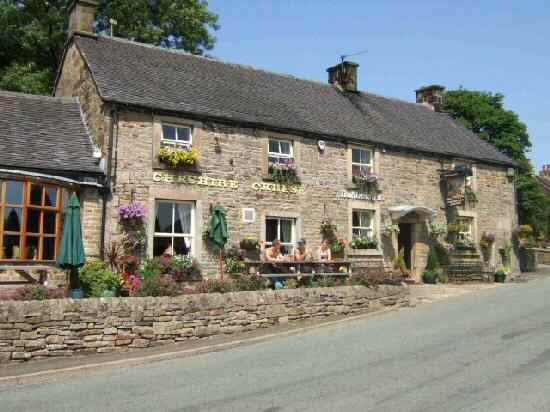
2. A few yards along the road to Crowdecote is the Cheshire Cheese, the inn’s name referring to its origin in 1621 as a local cheese store.
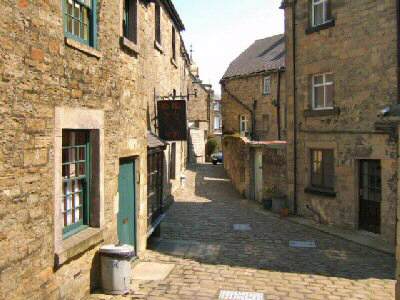
3. The former Red Bull in cobbled Chapel Street was once a public house, claimed to have derived its name from the local practice of bull baiting.
4. There are many quaint epitaphs in the churchyard, which closed for burials in 1888, and a new cemetery was created. The one most quoted is that for William Billinge, born in a cornfield in 1679, who died 106 years later, only a stone’s throw away. He lived through seven reigns and fought in countless wars, yet he was still soldiering at the ripe old age of 66.
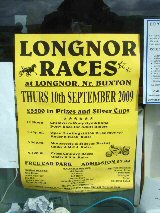
5. Longnor Races are a very colourful event, said to have resulted from a meeting of local farmers who decided to put up a wager to determine the winner by racing their mounts around the village. The original race followed a course from the village around Mill Lane and back. This popular event continues to this day, but in a different format.
6. As part of the National Park Authority’s Integrated Rural Development experiments, local farmers were encouraged to retain and promote herb-rich meadows, and some paid for the number of different wild flowers in their fields. Payment was also made for the upkeep of dry-stone walls, which helped keep this old craft alive.
7. The former Wesleyan Chapel was, for a time, a Doll’s Hospital where children’s dolls were repaired.
8. The Longnor Races take place on the Thursday after the first Sunday in September, featuring harness racing, a pony gymkhana, motorbike racing, a fell race, and a licensed bar and refreshments.
9. Edge Top is the old packhorse route between Flash and Longnor. It provides an enjoyable walk with marvellous views into the valley below.
10. St Bartholomew’s Church has a Norman font and a gallery, where the Beadle once sat. He kept order amongst the Sunday school scholars with his long cane by tapping their heads if they fidgeted!
LONGNOR TWO VALLEYS WALK