INTRODUCTION
Clay Cross is one of those Derbyshire towns that wears its history proudly. Set on the A61 between Chesterfield and Alfreton, it straddles what was formerly a Roman Road, known as Rykneld Street, which later became part of the Derby to Sheffield turnpike road of 1756.
It is one of those places that many people consider of little interest. But if they would only stop and take the time to look around and delve into the town’s fascinating history, they would assuredly change their minds. Its character has been shaped by coal, engineering, and the determination of the people who built it.
At the beginning of the 19th century, Clay Cross was little more than a scattered collection of stone houses at the crossroads on the present A61, where Thanet Street and Clay Lane join it. At this intersection, stood a clay cross from which the town probably derives its name.
COAL MINING
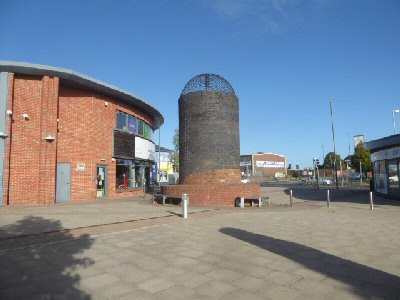
There is evidence that coal mining has taken place in the area for centuries. But it was not until the arrival of the railway that coal mining in the town and the surrounding districts really took off. In 1837, at the time that the mile-long tunnel under the town was being constructed, as part of the 72-mile stretch of the North Midland Railway link from Derby to Leeds, coal was discovered in commercial quantities together with iron. The railway line runs directly under the town, and nine ventilator shafts were constructed from which smoke once wafted with the passing of every train. Now a Grade II listed building, the northern railway portal is of a magnificent Moorish design.
GEORGE STEPHENSON
George Stephenson, who built the world’s best-known railway locomotive, the Rocket, was the consulting engineer for the line at Clay Cross. He was aware of the potential of mineral sources available and that valuable limestone resources were nearby. To exploit the opportunities, he set up a business, George Stephenson and Company and moved home to Tapton Hall, near Chesterfield. On his death in 1848, the business was taken over by his son, Robert, who left the company four years later when it became known as the Clay Cross Company.
THE CLAY CROSS COMPANY
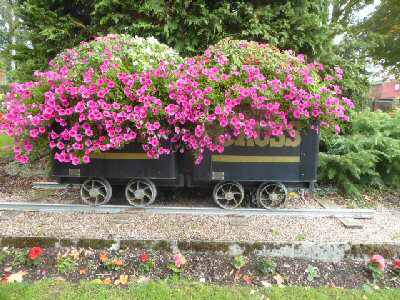
Founded by George Stephenson, the Clay Cross Company became one of Derbyshire’s most important industrial enterprises. It operated collieries, ironworks, brickworks, lime kilns and chemical plants. At its peak, it employed thousands and shaped the town’s growth. The company produced everything from bricks to locomotives and played a major role in Britain’s industrial expansion.
Limestone from nearby Crich, always highly regarded for its superior quality, was quarried. George Stephenson built the Crich Mineral Railway in 1837 to carry limestone from Cliff Quarry to a battery of limekilns at Ambergate about two and a half miles away.
TOWN DEVELOPMENT
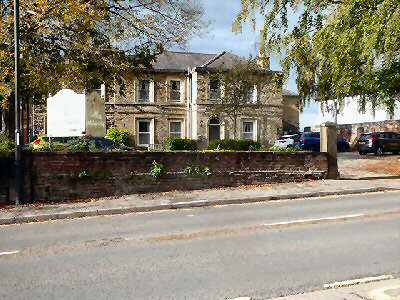
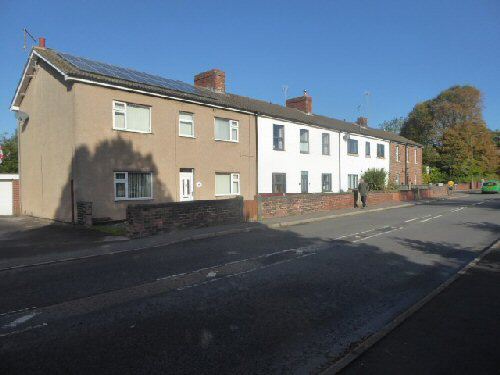
Stephenson had good quality houses built for his workers. As the company prospered, the population of the town grew, so that by 1857, there were 2,278 inhabitants listed. Apart from over 400 houses for employees, a school, churches, shops and a Mechanics Institute were built. In the mid-20th century, most of the earliest workers’ houses were demolished. But Clay Cross Hall, Eldon House and ‘Gaffers Row’, where Stephenson’s foremen used to reside, remain. The hall was built for Charles Binns, the General Manager of the company. Built in 1840, Eldon House served as the office of George Stephenson and Company.
CLAY CROSS TODAY
Modern Clay Cross is a town undergoing significant regeneration. The new town centre development, improved retail spaces, and investment in housing and leisure facilities have given the town a fresh energy. The Sharley Park Leisure Centre, rebuilt as a modern community hub, is a major asset offering swimming, fitness, sports and events.
The high street blends traditional shops with modern services. Cafés, takeaways, pubs and independent businesses give Clay Cross a lively, lived-in feel.
TEN FASCINATING FACTS ABOUT CLAY CROSS
1. The Clay Cross Tunnel, completed in 1837, is one of George Stephenson’s greatest engineering achievements. Stretching over 1,800 yards, it was built entirely by hand using picks, shovels and sheer determination. During excavation, workers discovered rich coal seams, prompting Stephenson to found the Clay Cross Company. This discovery transformed a rural area into a thriving industrial town. The tunnel remains in use today, carrying trains along the Midland Main Line.
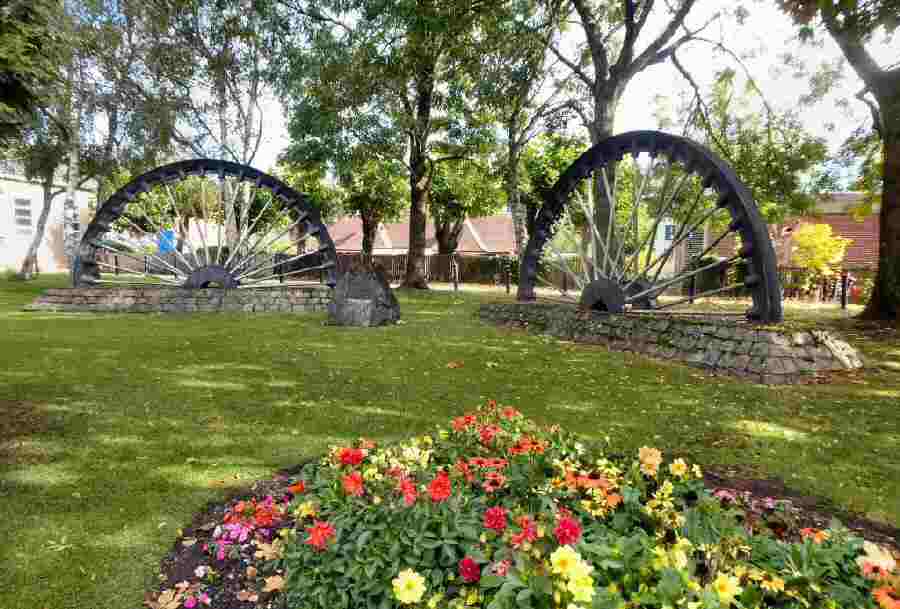
2. Parkhouse Colliery was one of Clay Cross’s largest pits, employing hundreds of miners. It was known for its deep seams and challenging conditions. The colliery played a major role in the town’s economy until its closure in the 1960s. Today, the site has been reclaimed, but its memory remains strong among local families.
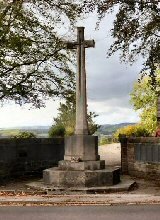
3. Parkhouse Colliery was the scene of a disaster in 1882 when 45 men and boys’ lives were lost, and in the local cemetery a memorial was erected to the victims of that dreadful tragedy.
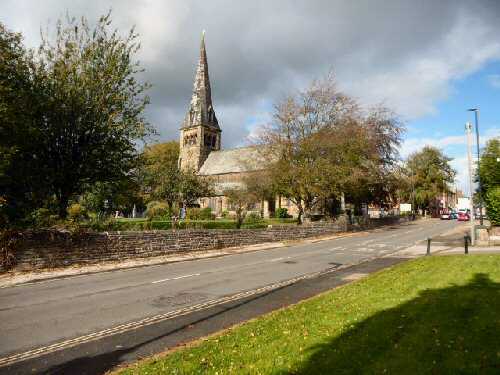
4. St Bartholomew’s Church is one of the town’s oldest landmarks. Built in the 19th century, it features a striking tower and peaceful churchyard. The church has long been a focal point for community life, hosting weddings, funerals and local events. Its architecture reflects the town’s Victorian era.
5. Clay Cross sits on the route of the Roman road Rykneld Street. Although the town itself developed later, the area has Roman origins, with evidence of early settlement nearby. This ancient route shaped the region’s development long before the arrival of coal and railways.

6. Kenning Park, on the western side of the town, was once the site of colliery workings. It was donated to the town by George Kenning, a native of Clay Cross and a pioneer in the car distribution business, and is now a very pleasant park with an abundance of wildlife.
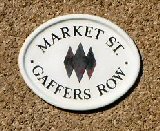
7. “Gaffers’ Row”, or Egstow Terrace as it is officially known, was built in 1846 and is the only surviving example of early employee housing built by the Clay Cross Company. The houses were of a slightly higher standard of construction for the occupation of foreman grades. Internally, the houses have retained much of their distinctive character. A gaffer is a man in charge of workers.
8. Modern Clay Cross is undergoing major regeneration, including new housing, retail spaces and leisure facilities. The redevelopment of Sharley Park Leisure Centre has created a modern community hub. These improvements are helping the town grow while preserving its heritage.
9. The railway tunnel under Clay Cross has several ventilation shafts, some still visible today. These shafts were essential for removing smoke from steam locomotives. They are among the few surviving features of early railway engineering.
10. The Bill Lomas Motorcycles Shop in Cross Street has a small museum and café. The motorcycles range from the 1930s to the 1980s, with the exhibits changing regularly. Bill Lomas (1928 – 2007) was an English Grand Prix motorcycle road racer. He was a two-time World Champion and a two-time Isle of Man TT winner.
WINGERWORTH AND GREAT STUBBING POND WALK