INTRODUCTION
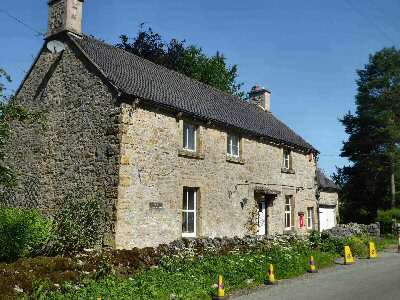
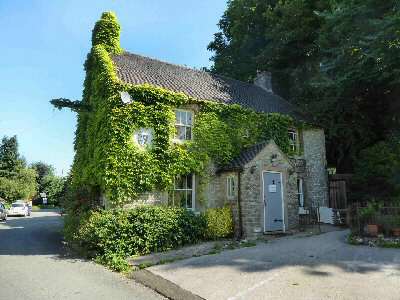
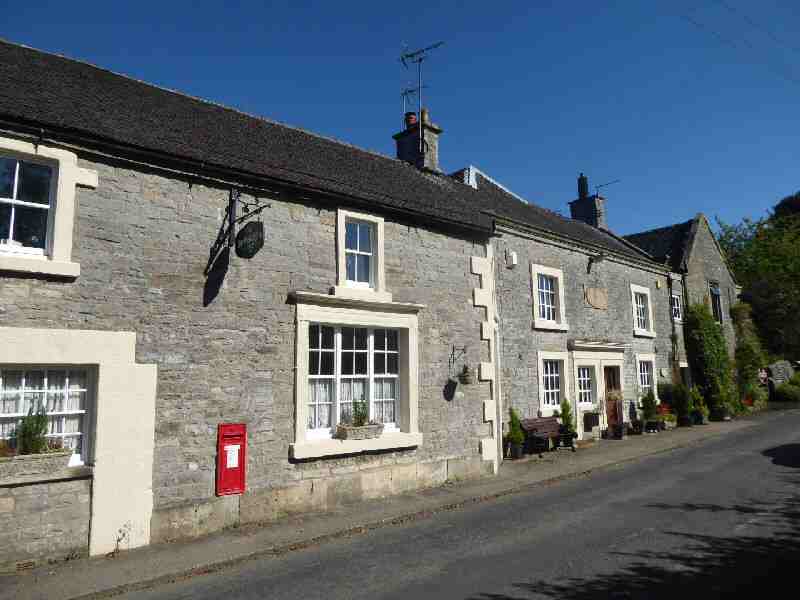
Alstonefield and Milldale Visitor Guide, the former is a handsome, unspoilt upland village and the latter a small, picturesque hamlet at the northern end of Dovedale.
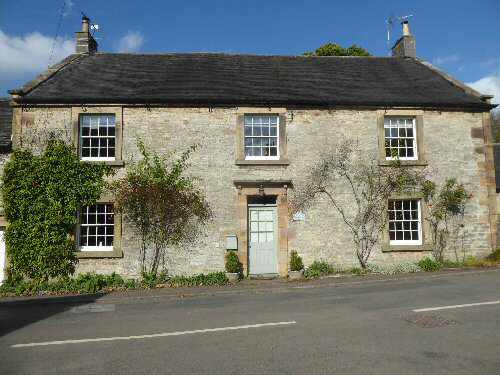
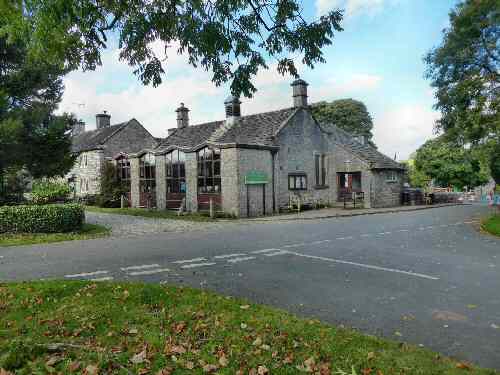
Alsonefield, standing on a limestone plateau at 900 feet above sea level, just over the Derbyshire border in Staffordshire, was built on an ancient site where several trackways once crossed, later to become packhorse routes. Today, it is a village of attractive houses and gardens with plenty of open space, often covered with a triangle of grass rather than a square. The number of awards received in the Best Kept Village Competition endorses local people’s pride in the village.
Milldale, at the northern end of Dovedale, is a delightfully positioned hamlet that attracts walkers like few other places of its size in Britain. Most come to explore the beautiful Dove Valley, with its steep-sided limestone sides and tree-covered slopes, along the stretch from Milldale, where a large car park stands by the road to Hopedale.
THE MIDDLE AGES
During the Middle Ages, Alstonefield was a thriving market town, and it was granted a market charter in 1308. At its height of importance, it covered an area of nearly 24,000 acres with a population exceeding 4,500. However, as the packhorse trade declined and transportation by canal and rail predominated, Alstonefield’s location became more of a hindrance than an asset. Canal and railway engineers overlooked the village due to geographical reasons, leaving it somewhat isolated.
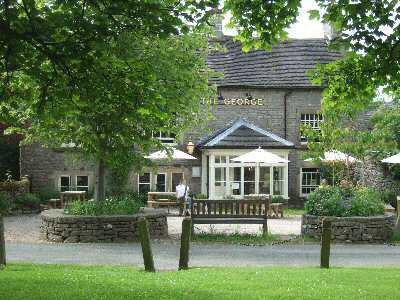
The George (for sale 2025), a famous coaching inn, was the centre of activity in the village. A wool market was held in the yard, and up until about 100 years ago, there was an annual livestock sale. A button factory on Church Street made silk-covered buttons, probably because of Macclesfield’s flourishing silk manufacturing industry. There was a cheese factory nearby in Hopedale, but this and the button factory have long since ceased production. The village now provides very little employment apart from a few skilled craftspeople.
ST PETER’S CHURCH ALSONEFIELD
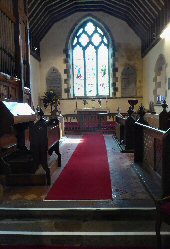
Hidden from view on the south side of Alstonefield is St Peter’s Church. There has been a church there since at least 892, when the Archbishop of York made a pastoral visit to dedicate the church. Parts of the building date back to about 1100, but most of the church was rebuilt in 1590 and restored nearly 300 years later.
The church is noted for its fine woodwork, particularly the grand Cotton family pew, which features the Cotton coat of arms on the back. It was made for Charles Cotton Senior, the owner of Beresford Hall, the father of Charles Cotton Junior, a friend of Izaak Walton, and a devout Christian who undoubtedly worshipped at the church. Walton wrote the best-selling book ‘The Compleat Angler’; he and Cotton were known for their love of fishing and the River Dove.
THE WORKHOUSE
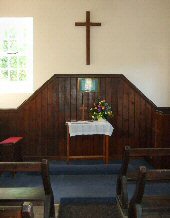
A workhouse was built in the village in 1782, housing approximately 50 paupers, categorised by age, sex, and physical and mental abilities. It was a hard life. The Rising Bell tolled in the summer at 5 a.m. but, thankfully, two hours later in the winter. The non-disabled men polished limestone, and many houses in the locality have fireplaces built from this material. Women did housework and helped look after the young. After a day of work, they all retired to their tightly packed beds after 8 p.m. prayers. No fixed lights were allowed after 9 p.m. Following the dissolution of the workhouse in 1868, it served a variety of purposes, including as a fish and chip shop.
MILLDALE
There was a mill in Alstonefield Manor in the 13th century, presumably situated in the hamlet of Milldale, where records show a mill to the north of Viator’s Bridge in 1775. The mill ceased operation in the late 1870s, but 50 years later, it was still standing, although it had become derelict by then. The buildings to the left of what used to be part of the mill are now a National Trust Information Barn. A remaining millstone wheel lies by the riverbank.
The ancient packhorse bridge over the River Dove at Milldale is known as the Viator’s Bridge and was made famous in the English classic ‘The Compleat Angler’ by Izaak Walton. In the fifth edition, published in 1676, Charles Cotton of nearby Beresford Hall wrote an addendum about fishing, introducing the reader to two travellers – Charles Cotton (Piscator) and Izaak Walton (Viator).
In the days when the two travellers would have approached the narrow bridge at Milldale, it would not have had any walls. It must have looked frightening to cross, and Viator commented on seeing the bridge: ‘Why! A mouse can hardly go over it: ’tis not twelve fingers broad.’
TEN FASCINATING FACTS ABOUT ALSTONEFIELD AND MILLDALE
1. In 1989, four bells from a church in Stoke-on-Trent, scheduled for demolition, were removed. Together with the three original bells, not heard for eighty years, were rehung. Now Alstonefield church has a peal of six bells – one of the original bells remaining ‘dead’. The single benches in the church were presumably for the poor people and contrast strikingly with the much more ornate Cotton family pew.
2. Judging by the massive chest inside St Peter’s Church, which measures approximately ten feet long, the church had considerable wealth. The chest has three locks and requires the vicar and the two churchwardens to be present when opened.
3. Standing at the top of Lode Lane is the former Wesleyan Chapel. A short distance away is Fynderne House, now a private residence. At one time, it was the Red Lion public house; in stark contrast, it later became a Temperance Hotel.
4. In the mid-19th century, when the village well could no longer meet the growing demand, two reservoirs and the pump on Hartington Road were installed. The water pump can still be seen and remained in use until mains water was installed in 1957.
5. The mill at Milldale processed and crushed calamine, mined at Chrome Hill and Parkhouse Hill, near Glutton, south of Buxton. Drug firms used higher-quality calamine. In the 19th century, it was utilised to grind colours for paints.
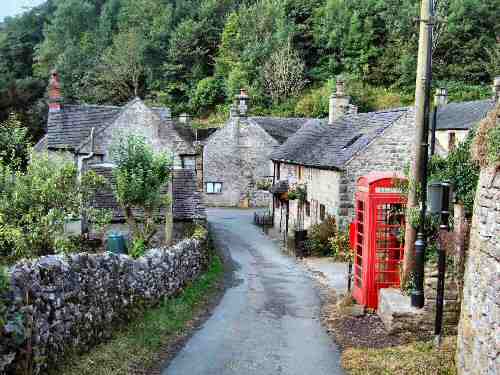
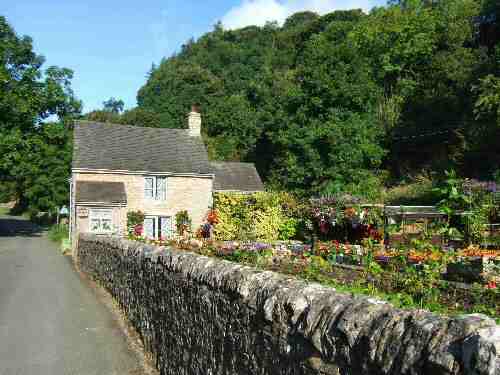
6. Milldale consists of only about a dozen cottages, the oldest of which date back to the 17th century and the others probably to the 18th century.
7. The Primitive Methodist Chapel at Milldale, built in 1835, continues to hold occasional services. On Christmas Eve 1998, 62 people squeezed into the tiny chapel. But, in 2000, numbers were even more remarkable, and eighteen had to stand outside.
8. Milldale has never had a pub, but had an application in 1898 by William Hambleton for a drinks licence, which was declined. However, all was not lost, and Milldale did have its hotel, but it was of the temperance variety!
9. Hopedale, a hamlet near Alstonefield, has a former Cheese Factory, the Watts Russell Arms, and several cottages.
10. A short walk from Alstonefield leads to the tiny hamlet of Stanshope, little more than a cluster of farms and Stanshope Hall standing on a bend on the road to Ilam. The hall dates to the 1500s, but it was not always as well-kept as it is today. William Manley, a money lender with two mistresses who lived nearby, went bankrupt in 1799. Over the next 50 years, the house fell into disrepair before being rescued from dereliction in the 1850s.
ALSTONEFIELD AND MILLDALE WALK