INTRODUCTION
Bess of Hardwick built the first House on the Chatsworth House Estate along with her second husband, Sir William Cavendish. Building began in 1552 and, following the death of Sir William, his widow completed it.
In 1687, William Cavendish, 4th Duke of Devonshire, started rebuilding the House. He originally aimed to reconstruct only the south wing and the State Apartments. But, he went much further and, having spent a considerable amount of money and effort improving the House, redesigning the gardens, and building a grand new bridge over the river, he made the decision to improve the view.
THE OLD VILLAGE OF EDENSOR
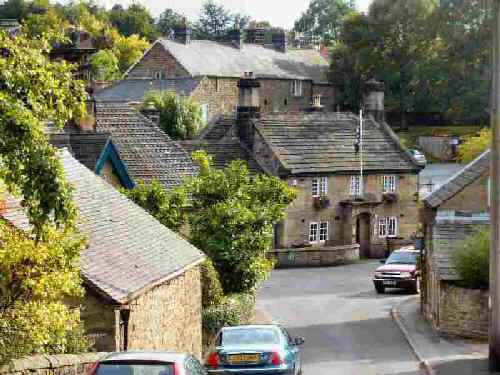
The 4th Duke decided to take down the houses visible from the House that meandered in an untidy line down to the River Derwent. This arrangement did not appeal to the Duke, who had spent a considerable sum of money and expended a lot of effort improving Chatsworth House and gardens and building a new bridge over the river. The tenants were re-housed in the nearby estate villages of Pilsley and Beeley before demolition work commenced. Unfortunately, the Duke died in 1764 before the completion of the work. Leaving the 6th Duke to complete the building of the present village of Edensor.
There remains one cottage and garden on the riverside of the road, surrounded by a stone wall. An elderly tenant lived there and did not want to move. The Duke allowed him to stay in the cottage, not seen from Chatsworth House.
CHATSWORTH’S TREASURES
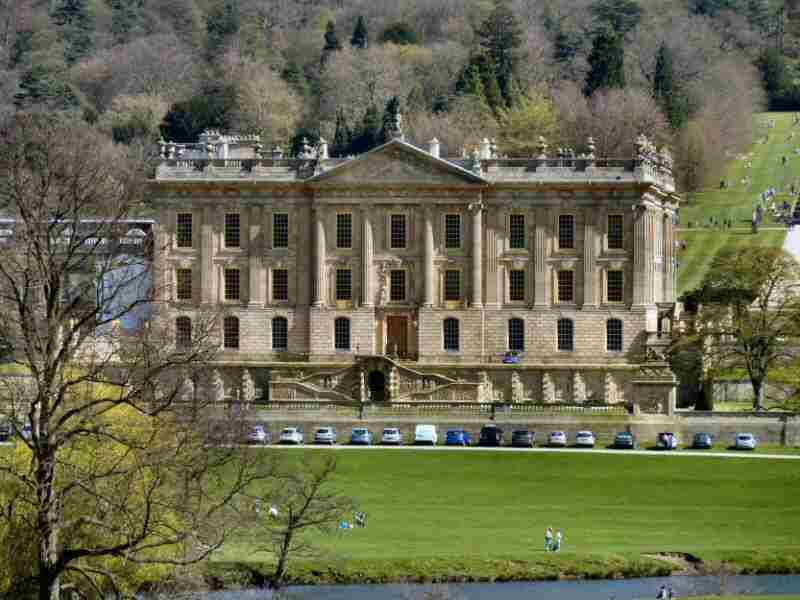
Chatsworth House has been home to the Cavendish family since 1549. It has been chosen several times as Britain’s favourite country house. A Grade I listed building, it underwent alterations in the 18th and 19th centuries and in 2011–2012, a £14-million restoration.
Today, Chatsworth is one of the Treasure Houses of England with fine furniture, sculpture, tapestry, paintings, and other works of art and is considered to have one of Europe’s most significant private art collections.
It is cared for by Chatsworth House Trust, a registered charity established in 1981. Set in beautiful surroundings, in the heart of the Peak District National Park, it attracts admiring visitors from all over the world.
CHATSWORTH GARDENS
The superb 105-acre garden has evolved over a period of nearly 500 years. and retains many of the older features, including the Greenhouse, Canal Pond, and the Cascade (currently under restoration). It has five miles of footpaths to explore with rare trees, shrubs, formal hedges, temples, sculptures, old and new, streams, and ponds.
The spectacular Arcadia Project represents the biggest transformation of the Park in 200 years. It involves a 25-acre project that includes a remodelled Rockery, the Maze borders, the Ravine, and Dan Pearson’s redevelopment of the Trout Stream and the Jack Pond. At the centre of the Project is a 15-acre area that had lain undeveloped until work began in 2018.
The Emperor Fountain, which was built in 1844 to impress Czar Nicholas of Russia. Unfortunately, the Czar was detained elsewhere and failed to visit Chatsworth. The fountain’s single gravity-fed high spout rises to 290 feet and was the highest in the country when installed.
CHATSWORTH FARMYARD AND ADVENTURE PLAYGROUND
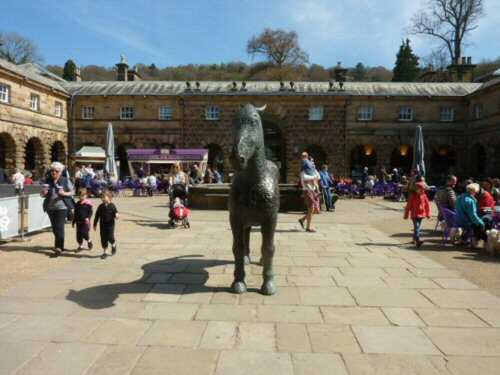
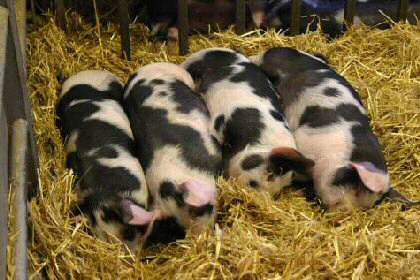
Where the whole family can have a great day out meeting friendly animals, from pigs to horses, goats to guinea pigs, many of whom you can feed and pet. There are several rare breeds, including Suffolk Punch horses, Shire horses, Gloucestershire Old Spot pigs and Derbyshire Red Cap chickens.
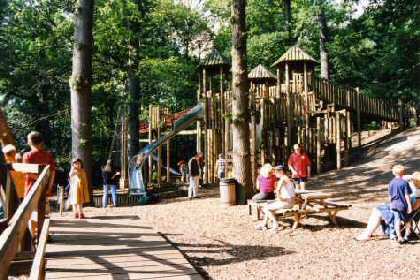
From the farmyard, there is a secret tunnel to the woodland playground. Here, the family can climb tall towers to get fantastic views, scramble across the wood tangle, or take a zip on the zip wire. For something a little less strenuous, parents can help children dig in the giant sand pit.
CHATSWORTH PARKLAND
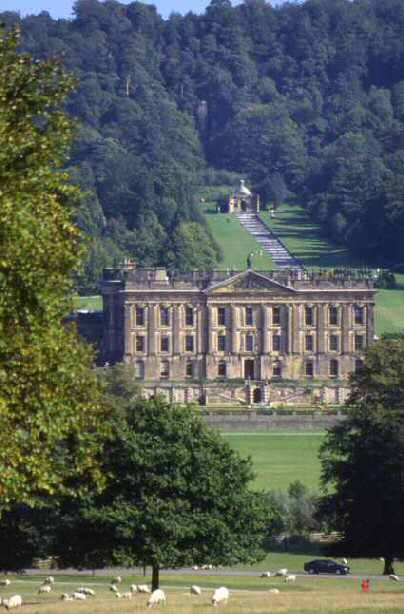
Laid out by ‘Capability’ Brown in the 1760s, the 1822-acre Park is open to the public free of charge throughout the year. Sheep and cattle graze the grass, and a large herd of deer can often be seen as you walk through the Park. The road that winds its way through the parkland provides a magnificent view of Chatsworth House. You look across the River Derwent to the west and south front, with its neat lawns sloping up the bank to the woods that provide a superb backcloth.
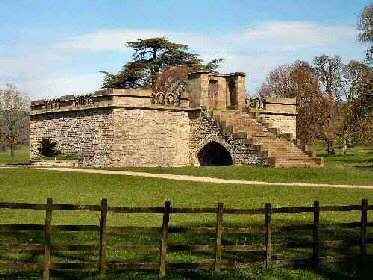
QUEEN MARY’S BOWER
The Bower is close to the bridge leading to the House. It took its name after Mary, Queen of Scots, who was held a prisoner at Chatsworth five times between 1570 and 1581. She was allowed to exercise in a secure environment close to the River Derwent and surrounded by beautiful countryside. Her coat of arms appears over the gateway.
STAND WOOD
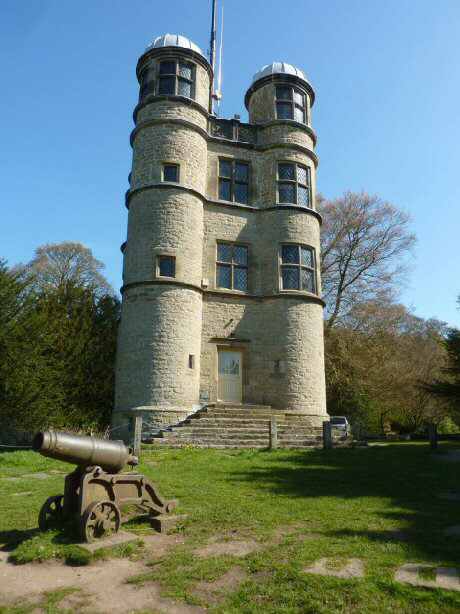
With its magnificent trees, Stand Wood provides a superb backdrop to the Park below. The Hunting Tower stands on an escarpment 400 feet above Chatsworth House, on the edge of Stand Wood. It has magnificent views over Chatsworth Estate. The cannon at the House’s base came from a ship that fought at the Battle of Trafalgar. In 2006, a small stone building at the foot of the tower, together with the tower, was converted to provide a holiday let for large groups.
THE RUSSIAN COTTAGE
The cottage was a gift to the 6th Duke of Devonshire in 1855 by Tsar Nicholas of Russia. The two men had become friends following the Duke’s visit to Russia in 1816, when he served as the British Ambassador to Moscow. They planned an exchange visit, but unfortunately, the Tsar had to cancel. Instead, he sent the Russian Cottage as a keepsake. The cottage is the latest and perhaps the most fascinating holiday cottage on the estate.
CHATSWORTH PARK LAKES
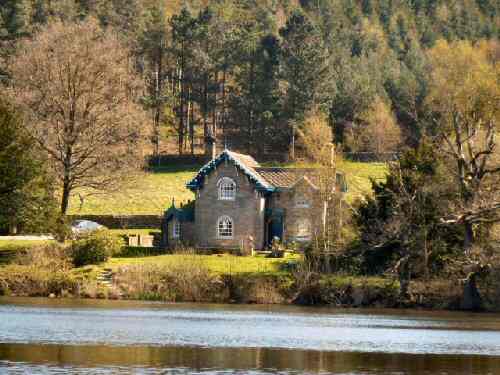
The Emperor Lake is one of a series of manufactured lakes that feed the fountain of the same name in the gardens below. The Swiss Lake, constructed between 1839 and 1842, was originally known as the Great Pond. It acquired its current name from the Swiss Cottage, built on its northern bank as a gamekeeper’s cottage a few years later. The cottage’s design was intended to attract the attention and impress visitors using the scenic carriage route. Having been completely restored, it now forms part of the collection of cottages and buildings available to let on the Chatsworth Estate.
TEN FASCINATING FACTS ABOUT CHATSWORTH ESTATE
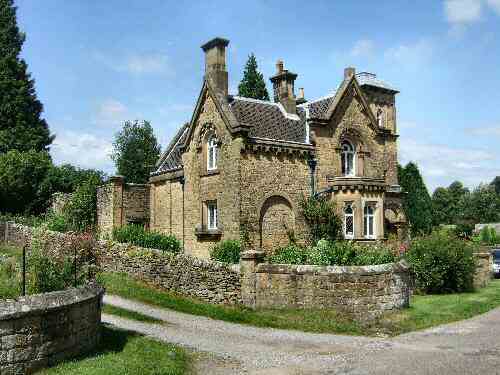
1. Joseph Paxton, who remodelled and landscaped the gardens at Chatsworth, chose the site for the replacement village of Edensor. But it was John Robertson, a relatively unknown architect from Derby, who provided the designs. At that time, aspiring young architects such as Robertson would prepare a book of house plans as part of their training.
2. It is claimed that Robertson approached the Duke to show him the plans when he was busy with other matters, and that after quickly looking through them, he could not make up his mind and chose all the different styles in the book. The designs, ranging from Norman to Jacobean, Swiss-style to Italian villas, are all here at Edensor.
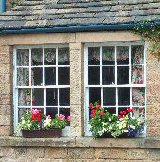
3. A few of the old houses remained virtually untouched, including parts of the old vicarage, two cottages overlooking the green and the old farmhouse, which now houses the village tea rooms.
4. The House has over 126 rooms that include grand halls, luxurious bedrooms, and even secret passages.
5. Chatsworth House has been used as a location for several films. These include “Pride and Prejudice” and “The Duchess.”
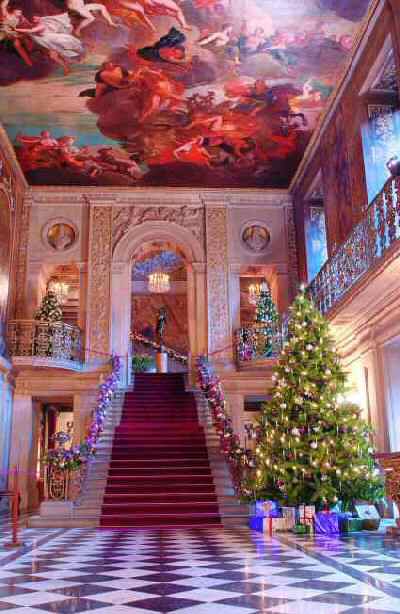
6. The Painted Hall, with its stunning ceiling painted by Louis Laguerre,
is one of the most famous rooms in the House. The grand staircase is made of oak and features intricate carvings.
7. The hamlet of Calton Lees, close to Chatsworth Garden Centre, is beautiful in the summer, with its rich, honey-coloured stone cottages and stunning gardens. Chatsworth estate workers tenant the cottages. It is always easy to recognise properties owned by the estate by the blue-painted doors.
8. The library at Chatsworth House is one of the finest in England. It contains over 17,000 books, some dating back to the 16th century.
9. During World War II, Chatsworth House served as a girls’ public school for 250 young schoolgirls and their teachers from Penrhos College in Wales. The House remained a school until 1946.
10. The former Dowager Duchess had a line of food endorsed with her signature available on mail order. She also established Chatsworth Design to exploit intellectual property rights to the Devonshire collections.
CHATSWORTH ESTATE WALK