DRONFIELD VISITOR GUIDE
PLAN YOUR VISIT
Location: The town of Dronfield lies midway between Sheffield and Chesterfield on the A61, and only 3 miles from the Peak District.
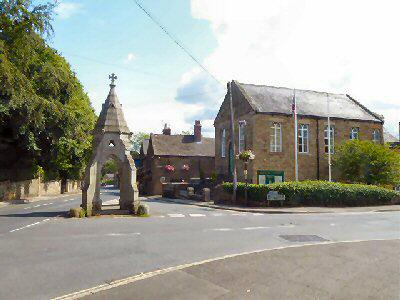
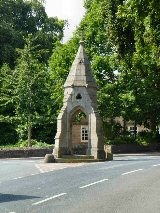
Visit: Take a walk around the centre of the town, paying particular attention to the Peel Monument, built as a tribute to Sir Robert Peel, who was instrumental in the repeal of the ‘Corn Laws’ in 1846.
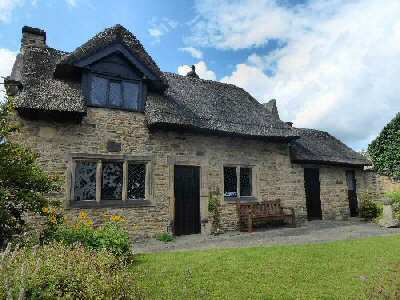
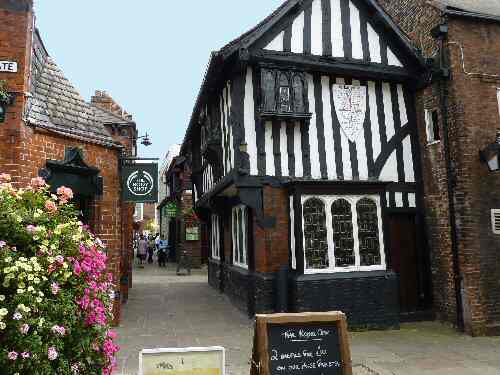
Refreshments: Dronfield Hall Barn is a beautifully restored 15th-century timber building. Saved by local volunteers, it features a rare, historic “king post” roof. Today, it serves as a wonderful heritage hub and coffee shop for visitors. Check before visiting, as it may be closed for events. – The Green Dragon, a Grade II listed building, is a traditional and friendly pub with a real fire and well-kept real ales. There are several cafes, pubs and restaurants in the town to suit all tastes.
Walk: The Wingerworth and Great Stubbing Pond Walk takes you through lovely, peaceful countryside along well-defined tracks and quiet lanes, only two miles to the south of the centre of Chesterfield.
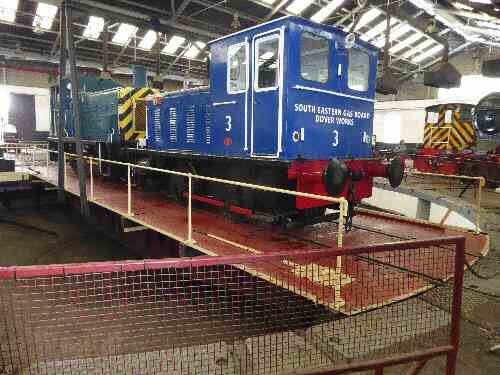
Special Places of Interest in the Locality: Chesterfield is a busy red-brick town, with stalls doing a lively trade on market days, a delightful Queens Park cricket ground, and an unusual church spire. Second only to Derby in population in the county, it is quite different in style and character to any of its neighbours in the Peak District. – Barrow Hill is the location of the last surviving railway roundhouse in the United Kingdom with an operational turntable, now transformed into a unique railway museum and events venue. – Old Whittington, reputed to date back to before the Domesday Book, is now a suburb of Chesterfield. It was here, in 1688, in a cramped room at the back of the Cock and Pynot, in what is now Revolution House, that a plan was devised to depose James II from the throne and replace him with William of Orange.
INTRODUCTION
The historic market town of Dronfield nestles comfortably in the rolling foothills of North East Derbyshire, right on the doorstep of the Peak District. Often bypassed by travellers rushing between the bustling city of Sheffield and the historic crooked spire of Chesterfield, this charming valley town is one of the region’s best-kept secrets and well worth a visit.
It is a small town comprising the three communities of Dronfield, Dronfield Woodhouse and Coal Aston. In the past, the area benefited from its location on a transport route serving lead mining and grindstone making. In the 16th Century, coal mining began to develop in the area. In 1811, steel refiner Samuel Lucas established a factory where cannonballs were manufactured for the Napoleonic Wars. The Forge Shopping Centre was created from one of the old foundries in the town.
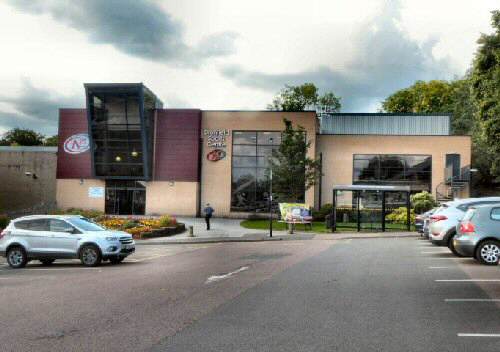
Visitors can browse the bustling weekly market—a tradition officially granted by King Charles II in 1662—or explore the beautiful, independent shops clustered around the Civic Centre and High Street.
INDUSTRY
The industrial history of the town includes lead mining, coal mining, the wool trade, the production of soap and steel, and engineering. Today, a range of manufacturing firms still operate within the town.
Dronfield’s early wealth didn’t come from agriculture alone, but from the lucrative Derbyshire lead trade. Wealthy merchant families, such as the Rotherhams, constructed grand stone houses here in the 16th and 17th centuries, many of which still stand today, giving the town its distinctively sturdy, historic character.
INDUSTRIAL IRON
By the 17th and 18th centuries, Dronfield had evolved from a quiet trading hub into a powerhouse of the British “edge tool” industry. The fast-flowing waters of the River Drone and its tributaries were harnessed to power dozens of watermills. Local craftsmen became world-renowned for forging incredibly sharp scythes, sickles, and axes.
THE MIDLAND RAILWAY
The arrival of the Midland Railway in 1870 supercharged the town, bringing with it the massive Wilson Cammell steelworks. For a brief, dizzying decade, Dronfield was a booming pioneer town of the steel rail revolution, its skies lit by towering furnaces. However, industrial fortunes can be fickle. In 1883, the entire steelworks packed up and relocated to the Cumbrian coast to be closer to seaports. Overnight, over 1,500 residents abandoned the town, leaving Dronfield to quieten back down into a peaceful, residential enclave—a twist of fate that ultimately preserved its historic charm from being swallowed by heavy 20th-century industrial sprawl.
POPULATION
Dronfield’s population has increased dramatically in the post-war years from 6,500 in 1945 to its current size of just over 21,000.
PEEL MONUMENT
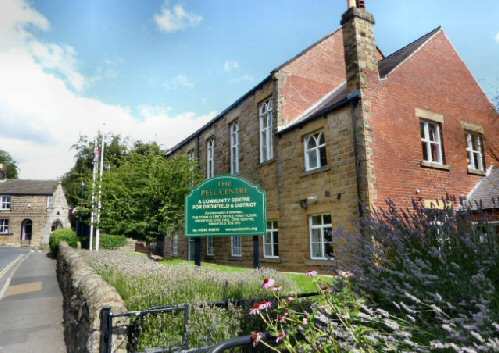
The Peel Monument on High Street attracts a lot of visitor attention. Built in 1854, it is a tribute to Sir Robert Peel. He was instrumental in the repeal of the ‘Corn Laws’ in 1846. The Corn Laws were regulations that restricted the import and export of grain, keeping prices high and favouring local producers, which led to people being unable to afford bread. Near the Peel Monument is the Peel Centre, used as a community centre.
ST JOHN THE BAPTIST CHURCH
The magnificent spire of St John the Baptist Church proudly dominates the town’s skyline, a grand Grade I listed architectural masterpiece with foundations dating to the 12th Century. Altered in the mid-16th Century and underwent extensive repairs around 1819. Following further alterations and restoration work in 1855, the Bishop of Lichfield reopened the church on 26 April of that year.
HISTORIC BUILDINGS
Just a stone’s throw from the church, you will find two of the town’s most remarkable timber-framed survivals. The first is the Green Dragon Inn, a wonderfully atmospheric pub built in 1349 that originally housed chantry priests. The second is the spectacular Dronfield Hall Barn. Dating back to the 15th Century, this rare building was saved from ruin by a passionate team of local volunteers. Today, beautifully restored, it serves as a vibrant cultural hub, gallery, and coffee shop where visitors can admire a rare, intact “king post” timber roof while enjoying a locally brewed coffee.
10 FASCINATING FACTS ABOUT DRONFIELD
1. The town’s name is said to come from the Old English words draen and feld, traditionally translated by historians as “open land where drone bees live.”
2. Local folklore claims that the axe used to execute King Charles I in 1649 was manufactured in Dronfield. The town was world-famous for its high-quality “edge tools” like axes, scythes, and sickles.
3. Dronfield is the home of Sheffield Football Club, officially recognised by FIFA as the oldest football club in the world (founded in 1857). They play at the Home of Football Stadium on the town’s northern edge.
4. In the early 1960s, a young, pre-fame Sir Michael Caine lived briefly in Dronfield while working in local theatre before finding global stardom.
5. When the Cammell steelworks closed in 1883, the 1,500 departing Dronfield workers didn’t just move to Workington; they actually helped found Workington Association Football Club.
6. The former Henry Fanshawe School was founded all the way back in 1579, making it one of the oldest operating secondary schools in England. In 1993, it suffered major damage when its 1960s system-built blocks were completely gutted by fire. The historic Victorian quadrangle and library, as well as the sixth-form block, survived. The remains of the modern school were subsequently demolished, and mobile cabins were used as classrooms until 1996 when rebuilding took place.
7. In 2007, Dronfield was the epicentre of a 4.1 magnitude earthquake that woke up residents across Derbyshire and South Yorkshire.
8. Local myth claims a network of hidden medieval tunnels connects the parish church to the Green Dragon Inn and the nearby manor house.
9. During the major UK local government shakeups of 1974, Dronfield fiercely and successfully fought off an attempt to transfer the town into the county of South Yorkshire, ensuring it proudly remained a part of Derbyshire.
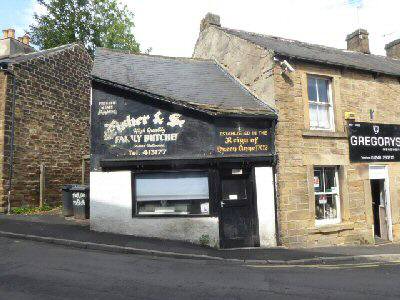
10. Fisher’s Butchers, on the junction of Soaper Lane and High Street, was a butcher’s shop run by the same family for many years before its recent closure on the death of the last surviving family member. An early 18th-century building; the timbers in the shop date back to the reign of Queen Anne (1702-1714). The Fisher family farmed at Manor Farm and kept this butcher’s shop in Dronfield since the 1850s.
WINGERWORTH GREAT STUBBING POND WALK