INTRODUCTION
Grindleford is situated in a beautiful setting with wooded hillsides rising above the River Derwent. It is a busy place where several roads converge. A ford crossed the river before the building of the bridge, and it was an important crossing point.
Grindleford is a ‘modern’ parish, formed as recently as 1987, out of the parishes of Eyam Woodlands, Stoke, Nether Padley and Upper Padley. It ended a lot of confusion. Since the 14th Century, the road bridge has been known as Grindleford Bridge. But the railway station was only named Grindleford in the 1890s.
Surrounded by some of the most attractive walking country in the White Peak, walkers throng to Grindleford all year round. To explore magnificent Padley Gorge and visit Longshaw Estate, walk along Froggatt Edge or follow the Derwent Valley Heritage Way.
SIR WILLIAM HILL
Rising steeply up from the Sir William Hotel is Sir William Hill, which reaches a height of over 1,400 feet on Eyam Moor. There are several theories as to how it got its name. The one that suggests it commemorates Sir William Cavendish, who owned Stoke Hall, may be correct. On the other side of the valley, amongst stunning woodland scenery, is Padley Gorge, a great favourite amongst visitors to the Peak.
TOTLEY TUNNEL
Totley Tunnel opened in 1893, a year before passenger services started. It is Britain’s second-longest inland railway tunnel, three miles and 950 yards long, and it took over four years to complete. When it opened, it caused considerable excitement in the Sheffield area, opening up, as it did, the relatively isolated Hope Valley. Grindleford was the first stop on the line and the cheapest after the tunnel opened, and tourists flocked there to see the glorious landlocked valley for themselves. Some liked it so much that they stayed and built their own houses.
The increase in the population after the arrival of the railway resulted in the enlargement of the Commercial Hotel, later renamed the Sir William. Built in 1908, the Maynard Arms, near the railway station, helped to cope with the extra inflow of visitors. The railway also boosted the mineral extraction industry at Grindleford Quarry, providing an easy means of distribution to more distant places. Trains from Grindleford transported over a million tons of gritstone for use in the construction of the Howden and Derwent Dams. All this activity brought prosperity to an area where the population was growing.
PADLEY HALL
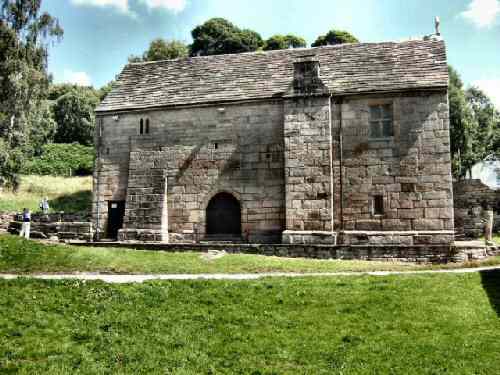
The ruins of Padley Hall lie along a track a short distance from Grindleford Station, past Padley Mill, converted into a private residence. All that remains of the hall are part of the foundations and the original gatehouse. Padley Chapel, hidden away on the upper floor of the gatehouse, survives today. It was used as a barn for over 100 years before being restored in 1933.
On 12 July 1588, a raid took place at the hall, and the two catholic priests, Nicholas Garlick and Robert Ludlam and several members of the Fitzherbert family were arrested. It was not illegal to be a Catholic, but training abroad to be a priest was against the law. Harbouring a priest was a treasonable offence.
Nicholas Garlick, the son of a Yeoman from Glossop who had trained to be a priest in France, and Robert Ludlam, the son of a farmer from Radbourne, who had also trained in France, were both taken to Derby and hanged, drawn and quartered. John Fitzherbert of Padley and his brother both died in prison. A pilgrimage now takes place every year in July when a special service takes place in memory of the Padley Martyrs.
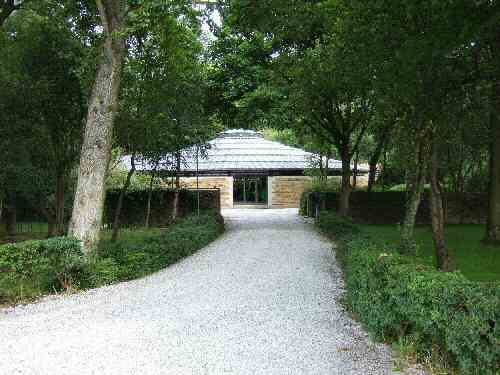
Facing Padley Chapel is Brunt’s Barn, a volunteer conservation centre opened in 1981 in memory of Harry Brunt’s pioneering work for the National Park 1951-80. A wildflower nursery that propagates a fantastic variety of flowers is close by.
BRUNT’S BARN
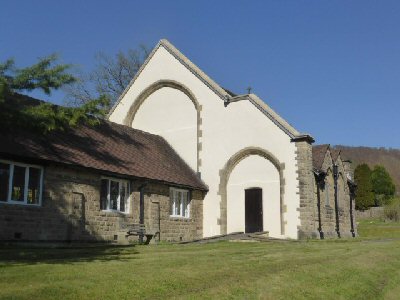
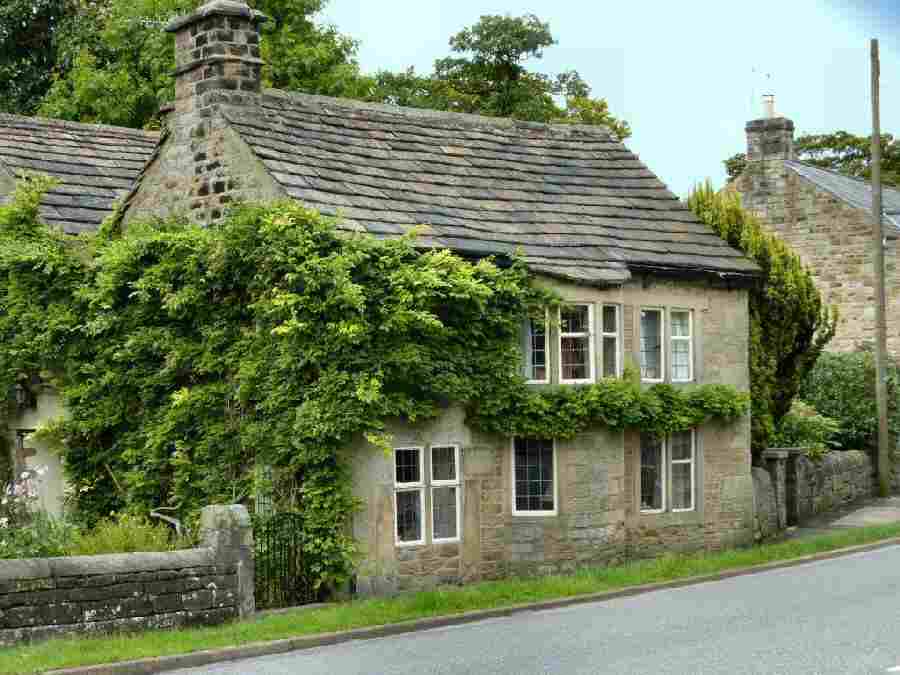
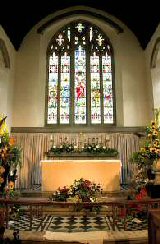
On the western side of the bridge over the River Derwent is the Toll Bar Cottage, with the projecting window providing a good view in both directions for the toll keeper to keep a watch out for business! The lovely light and spacious St Helens Church, consecrated in 1910, five years after the expansion of the Methodist Chapel, is on the opposite side of the road.
GRINDLEFORD
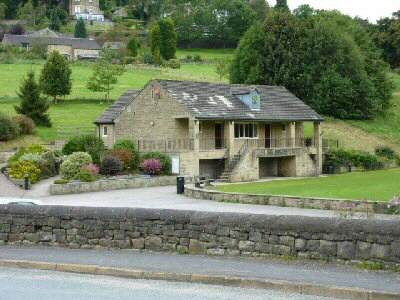
The 1977 Jubilee Gardens, by the bridge, is a pleasant place to sit and relax. Across the road, more strenuous activity takes place on Bridgefields sports ground. Apart from providing sporting facilities, the large, well-equipped Bishop Pavilion is the centre of community life in the village. The Annual Grindleford Horticultural Show takes place in August, and the Carnival is held in June yearly.
TEN FASCINATING FACTS ABOUT GRINDLEFORD
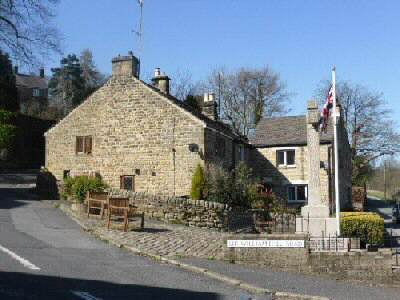
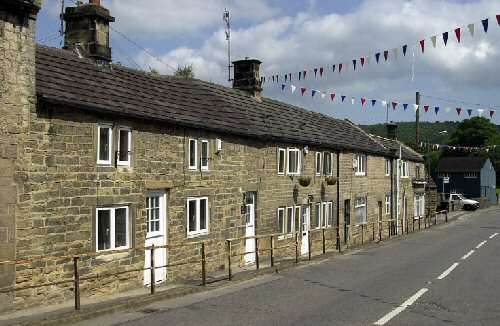
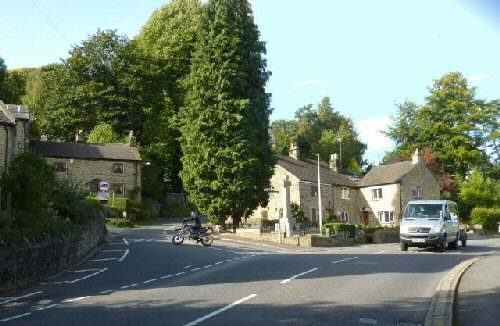
1. The old part of the village was built around the Green, at the foot of Sir William Hill, close to the War Memorial, with the impressive Sir William Hotel just across the road.
2. A stone quarry is on the beautifully wooded road to Calver, near the impressive Stoke Hall, a Grade II * listed building. The stone from the quarry is of a pleasing pale buff colour. It has been used to construct several prominent buildings in the village, including St Helen’s Church.
3. The Totley Tunnel was tunnelled from both ends and finished when both tunnels met on 23 October 1892. Water was a big problem during construction, and tunnelling had to stop more than once for drains to be cut to carry the water away.
4. Part of the Totley Tunnel is in Derbyshire, and the other part is in Yorkshire.
5. The village shop closed several years ago. A community shop was opened a few years later, at St Helen’s Church in the former choir-robing vestry.
6. Padley Chapel on the upper floor of the gatehouse, which served for many years as a farm building, was restored in 1933 as a Roman Catholic chapel. It dates to the 14th/15th Century.
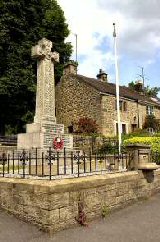
7. The War Memorial is unusual in that it shows the names and ages of the fallen and the actual date they lost their lives.
8. Longshaw Sheep Dog Trails are held annually in ‘Lawrence Field’ on Longshaw Pasture above Grindleford.
9. Grindleford was at the meeting point of three turnpike roads. The Buxton to Sheffield, the Newhaven to Grindleford and the Mortimer Turnpike, which linked Derbyshire with the West Riding of Yorkshire via Penistone.
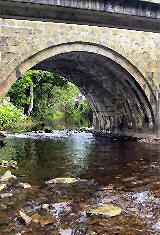
10. The importance of crossing the River Derwent led to the building of a bridge, first documented in 1577, but an earlier wooden structure existed. Underneath the arches of the present bridge, the joins show where the bridge was widened.
GRINDLEFORD AND PADLEY GORGE WALK