HAYFIELD
Location: On the A624 road from Chapel en le Frith to Glossop – SK037870
Visit: The Sett Valley Trail is two and a half miles in length and used for recreational purposes by walkers, cyclists, and horse riders. It follows the former track of the railway line that linked Hayfield with New Mills and Manchester. The route forms part of the Pennine Bridleway National Trail between Hayfield and Birch Vale and is of outstanding natural beauty.
Refreshments: There are several pubs and restaurants in and around Hayfield, including the Michelin-starred Pack Horse Inn. Marmalade Coffee Shop is on New Mills Road.
Walk: An invigorating walk, which after leaving the Sett Valley Trail climbs steadily up to Lantern Pike for glorious views over Kinder Scout and Hayfield. On a clear day, with the aid of the viewfinder on Lantern Pike, you will be able to pinpoint well-known landmarks on Kinder Scout.
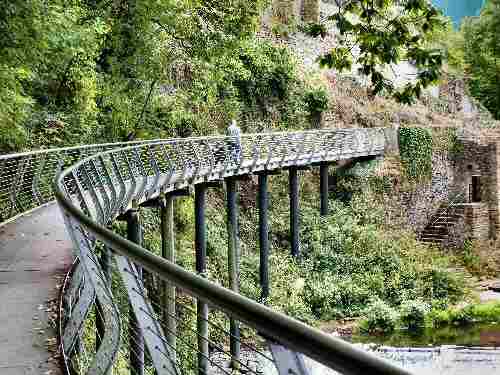
Special Places of Interest in the Locality: The Torrs Millennium Walkway, a much-admired walkway set deep in the spectacular Torrs Riverside Park and gorge at New Mills. The walkway forms the final link in the Midshires Way long-distance footpath. – Glossop, situated in the far North West of Derbyshire, is set in some of the most beautiful scenery in the Peak District National Park. A busy, bright, and modern town often referred to as the Gateway to the Peak. But, it is much more than a gateway and is an excellent centre for exploring the north-western side of the Dark Peak. – Lyme Park is a National Trust property comprising a magnificent mansion and a 1,400-acre park and formal gardens. The park contains a herd of deer with ducks and wildfowl on the lakes and ponds in the park. In the house is a varied collection of historic furniture, textiles, and tapestries.
INTRODUCTION
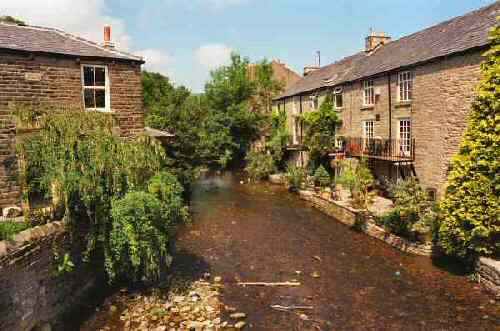
The village of Hayfield sits peacefully on the edge of the Peak District, in the narrow valley of the River Sett, surrounded by some of the wildest hills in the Dark Peak. Its location makes it a very popular centre for exploring the area with good amenities for walkers and mountain bikers, many of whom use it as the starting point for the western ascent of Kinder. Contrastingly, the Sett Valley Trail, two and a half miles in length, provides easy level walking. It follows the former track of the railway line that linked Hayfield with Manchester as far as New Mills.
KINDER SCOUT
For many years, Kinder was off-limits to walkers, preserved as a grouse moor. The peace was interrupted on Sunday, 24 April 1932, by the famous Kinder Scout Mass Trespass. It had been well-advertised in the Manchester Evening Chronicle and involved some 400 people. The police were waiting for the leader, Benny Rothman, at the railway station. But he avoided arrest by arriving on his bike. The walk started from Bowden Bridge Quarry, just to the west of the village centre. On the moor, the gamekeepers confronted the walkers. However, they were unable to stop them from walking across Kinder to meet up with other parties of ramblers who gained access from different locations. Five ramblers were later arrested and imprisoned for their part in the demonstration. As a result of the trespass, access restrictions gradually reduced.
THE VILLAGE
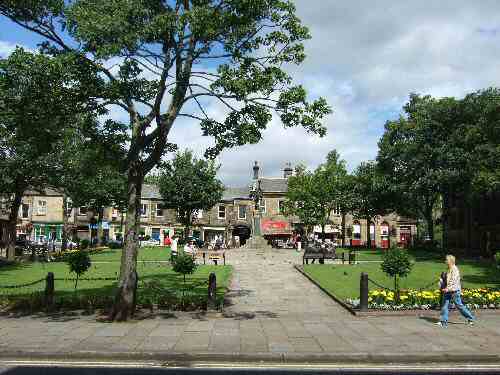
Today, traffic no longer follows the main village street but follows the new relief road, making the village centre a relatively quiet place. Things were much different in the past, when cotton and paper mills, calico printing and a dye works made it a busy and noisy place. It was wool that started the industrial expansion, and the spinning and weaving of both wool and cotton became established in the 17th century. As the 1700s progressed, Hayfield began to share in the significant expansion of textiles, which was taking place in the Northwest. Three-storeyed weavers’ houses replaced the former thatched cottages; three woollen mills were built by the river, and later in 1810, a dye works. But prosperity did not last, and handloom weaving began to decline, although Hayfield still had woollen mills until the mid-1800s.
RAILWAY
In 1868, the railway came to Hayfield and was soon busy with both passengers and goods, servicing all the mills in the Sett Valley, but business gradually diminished, and it closed in 1970. Now the line provides a traffic-free route of two and a half miles for walkers, cyclists and horse riders between Hayfield and New Mills.
FLOODS
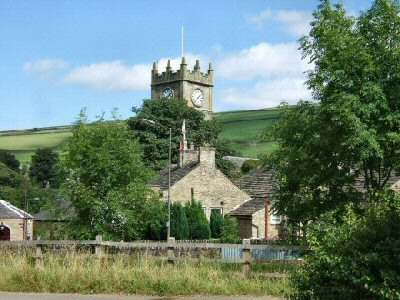
Flooding has been a regular problem in the past, and in 1818, after a disastrous flood, the parish church of St Matthew had to be rebuilt and the floor level raised. A curious feature of the building is that it stands on a stream which emerges from beneath the church.
BRIDGES
The Town Bridge, known locally as the Woolpack Bridge, built in 1837, is the third on the site, the first two having been swept away by floods. When the present bridge was rebuilt, the builders discovered the north side was on quicksand. This problem was solved when someone came up with the idea of using huge bags of wool pressed down in the sand. The bridge is still standing, which is testimony enough to the soundness of the idea.
TEN FASCINATING FACTS ABOUT HAYFIELD
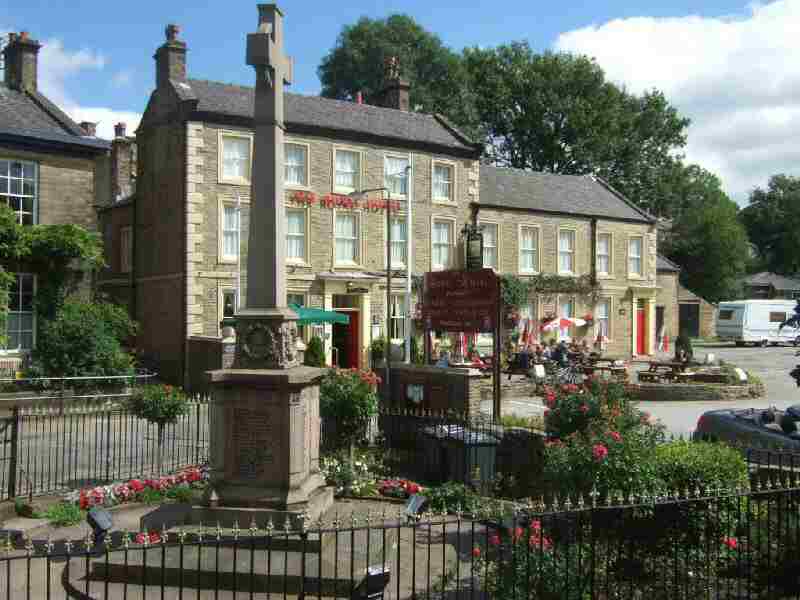
1. The Royal Hotel has a strange history. It was built in the 18th century as a parsonage, but mistakenly conveyed into the vicar’s name. On his death in 1764, his family sold it, and for forty years it was an inn. The new owner restored it to its original use until 1863. When he disagreed with the choice of the incoming vicar, he converted it back into an inn.
2. Arthur Lowe, the son of a railway worker, was born in Hayfield. He is best remembered for his role as Captain Mainwaring (Also but erroneously referred to as Mannering) in the well-known television programme ‘Dad’s Army.’
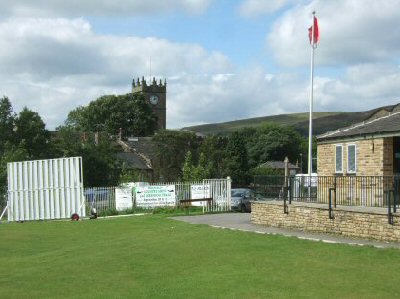
3. Lowe died in 1982, aged 66, after collapsing from a stroke in his dressing room at the Alexandra Theatre, Birmingham. A keen cricketer, he often used to bring members of the cast back to play cricket in the village.
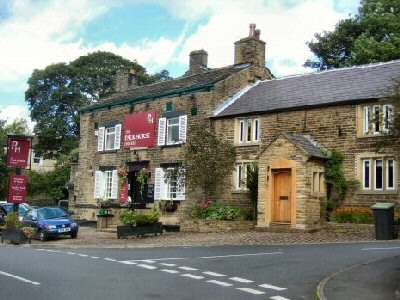
4. The Pack Horse Inn, built in 1577, was a stopping off point for ‘jaggers’ and their trains of packhorses on the long journey north to Holmfirth, or to the south.
5. Built during the same era as the Pack Horse, the George Hotel was where the popular folk song ‘Come Lasses and Lads’ was first heard.
6. The lower storey of the Town Hall was once used as a prison, but many prisoners escaped up the chimney. The most dangerous, however, were handcuffed to the oven door!
7. Beside the weir, an attractive Memorial Garden has been created in memory of three young people tragically killed in an accident at a Jazz Festival in 1983.
8. The village is split into roughly two halves by the A624 relief road, built to ease congestion on the village’s narrow main street. It is often locally referred to as the bypass, although this is not strictly correct as it goes straight through the village.
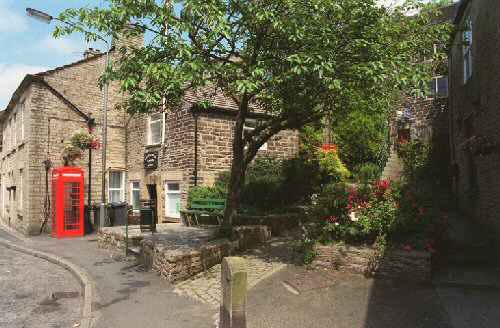
9. The small square off Market Street is known as Dungeon Brow because the village lock-up was once situated there.
10. At Little Hayfield, a mile to the north, is where Tony Warren created the television series’ Coronation Street’. Pat Phoenix, who starred as Elsie Tanner, also lived in the village.
HAYFIELD AND LANTERN PIKE WALK