PLAN YOUR DAY OUT
Location: Heanor is on the A608 Derby to Heanor Road (SK435463).
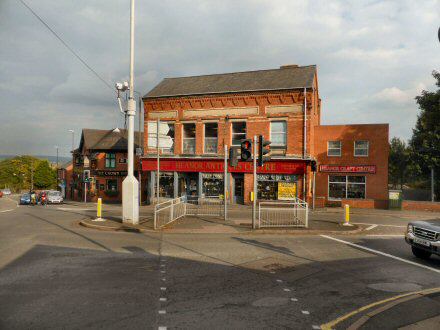
Visit: Heanor Antiques Centre is spread over four floors and has been described as a ‘Hunter’s Delight.’ For those who tire of searching for a bargain, the café, with rooftop seating, offers a resting place.
Refreshments: There is a wide range of pubs, restaurants, and cafés in and just outside the town.
Walk: Shipley Country Park, which offers 600 acres of attractive and varied parkland and 18 miles of footpaths and bridleways.
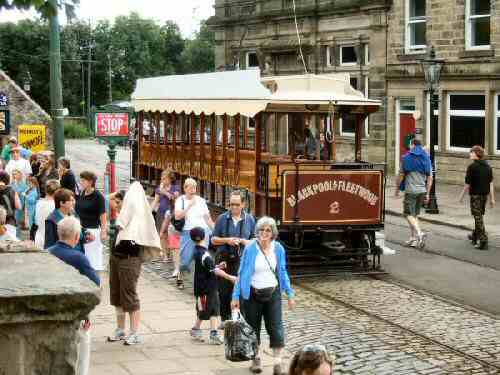
Special Places of Interest in the Locality: Crich Tramway Village boasts an extensive array of vintage trams from all over the world. Unlimited rides through a period street to stunning views over the Derwent Valley; The Great Northern Basin at Langley Mill was originally built over 200 years ago. The basin has been restored and extended during the last few years, linking the area with the southern canal system; Denby Pottery village is situated on the site where pottery manufacture began in 1809. There is an excellent selection of shops and somewhere to eat.
INTRODUCTION
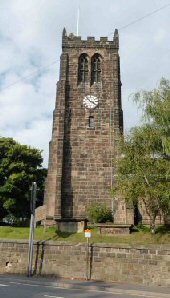
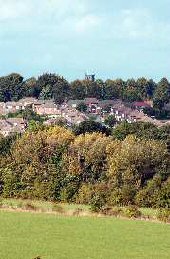
Heanor is a small hilltop town that clusters around its attractive parish church of St Lawrence, high above the Erewash Valley. It sits face to face across the valley with Eastwood, the Nottinghamshire town made famous by the writing of D H Lawrence.
The location of the site, which would have given early warning of unwelcome visitors, probably attracted ancient Britons, and there is evidence of Roman visits to these parts. However, the Anglo-Saxons were the first prominent settlers in the area. In Norman times, Heanor was an important village and had a church recorded in the Domesday Book of 1086. It remained an agricultural centre until the Industrial Revolution, when coal and iron ore deposits began to be extracted. The availability of employment drew more people to the area, and houses were built to accommodate the newcomers.
POPULATION TRENDS
In the mid-1900s, almost 45% of the working population of Heanor was employed in the collieries, and about 15% worked in the textile trade. However, the rapid decline of coal mining in the latter part of the century and the steady decline in the textile trade led to an urgent need for diversification to avoid mass long-term unemployment. To achieve this, in 1967, Heanor Gate Industrial Estate was extended and now contains several large, well-established companies and a small business section.
RIPLEY RATTLER
Between 1913 and 1932, anyone standing in Heanor Market Place would be able to hop on board the ‘Ripley Rattler’ for a ride on what was considered the most dangerous tramway in Britain. It ran for 11 miles, from Upper Parliament Street in Nottingham to Ripley, with several stopping points on the way and was the longest tramway in the world. It was so notorious that D.H. Lawrence, who lived only a few yards from the line, was moved to write an amusing short story, ‘Tickets Please.’
The single track had 316 passing places, all on the left-hand side of the main track, so that when riding from Nottingham, passengers had to endure a succession of swinging movements, the more violent the faster the tramcar travelled. Accidents happened regularly; trams reportedly got jammed under bridges, came off the track, and on one occasion, a double-decker tram crashed into the church wall and threw the passengers travelling on the top into the graveyard. A woman was killed saving a child from being run over, and a man named Harry Parkin was honoured for bringing a runaway tram to a halt.
SHIPLEY COUNTRY PARK
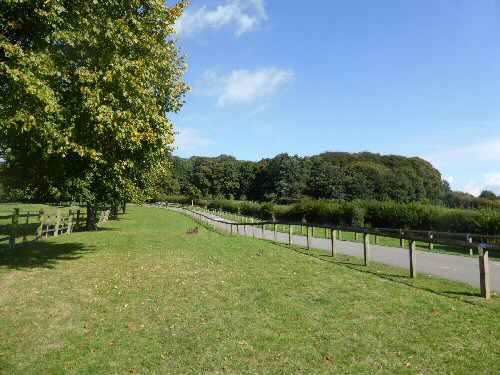
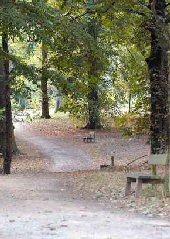
Visitors to the area are surprised to find attractive Shipley Park sandwiched between Heanor and Ilkeston – even more so when approaching the main entrance through the sprawling Heanor Gate Industrial Estate. Suddenly, Shipley Park is entered, and the industrial noise is silenced. An area of wooded parkland, hills, lakes, trails, and abundant wildlife stretches before you. It spans 600 acres of varied landscape and features 18 miles of footpaths.
THE MILLER-MUNDY FAMILY
The Miller-Mundy family developed Shipley in the 18th century as a country estate and a coal mining area. In the latter half of the 1900s, the area, once despoiled by mining activities, was restored. The old railway lines have been converted into trails, the reservoirs into lakes, and bare patches of land reseeded. Over half a million trees have been planted, and a Visitor Centre has opened since Derbyshire County Council turned the area into a park in 1976.
TEN FASCINATING FACTS ABOUT HEANOR
1. Heanor Gate is the home of Matthew Walker, the world’s oldest and largest manufacturer of Christmas puddings exported worldwide.
2. Matthew Walker, a Derbyshire farmer’s son, established the business in the 1890s, producing a range of preserves and Christmas puddings based on his mother’s recipes.
3. As demand for Christmas puddings grew, a modern factory was established. The firm now provides more Christmas puddings for retailers than any other Christmas pudding maker. It is part of the Valeo Foods Group.
4. In 1799, Shipley Hall was rebuilt, and the grounds were landscaped. Increased prosperity in the late 19th century led to further extensive development of the hall and estate as mining activity increased. After nationalisation in 1948, the National Coal Board demolished Shipley Hall due to subsidence.
5. Shipley Park is the home to one of Derbyshire’s prettiest cricket grounds – Shipley Park Cricket Club.
6. The American Adventure Theme Park opened in June 1987 on an area of the country park, previously the site of a deep-seam and opencast coal mine. The attraction proved very popular at the outset, but interest waned, and it closed after the 2006 season.
7. William Howitt, the son of a Quaker, was born in Heanor in 1792, the third of six sons. Both he and his wife, Mary, were prolific writers. Between them, they produced approximately 200 books, including poetry, travel narratives, novels, biographies, and translations.
8. The Georgian red brick chapel dates to 1839. Methodism first came to the town in 1797, introduced by a minister who had walked from Nottingham. After that, it became a ‘preaching place,’ before the building of a chapel on Tag Hill.
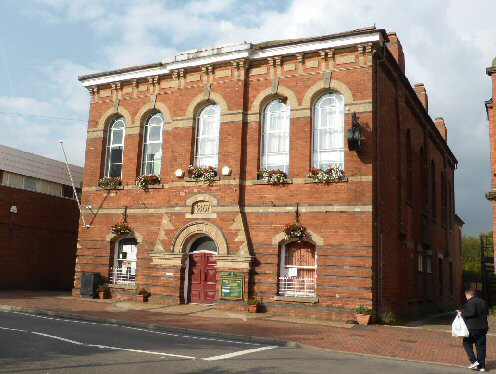
9. The Town Hall was erected in 1867, and about 33 years later, it served as a cinema, thought to have been the first in Derbyshire. It cost a penny to go in and two pence for a seat on the balcony. In 1995, it was saved from possible demolition when it reopened as a Town Hall.
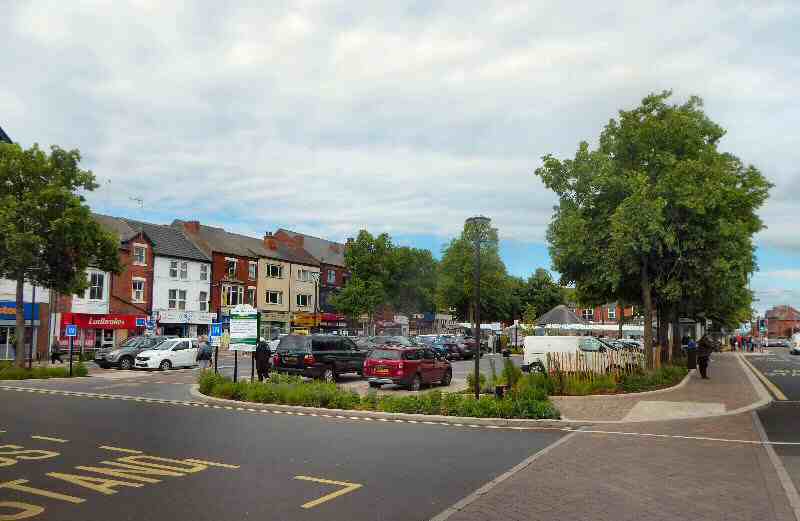
10. Heanor Market Place developed in the 1890s after the break-up of the Heanor Hall Estate. The Market Place site had been part of Heanor Hall Park and the focus of trading activity at Tag Hill.
SHIPLEY COUNTRY PARK WALK