INTRODUCTION
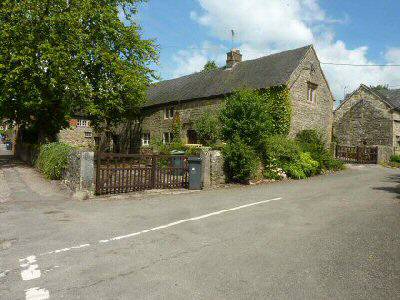
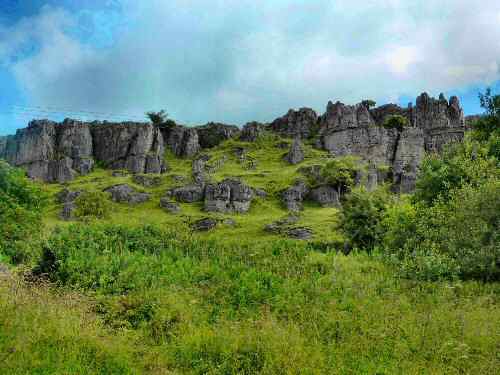
The attractive old village of Hognaston stands on a hillside overlooked by Hognaston Wynn, which protects it from the north winds. It has been in existence for at least one thousand years. Aerial photographs have shown evidence of medieval field structures and where properties long since demolished once stood.
The plentiful supply of spring water attracted the first settlers, marked by a series of wells along the road through the village. Some of the wells were called into use again during the drought of 1976.
It used to be a busy place in coaching days when the London to Manchester coaches passed through the village. Much longer ago, it may even have been on the Roman road to Little Chester.
JOHN OGILBY
In 1675, John Ogilby compiled the first proper road map of England – previous ones had been of little practical use. He called himself ‘Cosmographer to the King, Charles II.’ On his map, the only road in Derbyshire shown goes through Hognaston, when it would have been little more than a cart track. Ogilby measured the distance not only in miles but in furlongs as well, all this with nothing more to help than a wheel geared to a counting device.
ST BARTHOLOMEW’S CHURCH
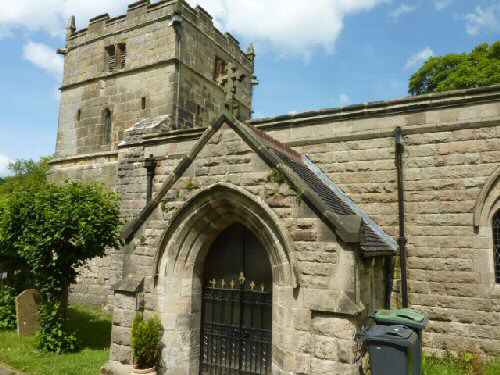
St Bartholomew’s Church dates to the 12th century, the doorway and the font being early Norman in origin. Two of the bells are in excellent condition considering they date back to the turn of the 13th century. The clock and three of the other bells were a gift from John Smith and Sons, the famous Derby clockmakers, as a memorial to John Smith, who lived in the village.
THE VILLAGE
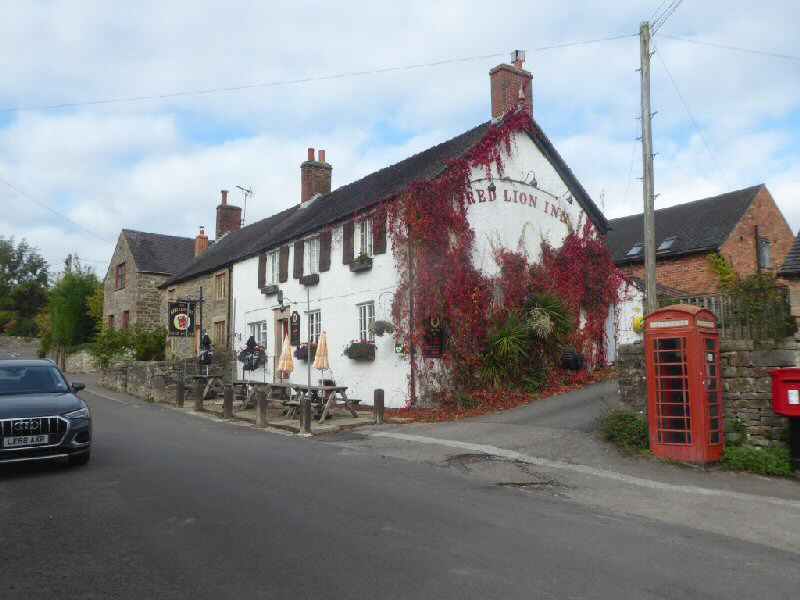
At the beginning of the 1900s, Hognaston was a village of bakers with three small bakeries serving the needs of the local communities. It was also well known for transport, the Webster family being involved in the haulage business as far back as 1666. Before them, trains of packhorses did the job. The early 1990s saw the sale of the coach operation. Three inns used to serve the packhorse trade, but only the Red Lion remains.
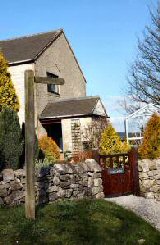
Many of the traditional limestone houses in the centre of the village date back to the 17th and 18th centuries. Knowl House, built in 1694, is one of the former bakeries and still retains a pump in the front yard from the days before piped water arrived. The Old Hall is about 100 years older than Knowl House, and once had a thatched roof. It is on the site of what was probably a fortified manor house.
CARSINGTON WATER
Nowadays, every worker travels some distance to work, and the village has been restored to its former rural peace and calm by the building of a bypass with the construction of Carsington Reservoir. Officially opened by HM the Queen in 1992, Carsington Water instantly became one of Derbyshire’s most important tourist attractions. The original estimate of 300,000 visitors per year soon had to be revised to over one million.
Built to meet the growing demand for water in Derbyshire, Nottinghamshire and Leicestershire, the reservoir provides a circular route for walkers. There is a slightly different route for cyclists. Only a short distance from the Visitor Centre is the Wildlife Centre, where you can watch Carsington’s birdlife in warmth and comfort.
At the Visitor Centre are several shops, a restaurant, a food kiosk, and an exhibition area. If you want something a little more adventurous, windsurfing boards are available. For the angler, there is the choice of fishing for brown trout from land or by boat.
TEN FASCINATING FACTS ABOUT HOGNASTON
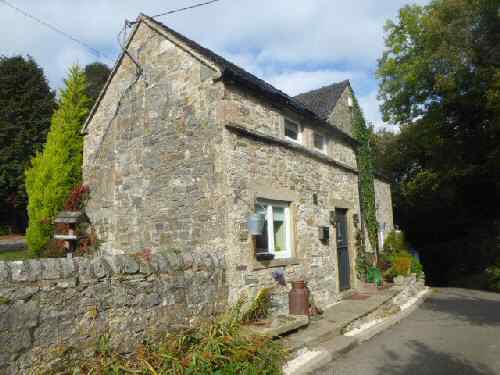
1. Hognaston is a limestone village, with older houses of local stone ‘closer to the honey colour of the Cotswolds than elsewhere in Derbyshire’, as Derbyshire historian Roy Christian observed. However, many of the later houses are of brick construction.
2. The church is home to Derbyshire’s oldest church bell, dating to the early 13th century.
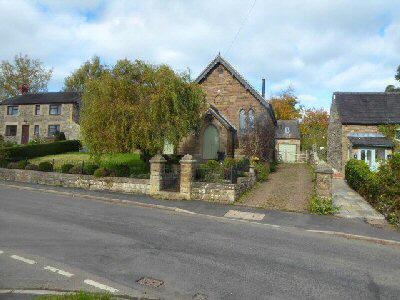
3. The former Congregational chapel, built in 1892, was later extended to accommodate the Sunday school in 1930.

4. Famous clockmaker John Smith, who lived in the village, endowed the church with three of its bells and provided it with its clock. His old firm still maintains the clock.
5. In 1978, residents bought the stones of some houses due to be submerged by the reservoir and used them to replace a tin and asbestos hut with a new village hall. The villagers raised more than half of the rebuilding costs, many lending money themselves to the committee.
6. The village hall, completed in 1982, was opened by Percy Thrower, the well-known garden expert.
7. According to some of the old village records, Hognaston was not always as smart as it is today. One court order read, ‘Every person who has a Dunghill or Dunghills in Town Street to remove it out of town.’
8. Another court order required a villager to remove his ‘Necessary House,’ to stop the fouling of a neighbour’s water.
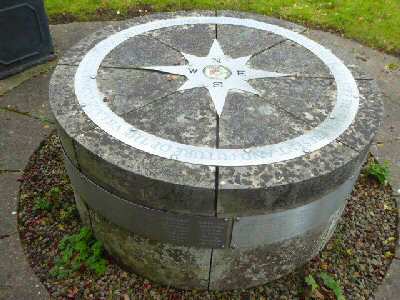
9. A roadside millennium exhibit records the names of the people living in the village at that time.
10. Carsington Water has become one of the East Midlands’ major tourist attractions, boasting over a million visitors a year. But the bypass has ensured that Hognaston remains a quiet and peaceful village, apart from an increase in walkers who come to explore the area, attracted by the new reservoir.
HOGNASTON AND CARSINGTON WATER WALK