ILAM PARK
Explore the 158-acre Ilam Country Park, managed by the National Trust, which lies on the banks of the River Manifold, surrounded by beautiful countryside. Enjoy a stroll along Paradise Walk, originally planted as a pleasure ground for the hall.
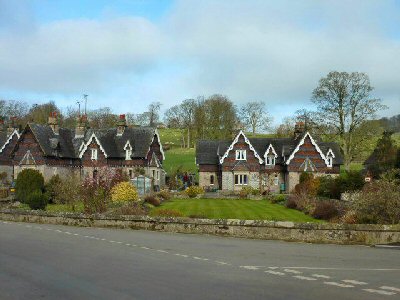
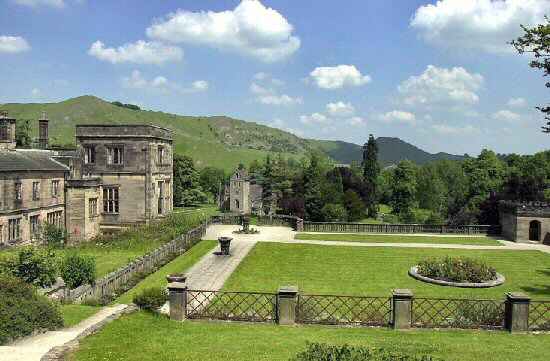
Alpine-style cottages, a Tudor Gothic Hall, an eccentric river and a wonderful background of soft green hills make Ilam a very popular place with visitors. Many of whom come to walk in Ilam Hall’s beautiful parkland, which is free for all to walk around, along the aptly named Paradise Walk by the River Manifold.
Paradise Walk is fringed by woodland, planted as a pleasure ground for the hall, and is a favourite with visitors. An ancient semi-natural woodland, Hinkley Wood, lies on the southern side of the River Manifold. Designated as a Site of Special Scientific Interest, noted for its small-leaved and large-leaved limes and their hybrids. The park possesses well-maintained trails, ideal for walking and hiking. A recently completed project to create a 1km circular route at Ilam Park, making the historic and picturesque site more accessible for everyone.
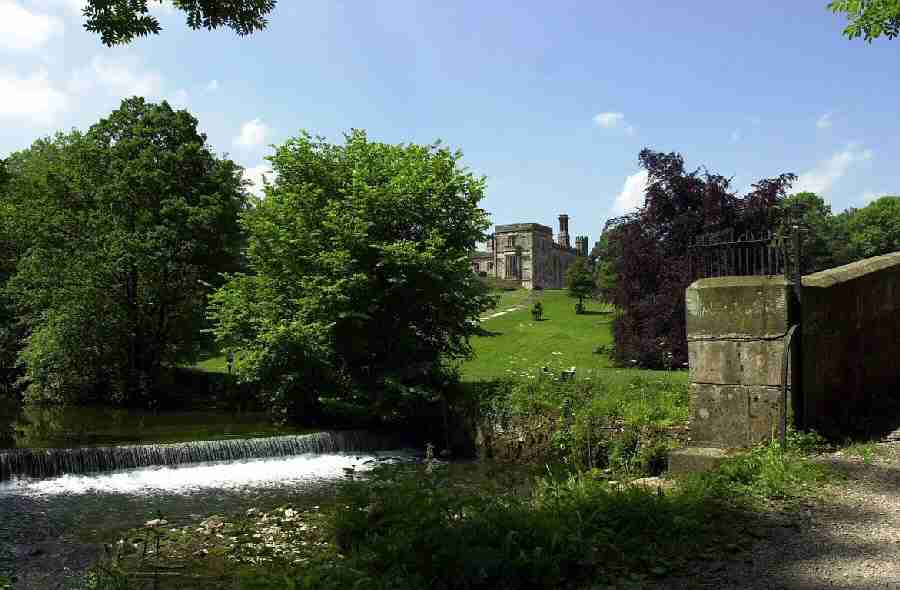
It was here that Jesse Watts-Russell, a wealthy industrialist, had a rather grand hall built. It had battlemented towers, ornamental chimneys and a flag tower. The architect, who designed the hall, was also engaged in the building of Alton Towers, and there were some similarities between the two.
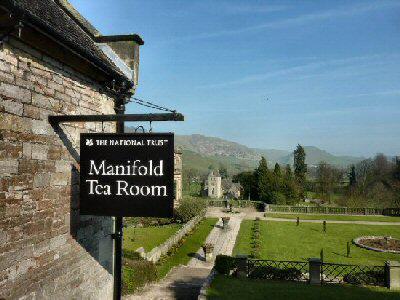
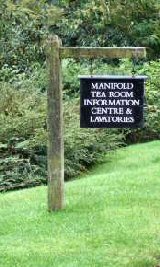
Following Watts-Russell’s death, the hall was in the hands of the Hanbury family for a time before being tried unsuccessfully as a restaurant, then sold, and partly demolished. In 1934, Sir Robert MacDougal decided to buy it for the nation and give it to the Youth Hostels Association ‘for the perpetual use of the youth of the world’. As the YHA did not have a trust body, it gave the building to the National Trust. What remains today are the old entrance hall, armoury and servants’ quarters, now converted into a Youth Hostel. There are tea rooms, a shop, information facilities and a car park available for visitors.
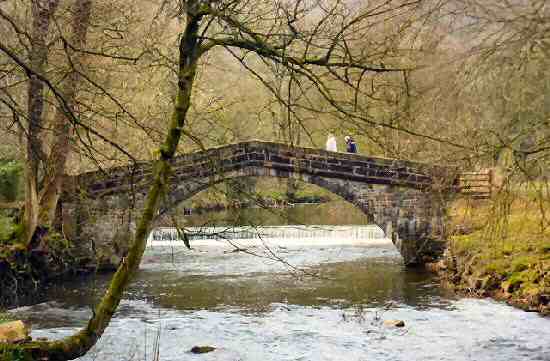
A short distance from the YHA is St Bertram’s Bridge, which carried the old road across the River Manifold before the present bridge existed. Bertram, who had connections with the Royal family of Mercia, was returning from Ireland with his wife and newborn child. He left them briefly, only to find on his return that wolves had savaged them both. At once, he denounced his heritage and spent the rest of his life as a hermit preaching the gospel.
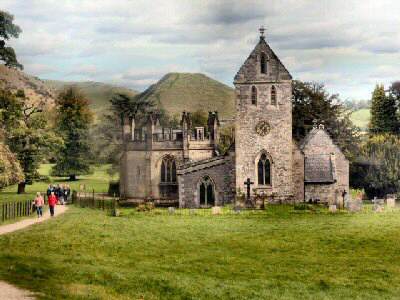
In the church of the Holy Cross, the chapel of St Bertram contains a shrine that became a place of pilgrimage in the Middle Ages and the scene of many miraculous cures. The Chantrey Chapel holds a finely carved memorial to David Pike Watts, a former owner of the estate, whose daughter married Jesse Watts-Russell.