INTRODUCTION
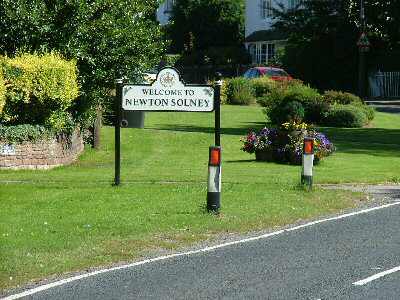
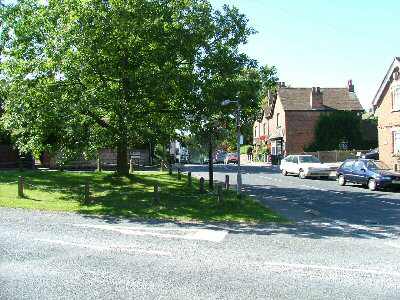
A writer in the 1950s described Newton Solney as ‘A village planted out in a garden, and half its population seems to be gardeners.’ Although the village has grown since then, a better-kept village is hard to find. Immaculate, colourful gardens, well-maintained verges and rarely any sign of litter. It is not surprising to see that so many awards have been won in the Best Kept Village and the Britain in Bloom contests. In 1999, Newton Solney gained second place in the medium-sized village section of the National Finals for the Britain in Bloom awards and since then has continued winning awards.
Few people who regularly drive through Newton Solney realise that hidden away on the riverside of the village, is a sizeable estate of houses. Even fewer are aware of the small, attractive estate built up around the lake at Newton Park on the other side of the road. It is a medium-sized village with a population of about 700. There is an infant school, a church, a village hall, a recreational field, two pubs and a hotel (currently closed). There is a second school, Bladon House, within the parish boundary for children with special needs.
The housing estate was built sometime after the land had been sold off, following the death of Percy Ratcliff, who owned most of the land in the village and lived at Newton Park. Like the rest of the village, all the properties and their gardens have the same neat appearance.
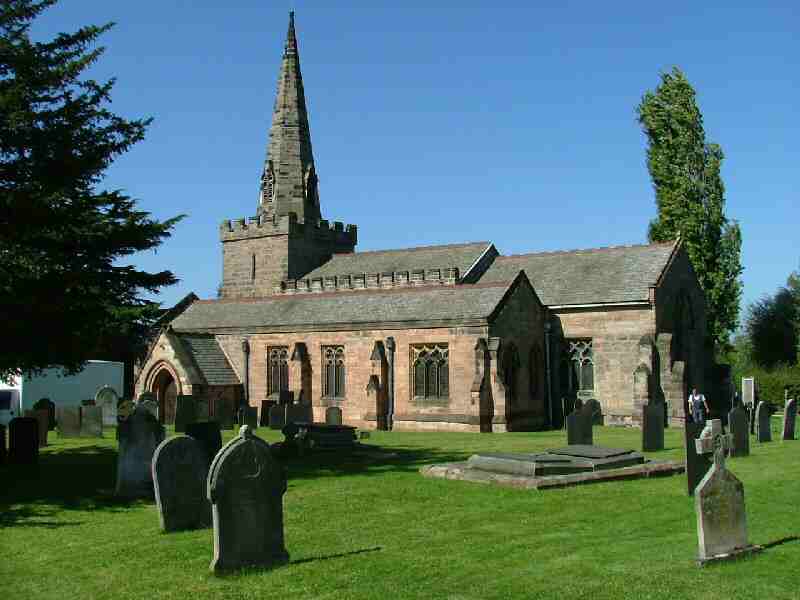
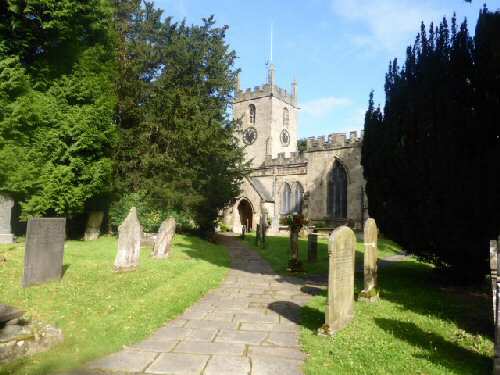
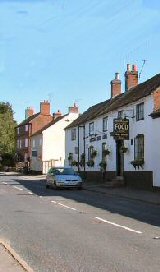
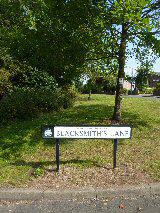
Although the River Trent flows close to the northern end of the village, it remains largely unseen. Three lanes lead off the main street, but Trent Lane alone leads to the river, and then it only comes into view at the last minute. Blacksmith’s Lane takes its name from the charming old Forge Cottage at the entrance to the Lane that leads to the housing estate. The view of the river from Church Lane is blocked by the Church of St Mary and Rock House, which some believe to be built on the site of the old Manor House.
Newton Solney is one of Derbyshire’s oldest villages and can trace its history back to the 10th century. An Anglican settlement existed in 956. The village is strategically placed just to the west of the confluence of the Trent and the Dove, and a ford across the Trent, which gave access to the common pastures, known as ‘The Hargate’ on the north side of the river.
After the Norman Conquest, Newton, as it was then called, eventually came into the hands of the Soligny family. They held it from about 1120 to 1390, when the last Soligny died childless, but the manor remained in the family through the female line. The village by this time was called Newton Solney.
The estate changed hands several times, but it was Abraham Hoskins, an attorney and land speculator from Burton, who made the most significant impact. He built a house there in the 1790s, the core of the present Newton Park Hotel. However, he did not stop there; he built Bladon Castle, a folly, with no other purpose than to improve the view from his house. The local people were aghast at the extravagance, but he, and later his son, converted it into an even more extravagant house.
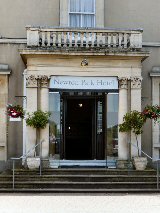
Ruined by extravagance, the younger Hoskins was forced to sell the estate in 1876 to Lord Chesterfield, who let Newton Park to William Worthington, the Burton brewer. After Worthington’s death, it remained empty for several years before the Ratcliff family acquired it in 1879, together with the majority of Hoskins’ former property. Money was lavished on modernising and extending the house and revitalising the gardens, and it became one of the first country houses to be lit by electricity.
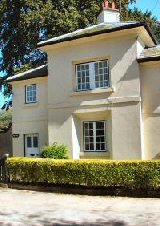
The Ratcliff family was a generous benefactor to the village. They contributed substantially to the church restoration and built the village club. Percy Ratcliff had Sunnyside Cottages erected in 1950 for older people, as a memorial to the Second World War. They are located on the corner of Church Lane, alongside the row of four almshouses given to the village by John Higgot, a local farmer, in 1876. The almshouses were given on the condition they were occupied by persons not less than fifty years old and of ‘good character and clean habits,’ preference being given to aged agricultural labourers or their widows.
On the death of Peter Ratcliff in 1955, Newton Park was sold. His widow moved into The Cedars, and eleven years later, Newton Park opened as a hotel. The tenants bought most of the property in the village. The land was released for building, and The Hollies Estate was built, bringing more young families into the village. This relieved the pressure on the village school, previously in danger of closing because of a lack of numbers.
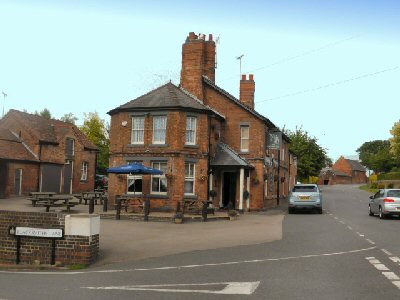
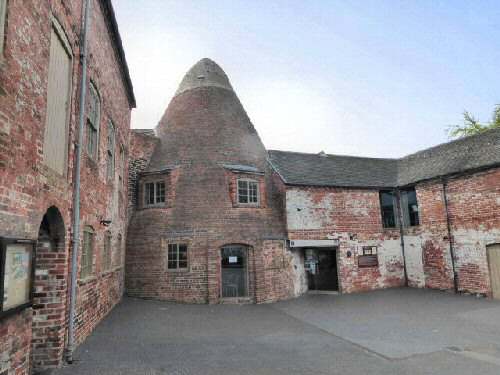
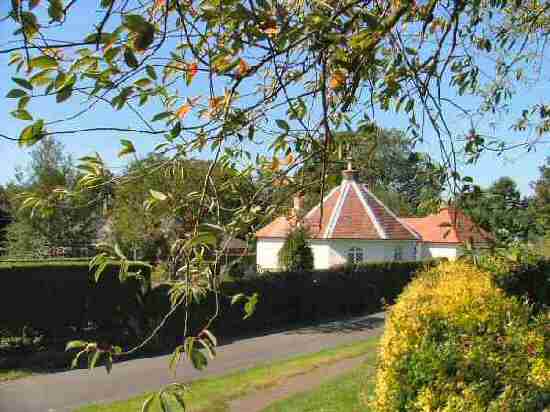
There are two public houses in Newton Solney: the Unicorn, formerly a farmhouse, and the Brickmakers Arms, which stands in front of what was the site of a flourishing brickworks in the 19th century. The most unusual property in the village is almost certainly the Beehive Cottage at the end of Church Lane, which was probably built as a lodge to Rock House and is octagonal.
TEN FASCINATING FACTS ABOUT NEWTON SOLNEY
1. Like many settlements that were established adjacent to the River, Newton Solney developed in association with a major crossing point, in this case, a ford.
2. Initially, Newton Solney was predominantly an agricultural settlement. But this changed in the 19th century to that of a highly select residential area for wealthy families from Burton-on-Trent.
3. Its location overlooking the Trent valley provided opportunities for new houses with commanding views. This appealed to well-to-do Burton families, who set up home there.
4. Apart from all the usual events that you would find at a busy church hall, with its well-maintained bowling green, an annual Christmas Shoot is not what you would expect. A rifle range was presented to the village at the back of the church hall by Colonel Ratcliff when he lived in Newton Solney.
5. The Unicorn Inn and the Brickmakers Arms are the heart of the village when it comes to meeting places. They are both located along the B5008 Newton Road, on opposite sides of the street. There is a lot of friendly rivalry between the two pubs at the annual cricket match, first set up in 1952.
6. South Derbyshire District Council designated the Newton Solney Conservation Area on 12 October 1978. There are 19 Grade II listed buildings in Newton Solney, including the Newton Park Hotel, the Brickmakers Arms, and the church of St Mary the Virgin.
7. The War Office requisitioned Bladon Castle during the Second World War, following which it was purchased by Air Chief Marshall Sir Ralph Cochrane, who most famously led the Dambusters raid to destroy the dams in the Ruhr Valley during the Second World War.
8. Originally, Bladon Castle was nothing more than a single long wall, rather like a film set. Built by the Hoskins family to improve the view and impress. It had the opposite effect on the inhabitants of the village, who protested furiously at the extravagance while the country was at serious threat of invasion by Napoleon.
9. To try to placate the villagers, rooms were hastily added at the rear of the castle frontage, and claims were made that this had always been the intention.
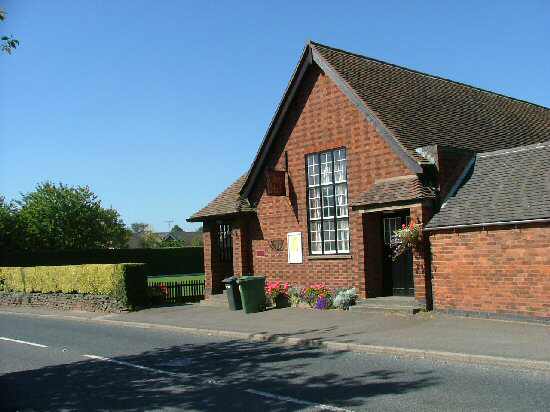
10. The Village Hall, designed by the architect Arthur Eaton and built in 1932, is a one-off design incorporating four different colours of brickwork. This gives it a unique character in the village.
NEWTON SOLNEY AND WINSHILL WALK