INTRODUCTION
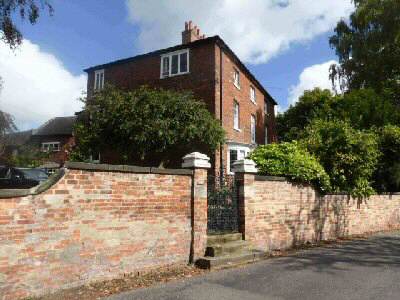
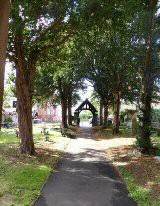
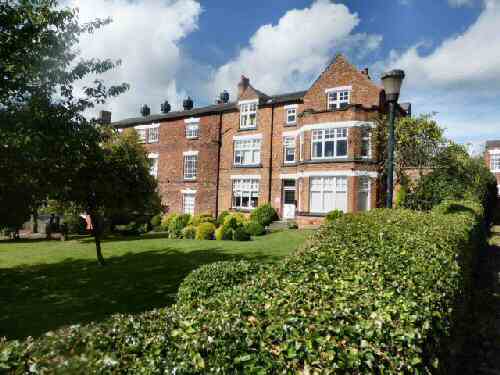
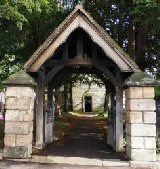
Ockbrook is situated just to the north of the busy A52 dual carriageway, only a short distance from the outskirts of Derby. Despite this, it has retained much of its charm and maintained reasonable peace and quiet. There are two distinct parts to the village. The original settlement is where Occa, an Anglo-Saxon, and his people built their homes. In the 6th century, on the banks of the brook from which the village derived its name. Alongside it is the Moravian Settlement, a product of the 18th century, with its delightful terrace of red-brick Georgian buildings and a strikingly attractive church, approached up a tree-lined path.
ISAAC FREARSON
In 1739, when visiting Nottingham, Isaac Frearson, an Ockbrook farmer, stopped in the marketplace to listen to the Rev Jacob Rogers speak. He was so impressed that he invited him back to preach at Ockbrook, and Rogers preached a sermon to the people of the village in Frearson’s barn. Although Rev Rogers was an Anglican, the Moravian way of life influenced him.
THE MORAVIAN CHURCH
The Moravian Church was founded in 1457 in Bohemia, based on simplicity in life and worship. Persecution followed and became so severe that in 1722, many followers of the religion fled. Most went to Saxony near the present-day border with Poland, where Count Zinzendorf granted them sanctuary. They established the Moravian Church there and sent missionaries to America and the West Indies. They also spent time in London, where the message gradually spread.
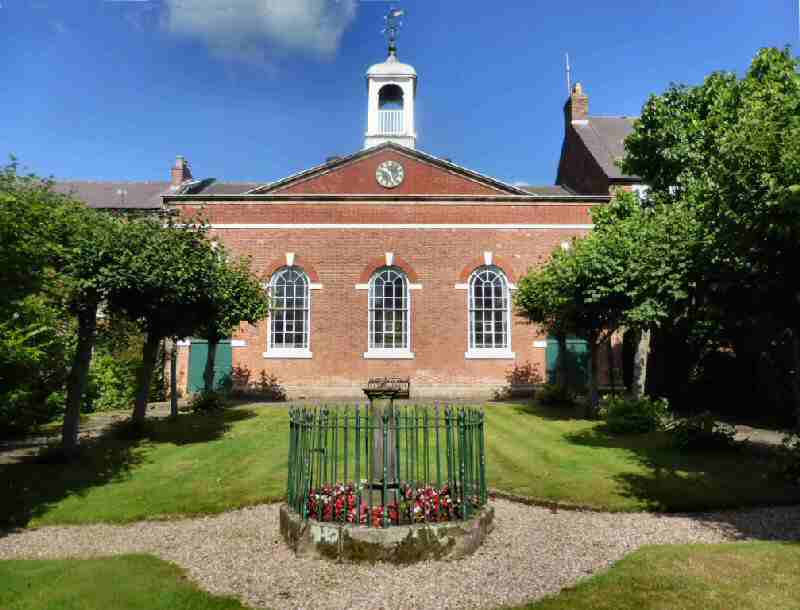
In 1750, a Congregation of the Moravian Church was established in Ockbrook. After overcoming many obstacles, mainly due to local opposition. Some local people did not like the idea of a new church, and they damaged the church building considerably during its construction. Despite the unrest, two years later, the church was opened on land bought from Isaac Frearson.
During the latter part of the 18th century, Ockbrook was the centre of the Moravian Church in England. The Moravians were hard-working, highly disciplined people with strict rules. They attended to the basic medical needs of the community, built schools, opened a shop, and administered to the spiritual needs.
MANUFACTURING
The arrival of the Moravians led to a considerable improvement in living standards. As a result, more affluent people moved to Ockbrook and new trades were introduced, including silk glove manufacturing and shoe and straw bonnet manufacturing.
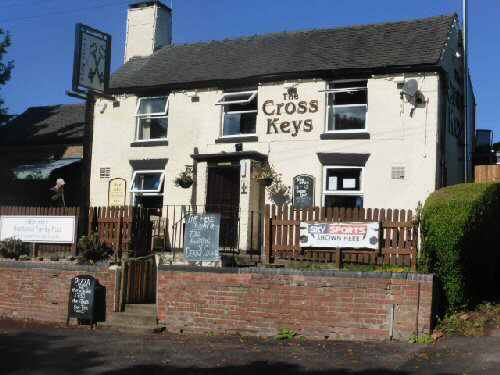
Textile manufacturing was also significant, and framework knitting took place in cottages in the village. The Cross Keys fulfilled the joint function of a public house and silk-stocking manufacturer, including Queen Victoria’s wedding stockings. However, during the second half of the 19th century, competition from mechanisation slowly ended the cottage industry.
THE ROYAL OAK
The Royal Oak is the oldest licensed pub in the village, dating back to the early 1700s. A stone slab near the front of the premises covers a well from where water was once drawn to make beer. Behind the Queen’s Head is the local cricket club that has achieved considerable success recently. One local character who enjoyed playing for the club was Whackie Harrison, who played for 42 years from 1891. In recent times, Kevin Dean, the former Derbyshire CCC stalwart, has captained the side. The White Swan is another attractive pub worth visiting.
THE CROSS KEYS
The Cross Keys, owned by Punch Taverns, was so much in decline a few years ago that the leaseholder offered the lease ‘for sale’ for nothing. And there were no takers. Eventually, along came Ian Darlington, and a few years later, the pub not only offered drinks but also served food. To add to the success story, the pub debuted in the Good Beer Guide in 2016.
THE VILLAGE
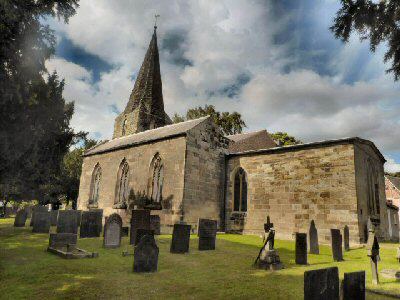
All Saints’ Church became the parish church around 1600, previously serving as a chapelry of Elvaston. The tower was built in the 12th century, and the spire was added later. In 1963, the Norman font was restored and returned to its rightful place after being thrown out by a previous generation and used in the rectory garden. At the rear of the church stands the substantially restored Church Farm, a delightful timber-framed farmhouse dating back to the 17th century.
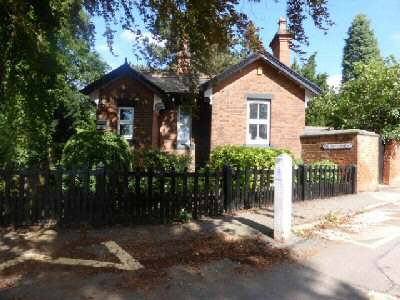
The Old Post Office, down the path leading into the central part of the village, has been converted into a private house. It was once the Moravian Congregation Shop, where the brethren offered the best quality goods at reasonable prices. Further up the path, Shopstones Cottages were built as family houses.
TEN FASCINATING FACTS ABOUT OCKBROOK
1. Ockbrook is part of the parish of Ockbrook and Borrowash and was the largest in the past. But in the late 1800s, Borrowash expanded and is now the larger of the two.
2. The Moravians celebrated their 250th anniversary at the beginning of this century. When any person associated with the church, by request, had their name embroidered on a leaf. These formed part of a tree tapestry hung on the church’s wall.
3. At the top of The Moravian Settlement, the Single Sisters’ House was funded by producing and selling fine needlework. The Sisters also ran a small day school until 1799, when a Girls’ school was opened in a different building. The main school closed in 2021.
4. A Lecture Hall and Sunday school opened opposite the former school in 1831. During the First World War, the Red Cross used the building as an auxiliary hospital, where many soldiers went to recuperate. It is now used by various groups from the local community and the congregation.
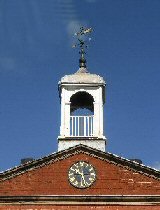
5. The Moravian Church clock was made by Whitehurst of Derby and paid for by public subscription. It is hand-wound and still in working order.
6. The ancient hedgerows along the upper reaches of Far Lane indicate that it is an ancient track, probably dating from the Mesolithic period.
7. Off Far Lane, an Archaeological Project Information Board details a project on land at Little Hay Grange. A substantial stone building, which appears to have been built in the late 1st century AD, was excavated.
8. The path to the Moravian Church is known as the ‘Bishop’s Walk.’ It has been created from a collection of flagstones acquired from Dale Abbey.
9. A popular walk from Ockbrook is to the Hermit’s Cave at Dale Abbey, which is a designated Scheduled Ancient Monument.
10. All Saints Church at Dale Abbey has parts dating back to 1150. When the hermit started to build his Chapel and House on the site, this explains why Dale Abbey Church is the only one in England to share its roof with a farm.
OCKBROOK AND HERMIT’S CAVE WALK