INTRODUCTION
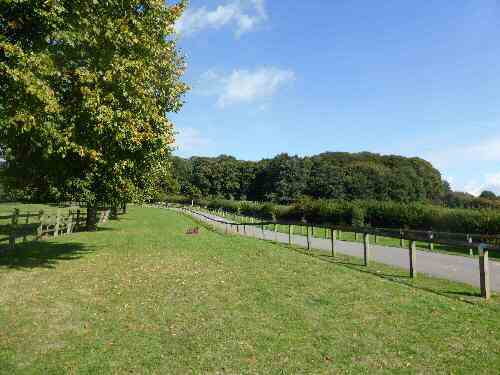
The village of Stanton–by–Dale retains its unspoilt charm and tranquillity of days gone by, despite being only a short distance from a former industrial area, and with the M1 motorway passing through the parish.
INDUSTRY
Heavy industry was once a feature of the area when several attempts were made to set up blast furnaces. The breakthrough came when iron pipes rapidly replaced wooden and earthenware ones — encouraged by the Earl of Stanhope, who owned the estate which included the village. Stanton Ironworks was eventually successfully established, joining with Staveley Ironworks in 1960 and being known throughout the world for cast iron products.
STANTON COMPANY
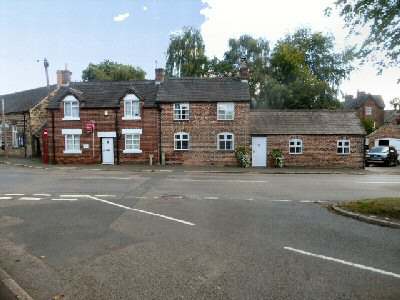
In 1912, the Stanton Company purchased Earl Stanhope’s estate and maintained the buildings in the village in a diligent manner. The policy was one of repair rather than alteration. Very little building took place other than the six semi-detached houses on Quarry Hill for the supervisors from the ironworks. Today, much of the village remains the same as it was in the early part of the 20th century.
STANTON HALL
Stanton Hall was the home in 1846 of Benjamin Smith, ‘The Ironmaster’, who took a 21-year lease from Earl Stanhope and established an ironworks by the Nutbrook Canal, which saw the beginning of the Stanton Ironworks. However, he and his son went bankrupt in 1849, and the creditors carried on the business before selling it to James Haywood, who made it financially sound. At its peak, it employed over 7,000 people, dominating local life, before finally closing in 2007.
ST MICHAEL’S AND ALL ANGELS CHURCH
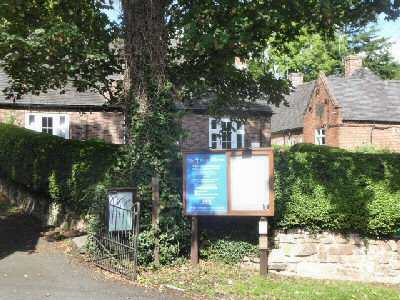
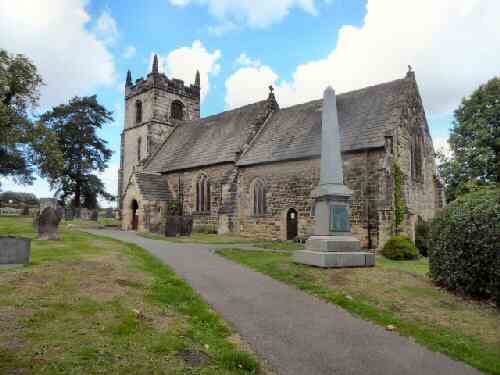
The village church dates to the early 14th century. A former rector, the Rev William Fox, achieved fame as ‘the sledging rector ‘ by using a horse-drawn Russian sledge, in winter, to get between his two parishes. At the bottom of the path leading to the church is a large rectangular stone that once formed part of a cheese press. On the right are the Middlemore Almshouses that blend so harmoniously that they would appear to be built at the same time. However, this is not the case: there are nearly two hundred years between the first four built and the last one. Mrs Winifred Middlemore gave the four houses nearest the church for occupation by eight poor people, from whom the row gets its name.
PUBLIC HOUSES
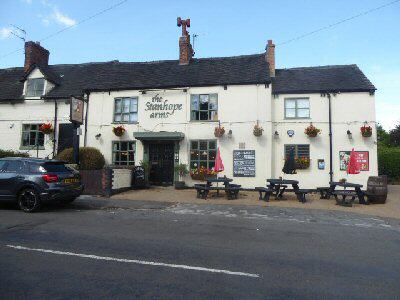
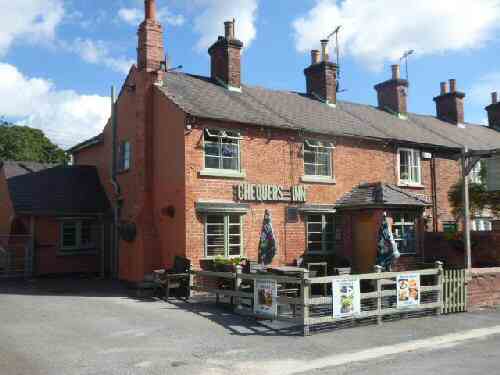
There are two public houses in the village, the Stanhope Arms and the Chequers Inn, where during the Second World War the landlord, because of the shortage of barbers, used to cut customers’ hair, while they downed a pint! It provided a rather novel excuse for slipping out of the house for a drink, rather than the more usual one of taking the dog for a walk.
THE VILLAGE
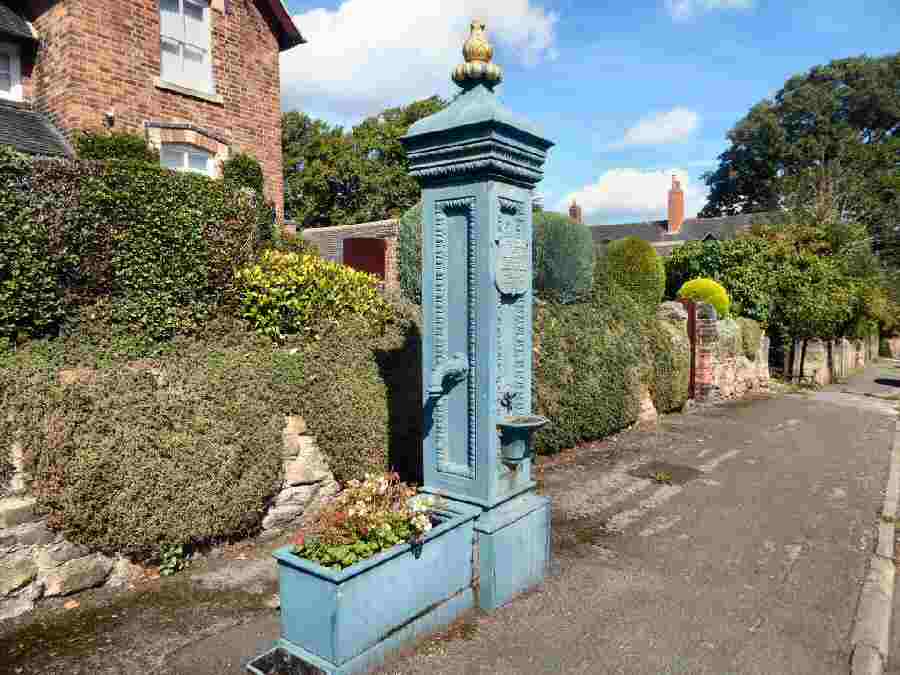
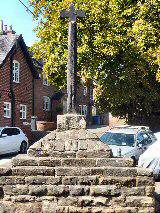
The Village Cross stands at the foot of Pepper Lane, under the shade of an old horse chestnut tree, its Fleur-de-lys style head dating back nearly 400 years. Further down Stanhope Street, the cast-iron pump used to act as a drinking fountain and provided a plinth for resting water containers whilst filled. It was a gift from the women of the village to commemorate Queen Victoria’s Diamond Jubilee in 1897. Over Dale Road and up the field from the Chequers is the village cricket ground. Formed in 1868, the team had the rather grand name of ‘The True Britons’.
TEN FASCINATING FACTS ABOUT STANTON-BY-DALE
1. In 1788, a small ironworks was established near Stanton-by-Dale before the real transformation began in the mid-1880s when Benjamin Smith and John Crompton expanded operations to form the Stanton Iron Company. Its location was ideal – rich local coal and clay, a canal nearby, and later, a direct rail link.
2. During both world wars, Stanton’s foundries switched to armament work, producing bomb casings and shell components.
3. Stanton by Dale heritage can be found across the globe. Wherever you are, look down, and you may well see a manhole cover with the embedded name ‘Stanton and Staveley.’ Look up, and if you see an old concrete lamp post, it could also bear the same name.
4. Many of the properties in the village were let and maintained by the Stanton Estate, and only workers at the ironworks were allowed to occupy them. The buildings were all painted “Stanton Green”, and although not predominant, the colour can still be seen throughout the village today.
5. The Manor House on Stanhope Street, in the heyday of Stanton Ironworks, was used as a private guest house for visiting senior executives.
6. There is evidence of iron production here from Roman times, long before blast furnaces ignited at the Stanton Works.
7. The golf course along the Derbyshire/Nottinghamshire border forms a protective barrier between the buzz of traffic on the Motorway and the peaceful village of Stanton-by-Dale.
8. Behind the village cross, a sealed letter box with the insignia “GR” that was in use until 1990 can be seen in the wall of the cottage next door to the Stanhope Arms. The octagonal shaft of the cross and parts of the church are all that remain in the village from medieval times.
9. A triangular refuge where the three main roads through the village meet forms a natural village green. Stanhope Street is to the left, Dale Road behind, and Main Street to the right.
10. The majority of Stanton lies within a conservation area, and it is subject to an Article 4 Direction, which should ensure that the village will continue to retain its unique character in future years.
OCKBROOK AND HERMIT’S CAVE WALK