INTRODUCTION
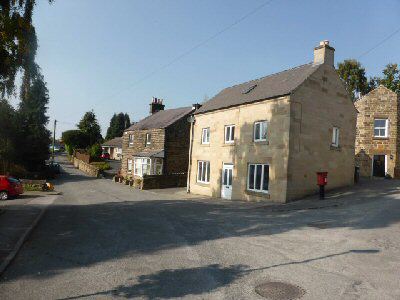
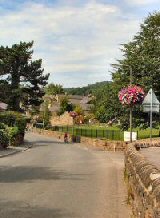
Situated on the edge of Tansley Moor, in attractive countryside, one and a half miles east of Matlock, is the village of Tansley. It straddles the main road to Alfreton. Church Street, the main village street, leads off the A615 in a northerly direction.
The climate is bracing, the water supply is good, and the scenery is beautiful. All this once made the village a pleasant resort for visitors and invalids who came to take the waters at the hydropathy at Matlock.
LUMSDALE
Fast-flowing streams brought industry to the locality, and several mills were built in Lumsdale, which became part of the parish of Tansley, in 1865. They provided additional employment in addition to farming and quarrying. At one time, some seventeen mills all drew their power from one small, but rapidly descending stream, the Bentley Brook. Dams were constructed on the very steep hillside so the mills could operate.
The oldest of the mills dates back to the 1600s, and most of the population of Tansley found employment in the corn and bleach mills. The mills fell into disuse in the 20th century. But in 1976, the Lumsdale Project was launched. By 1981, work began to preserve the complex of water mills and ponds, after the Arkwright Society had acquired the lease.
Most of the mills were not restored but retained in a picturesque state of decay. The woodland area was retained as far as possible, and the public was allowed access to as much of the valley as safety allowed. The Arkwright Society continues to develop the management plan for the valley, which, together with its woodland and wetland habitats, is now a conservation area. There are no working mills and quarries, but a wide range of light industries now provide employment.
COMMUNITY SPIRIT
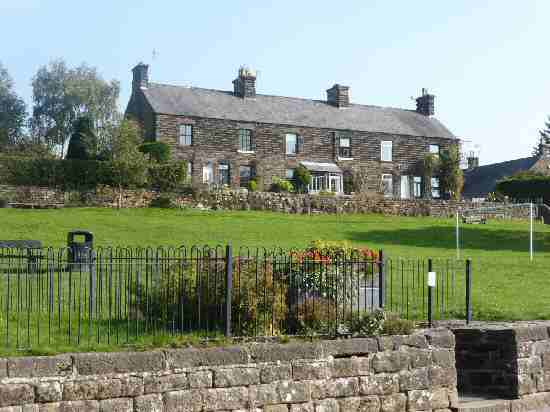
In February 2010, Tansley featured in the Sunday Times Property Section as a village that was ‘alive and kicking’, one where community spirit still thrives. The village has a green with a play area, a football field, where other village events take place. There are also village and community halls, two churches, a primary school, two pubs and other amenities. Few, if any, small villages anywhere in this country have so many garden and horticultural centres as Tansley.
HOLY TRINITY CHURCH
The Anglican Holy Trinity Church, built in 1840, saw the Reverend J Brodie Mais made rector 52 years later. He was in poor health and not expected to live many months; his predecessor had died within twelve months of appointment. The rector before that had not been a strong man. The omens were not good, and the future seemed rather bleak for both church and rector. Fortunately, the rector’s health improved, and 50 years later, at over 80 years of age, he was still in office!
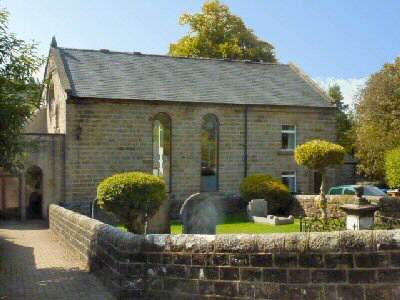
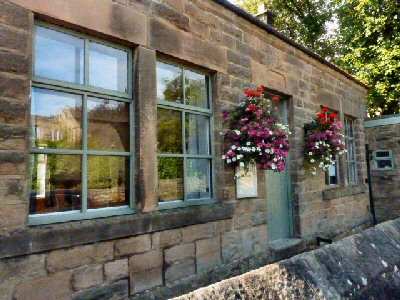
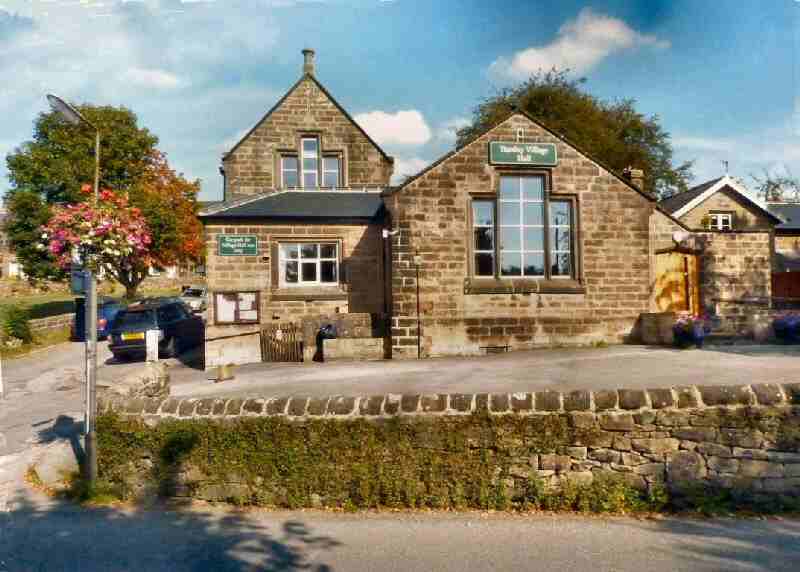
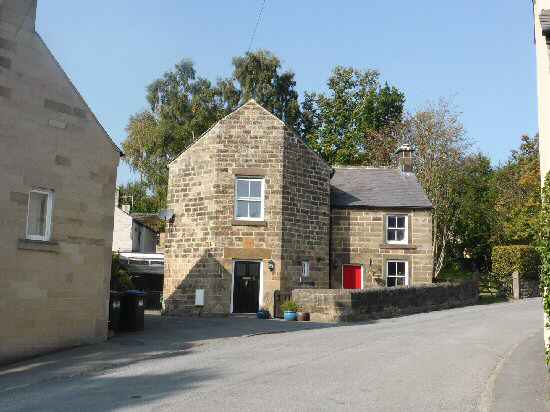
Built on rising ground of locally quarried stone, the Anglican Holy Trinity Church looks down on the village. Further down the street, the Methodist Church, built in 1829, has unusual modern windows, wrought iron railings and a gate at its entrance. The community centre, built in 1879, was originally a reading room, and the village hall was previously a school. These two buildings house the majority of the village’s numerous activities. Popular summer events include the Summer Fair and the well-liked scarecrow trail, along with the Holy Trinity Church Flower Festival.
THE VILLAGE
For those requiring refreshment, there are two public houses to choose from: The Gate, at the northern end of Church Street and, on the A615, The Tavern at Tansley. There is an even wider choice for enthusiastic gardeners. Attracted by the good loamy soil and a comparative absence of sharp late frosts, on the breezy hilltops, several garden centres and horticultural nurseries have all set up business within half a mile of the village.
RIBER CASTLE
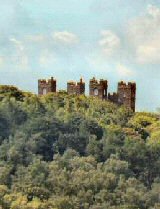
Within easy reach of Tansley is the delightful hilltop village of Riber. The ruins of Riber Castle, built by John Smedley in 1862, dominate the Derwent Valley from its lofty perch on the edge of the hill above Starkholmes. Smedley’s original idea was to build an observatory tower. But he found too many practical problems and decided to build a retirement home instead. The castle was constructed of massive blocks of local gritstone extracted from a quarry near the castle. He employed skilled artisans, including plasterers from Italy, to work on the interior.
TEN FASCINATING FACTS ABOUT TANSLEY
1. The autobiography of the rector’s son, ‘An Unrepentant Englishman’, was published a few years ago. It told the story of S. P. B. Mais, who became a well-known and well-loved national figure in later life. After leaving Oxford University, he went into teaching and then into journalism with the Daily Telegraph. He wrote over 200 books: novels, textbooks, poetry, topography books and an autobiography.
2. It is as a broadcaster for the BBC that S.P.B. Mais is best remembered, especially during the Second World War, when his Kitchen Front and Microphone at Large programmes attracted large audiences. He even presented a Letter from America, 13 years before Alistair Cooke began his marathon stint.
3. The headquarters of the British Orienteering Federation, the national governing body for orienteering in the United Kingdom, is at Scholes Mill, Tansley.
4. In 2015, Derbyshire Dales District Council approved a plan drawn up for the village hall and sold it to the community for £1.
5. Tansley expanded during the Industrial Revolution, the primary industry being the quarrying of millstone grit to make millstones, now the symbol for the National Park.
6. Tansley is well known for its car-boot sale. It is one of the largest car boot sales in Derbyshire, and takes place every Sunday and Bank Holiday. It typically starts near the end of February and runs to the end of November.
7. The villagers have a community chat group and a free email news service.
8. In the early 1800s, Tansley was part of the Parish of Crich (some five miles away) and did not have a church. In 1839, the villagers started raising the money for a church of their own, and it opened in 1840.
9. In 1844, the Parish of Tansley was formed and was no longer part of the Parish of Crich.
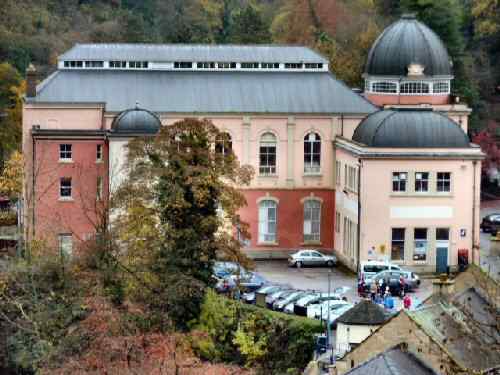
10. Tansley had a hydro, when spas and hydrotherapy were in fashion and Victorian tourists came to Matlock run by William Mycock, a former employee of John Smedley. Smedley’s hydro is now the offices of Derbyshire County Council.
TANSLEY AND RIBER CASTLE WALK