WINSTER
PLAN YOUR DAY OUT
Location: On the B5056 between A5012 (Cromford to Newhaven) and A6 (Matlock to Bakewell).

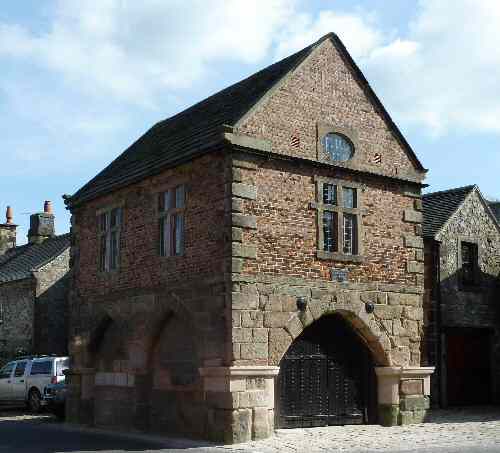
Visit: The Old Market House at Winster, which dates to the 17th century when the village was granted the right to hold a market. It became the first National Trust property in Derbyshire and the Peak District in 1906, and it is now an exhibition and information centre. For further information, visit the website: www.nationaltrust.org.uk
Refreshments: The Old Bowling Green dates to 1472, and is a privately owned traditional free house, offering good street food and refreshment. – The Miners Standard is a 17th-century oak-beamed pub full of interest and character, serving home-made food and refreshment. – The Miners Standard top car park accesses the Bank Top Café.
Walk: Ancient Britons and lead miners were once very much in evidence on Winster Walk, and at one time, you could even meet a hermit anxious to guide you on your way and keep you safe from harm.
Special Places of Interest in the Locality: Middleton Top, where the Visitor Centre tells the story of the Cromford and High Peak Railway. Shop facilities and cycle hire are available. The Engine House opens on a limited basis. Contact for more information. – Nine Ladies Stone Circle, on Stanton Moor, where, according to legend, nine ladies danced on the Sabbath Day and were turned to stone as a punishment, along with the fiddler who stands nearby. – Haddon Hall, situated two miles to the south of Bakewell on the A6, was mentioned in the Domesday Book and is perhaps the most perfect example of a medieval manor house in the country. Check for opening arrangements.
INTRODUCTION
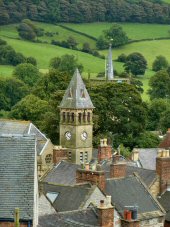
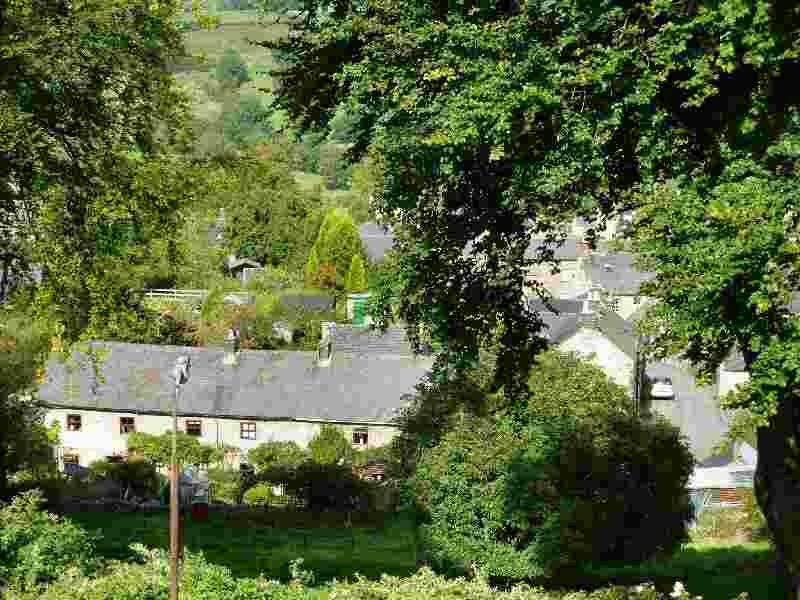
Winster is a village that retains its 18th-century character, with over 70 listed buildings in its Conservation Area. The brightly painted houses, often with fascinating names, are set on the gently rising hillside alongside winding lanes and pathways. Little seems to have changed since they were built, and in keeping with the village’s traditional appearance, many of its old customs remain.

Winster is an ancient settlement mentioned in the Domesday Survey. But it was only when lead mining commenced in earnest that it came to prominence. At the height of the mining boom in the mid-18th century, it was the fourth-largest town in the county. Near the Miner’s Standard public house on the western side of the village along Islington Lane, a shanty town of miners’ huts sprang up, close to the Portway Mine, one of the richest mines in the county. The boom only lasted for about a century as the cost of draining the mines and competition from abroad reduced profitability – mines began to close and the population of the village declined. With little work in the village, many of the men from Winster worked at the Mill Close Mine, near to Stanton-in-Peak, until disastrous flooding in 1938 ended mining.
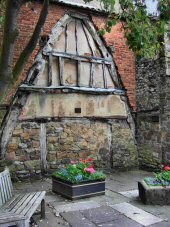
In the centre of Winster, almost blocking the roadway, is the ancient Market House, now in the care of the National Trust. It was the first property acquired by the Trust in Derbyshire in 1906, and it is now open to the public as an exhibition and information centre. The base of the property is stone, and the upper part is brick. But it was probably in the beginning timber-framed. Originally, the whole of the ground floor between the arches would have been open to allow trading to take place and only blocked up when business declined.

Morris Dancing has long been a tradition in Winster, but not without some gaps, notably in wartime. The great folk music pioneer, Cecil Sharp, first documented it early in the 20th century. It is one of the most colourful forms of Morris Dancing in the country, enjoyed not only by local people but also by visitors from all over the world.
Any newcomer to the area trying to make their way through the village on Shrove Tuesday might be rather surprised and possibly a little startled to see people, young and old, charging towards them, frying pan in hand, tossing pancakes. The Annual Shrove Tuesday Pancake Race has been in existence for well over 60 years in the village.
Wakes Week, held in June every year, is another tradition still followed in the village and gave rise to the amusing rhyme:
‘At Winster Wakes there’s ale and cakes,
At Elton Wakes there’s quencher’s,
At Bircher Wakes there’s knives and forks,
At Wensley Wakes there’s wenches.’
Only Winster of the villages mentioned retains so many of its old customs.

The former prosperity of Winster is evidenced by the fine three-storey houses that line the Main Street. Private houses have replaced most of the shops and businesses, but a community shop and a post office remain. The grandest of the houses is Winster Hall, built for Francis Moore, who was a local solicitor and a mine owner. Unfortunately, it has a sad tale to tell of the tragic love affair of the daughter of the house and the coachman. Her parents disapproved and arranged what they believed to be a more suitable match. However, before the wedding could take place, the young couple climbed to the top of the parapets and jumped hand in hand to their deaths.
A short distance from the Miner’s Standard public house is the Ore House. Here, lead miners deposited ore down a chute for safekeeping overnight, in a somewhat similar manner to the present bank night safe system.
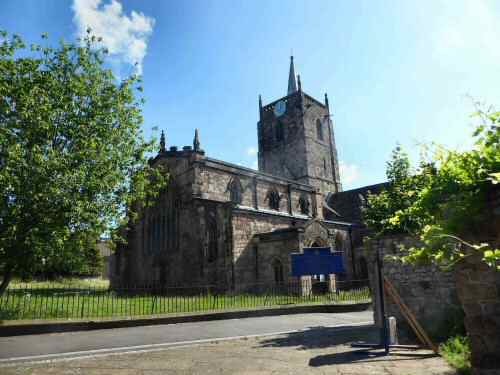
The Dower House was probably built on the site of the original Manor House. It stands at the side of the Parish Church of St John the Baptist, where the nave and the chancel have been enlarged twice, the last time in 1883.
TEN FASCINATING FACTS ABOUT WINSTER
1. With more than 70 listed buildings, Winster has one of the most impressive street scenes in the county, which merges with artisans’ cottages leading up the bank on the southern side of the village.
2. Winster Village Shop is a community-owned project. It employs a locally-based manager, together with three full-time staff. Several volunteers from the village also help to make sure that the shop runs smoothly.

3. The name of the Miners Standard public house is derived from the dish that local lead miners used for measuring ore – the miners’ standard! A small sign inside proclaims ‘pub of the year 1653’, the year of erection.
4. Historically, Winster was a main crossing point for many roads and trackways, one of the most important being The Portway. This ancient trading route passes close to the village. Salt routes from Cheshire came through the village, as did the main turnpike from Nottingham to Newhaven in later years.
5. After the lead mines closed, markets became less important, and the Market House fell into disrepair. By the end of the 19th century, it was derelict, and in 1904, the upper storey was removed for safety purposes.
6. In 1906, the building was purchased by the National Trust for £50.00 and restored.
7. The Oddo House came into the possession of the Brittlebank family in about 1700. But it was a later member of the family who brought notoriety to the name, when in 1821, a fatal duel was fought on the lawn of the Bank House. Between William Cuddie, the village doctor and the victor William Brittlebank, who fled abroad to escape the consequences.
8. A cattle market was once held on East Bank opposite the Old Bowling Green public house.
9. Formerly, pancake races covered the whole length of Main Street, but nowadays the distance has been halved. For adults, there are male and female races, and a walking race for seniors. Pre-school and primary children from Winster and Elton schools also race.
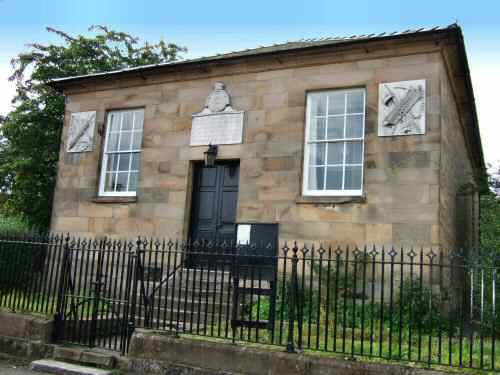
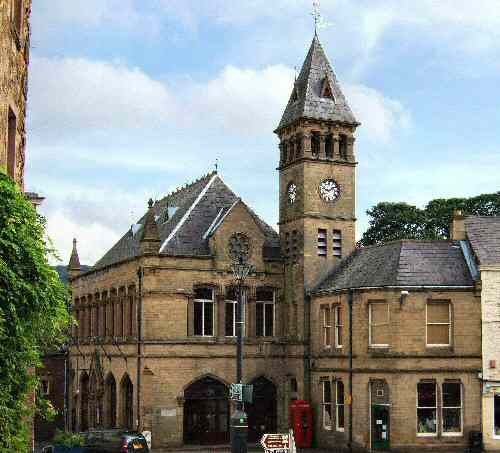
10. On the West Bank is the Burton Institute, refurbished a century ago by Joseph Burton as a Reading Room for the residents and now the village hall.
WINSTER WALK