INTRODUCTION
Darley Dale lies in an attractive part of the Derwent Valley, on the edge of the Peak District between Matlock and Bakewell. The problem for most travellers along the A6 is that they see little of the beauty of the valley on their six-mile-long journey. Extensive ribbon building hides the view, and the route can become very congested at weekends and in the summer.

The town has had a Town Council since the late 1900s. It covers a wide area, including the old settlements of Hackney, Farley, Two Dales, Darley Hillside and Churchtown, as well as the piece along the A6. The council offices and meeting room are at the Whitworth Community Centre.
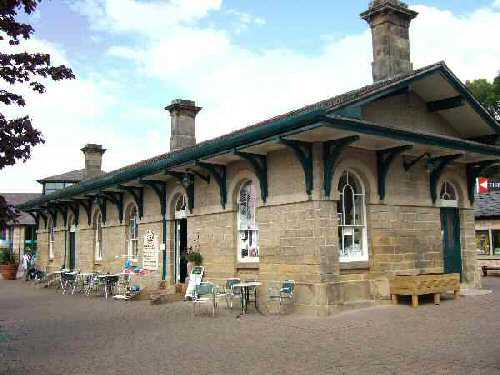
In 1849, the railway arrived, resulting in the expansion of Darley Dale, which became a railway village. Unfortunately, the line closed 119 years later. At its height, it had been part of the Midland Railway’s line between Manchester Central and London St.Pancras. Businesses grew up near the station, with coal yards, animal feed mills, wood yards and others taking advantage of the easy access to rail transportation.
Following the actions of a band of determined enthusiasts, who formed the Peak Railway Society, trains recommenced running from Matlock to Darley Dale Station in 1991. Six years later, it extended to Rowsley South Station. A journey on the train is an ideal way to see the best of the valley and beat the traffic jams.
Stancliffe and Hall Dale quarries, on the northern side of the A6, provided flagstones for Trafalgar Square, Hyde Park Corner and the Thames Embankment in London. Stone from the quarries was also used for many other notable buildings, including the Walker Art Gallery and St George’s Hall in Liverpool. A standard gauge railway used to run from the quarries to the masonry yard and then onto the main railway line. Laid in 1903, and removed during the First World War and transferred to France. It was re-laid after the war and finally removed again just before the outbreak of the Second World War.
Sir Joseph Whitworth, who served his apprenticeship at his uncle’s Ambergate Mill, was a manufacturer of machine tools, promoting absolute accuracy in measurement and the standardisation of machine parts. He famously invented the Whitworth screw thread.
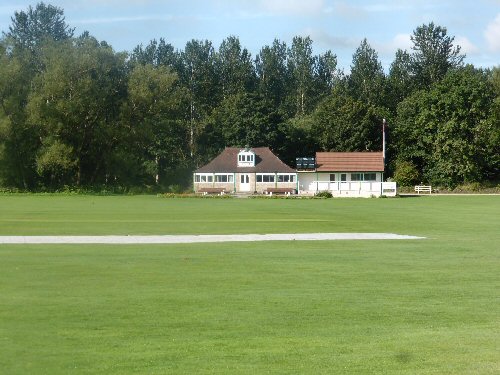
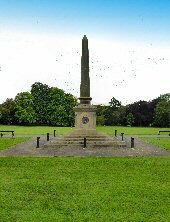
Whitworth was responsible for much of the development in the village. He bought Stancliffe Hall in 1854 and had it virtually rebuilt, but did not move in until 1871. A shy man, prone to disputes with other landowners, he built a high wall around Stancliffe Hall to protect his privacy. After his death, his wife founded the Whitworth Institute, a community centre for the people of Darley Dale, Whitworth Park, with its many sports facilities and Whitworth Hospital. Although not particularly popular during his lifetime, the people of Darley Dale erected an obelisk in Whitworth Park after his death, in recognition of all he had done for the community.
TEN FASCINATING FACTS ABOUT DARLEY DALE
1. Darley Dale has a rich history dating to the Bronze Age, and it saw quite a lot of activity during the lead mining era in the 18th and 19th centuries.
2. Recorded in the Domesday Book as ‘Derelie’, the village was known as just Darley for approximately 800 years. Until the late 19th century, when the Rev. Daniel Vawdrey successfully proposed that ‘Dale’ should be added to make its attractive location more appealing to potential visitors.
3. At about the same time that Darley changed its name to Darley Dale, the parish vicar suggested that ‘Toadhole’s should change its name to help encourage tourism. Two Dales was the replacement name.
4. The Plough Inn public house in Two Dales was the reason behind Former England international footballer Eddie Shimwell’s transfer from Sheffield United to Blackpool in 1946. It occurred as a result of his wanting to buy The Plough Inn at Two Dales. But Sheffield United’s rules forbade players from becoming publicans. Shimwell put in a transfer request and moved to Blackpool FC, whose rules were not so strict.
5. Churchtown was described accurately by an 18th-century writer as ‘Churchtown, no town’, as it was only a small hamlet, and still is not much bigger today.
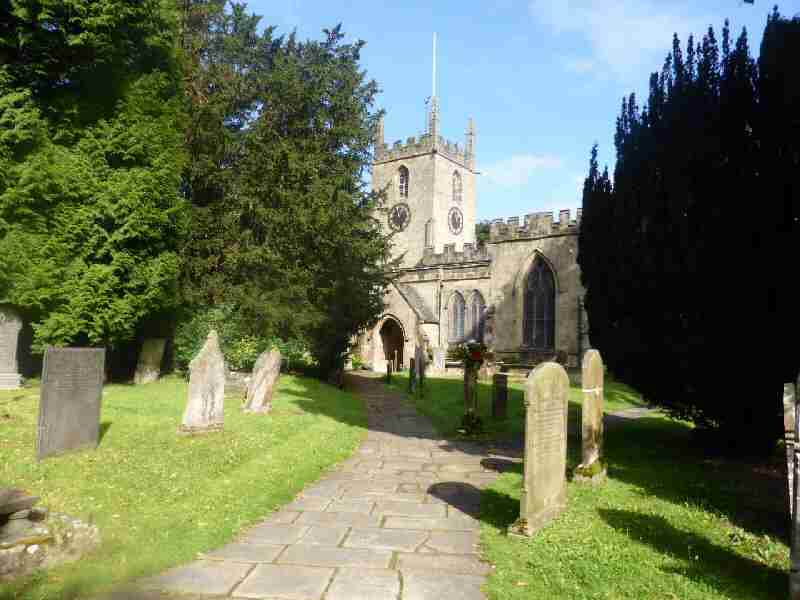
6. The ancient Parish Church of St Helen’s dominates Churchtown and its even older yew tree, said to be in the region of 2,000 years old. The medieval church, which includes two Burne-Jones windows, is large and impressive.
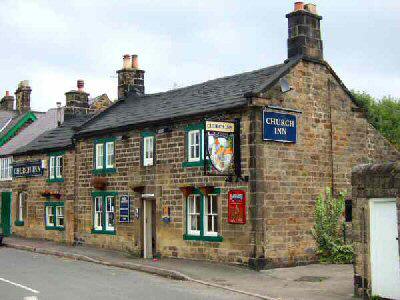
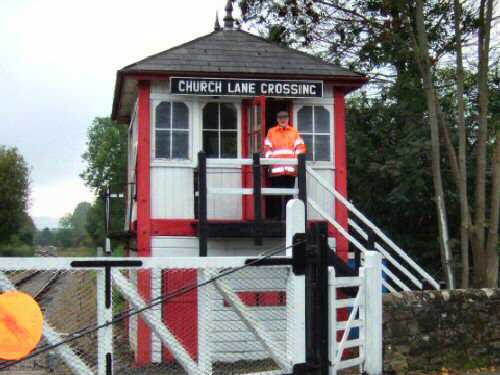
7. A short distance along the road, from Churchtown, past the level crossing, is a church of a different kind, the popular Church Inn.
8. Following the death of her husband, Lady Louisa Whitworth built Whitworth Cottage Hospital, which is still in use as an NHS hospital.
9. Lady Louisa’s second major project, the Whitworth Institute, was opened in 1890 and given to the people of Darley Dale. The institute comprised an indoor swimming pool, an assembly hall, various reading and committee rooms and eventually a library, a billiard room, a museum of natural history, a convenient hotel (Whitworth Hotel, now ‘Barrington’s’) and a landscaped park. In 2009/10, it underwent a £1.7million renovation.
10. Whitworth Park provides facilities for a variety of sporting activities and includes over ten acres of landscaped grounds with pathways along tree-lined avenues and a lake. The centrepiece is an obelisk commemorating Sir Joseph Whitworth.
DARLEY DALE WALK