INTRODUCTION
Set in the picturesque Derwent Valley, with hills rising steeply on either side, travellers on the busy A6 often pass through Milford hardly noticing that it exists. Yet the village has played a significant part in the industrial history of this country, so much so that it now forms part of the Derwent Valley World Heritage Corridor.
JEDEDIAH STRUTT
The man who transformed Milford from a tiny hamlet to an important industrial centre was Jedediah Strutt. From a young age, he had an obsessive interest in machinery, but when his uncle died and left him a small holding, he took it over and married Elizabeth Woollatt, whom he had met when he was an apprentice as a wheelwright. His brother-in-law, who worked for a hosiery firm in Derby, knowing of Jedediah’s interest in machinery, told him of the problems they were having in trying to adapt their machines to make stockings in a ribbed pattern. Everything they had tried had failed. Immediately, Jedidiah set about the task of finding a solution.
He spent many hours in his attic experimenting, neglecting his farm work in the process. At last, he succeeded, and the closer-fitting stockings that resulted were a great success. He went into partnership with his brother-in-law, opening a stocking factory in Derby and patented his ‘Derby Rib Machine’. Wishing to expand his business further, he went into partnership with Samuel Need, and they later asked Richard Arkwright to join them and together built mills at Belper, Cromford and Milford.
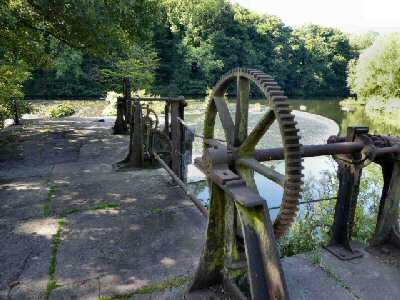
Using the power of the River Derwent to drive the machinery. Jedediah built his first cotton mill, the South Mill, at Belper in 1776 and a second at Milford four years later. Soon after that, the partnership was amicably dissolved, with Strutt retaining the mills at Belper and Milford. From then until 1827, mills were built every few years along the banks of the Derwent. After Jedediah died in 1797, his eldest son, William, took control.
Jedediah was a strict disciplinarian; his employees were fined heavily for lateness or bad behaviour. He insisted on their going to a place of worship on Sundays and that the children attended school regularly. He built houses, a school, a chapel and model farms at Belper and Moscow Farm at Milford, where the food produced was supplied to employees at a reasonable cost with credit facilities available. Many other amenities were also provided, described by one local historian as ‘a sort of Welfare State, 150 years before anything like it arrived on a national scale.’
The Strutt family mansion at Milford House, and later Makeney Hall, had a view over most of the workers’ houses in the village. The shutters that protected nearly all the dwellings had holes drilled through them so that internal lights were clearly seen from outside. If any lights were observed still shining after 11 p.m., a warning would be sent to the tenants the following day about the dangers of loss of sleep.
ENGLISH SEWING COMPANY
At the end of the 20th Century, the English Sewing Cotton Limited took over from the Strutt family. Until, sadly, in 1964, the main part of the Cotton Mill was demolished, much to the dismay of industrial archaeologists. Fortunately, some of the most interesting artefacts went to museums for safekeeping.
THE VILLAGE
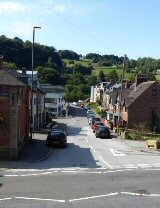
The bridge was built by the Strutts in 1792 and widened just over 100 years later. In more recent years, The Old Mill House Inn, now Soi on the Weir, has been built overlooking the river, on what was the site of Strutt’s cotton mill. Most of the early mill buildings were demolished in the 1950s and 1960s, but much of the industrial housing has survived. The majority of the houses were built from the late 18th Century onwards, by the Strutt family, effectively transforming Milford from a riverside hamlet into an important industrial village. The Strutts built the school, several farms and helped to establish the village’s various religious and social meeting places.
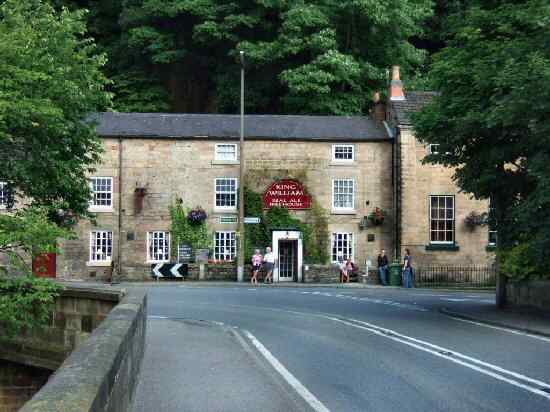
For many years, The Strutt Arms Public House has stood alongside the A6 on the western side of the bridge over the Derwent, acting as a reminder of the dominant influence that the family had over the village. Following a period of closure, the pub has reopened.
MILFORD CONSERVATION AREA
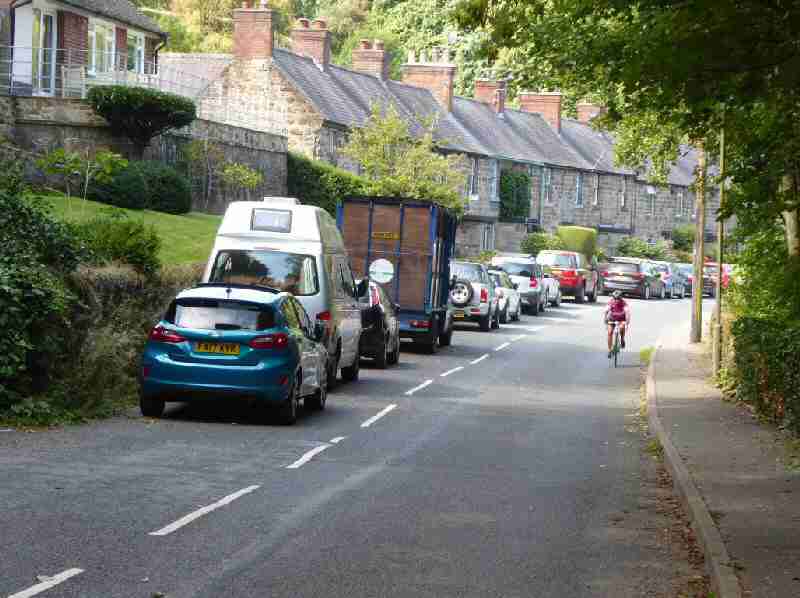
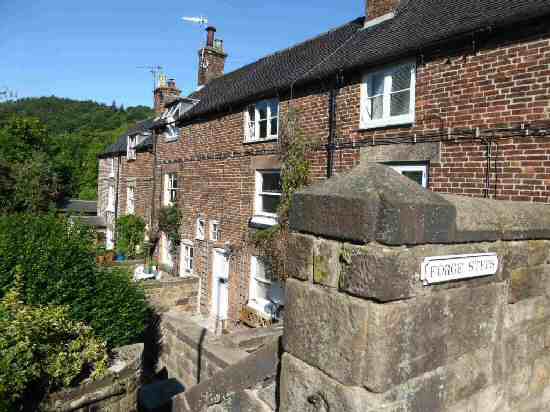
Milford was designated a conservation area in 1976 and forms an integral part of the Derwent Valley World Heritage Site. The Parish Church of the Holy Trinity (closed for Services) and the War Memorial are at the junction of Hopping Hill and the A6. All the houses comprising the East Terrace and West Terrace are Strutt houses. The terraces are unusual in that, to allow for the steeply sloping site, the east side is two storeys high and the west three. So that all the dwellings had the same accommodation, there are three east houses to every two west.
TEN FASCINATING FACTS ABOUT MILFORD
1. North Lane follows a broad, tree-lined path, which is somewhat uneven in places. Walking along the lane, you will get fantastic views across the Derwent Valley and back towards Belper. There is an abundance of wildlife to observe.
2. According to the excellent Milford and Makeney website, the village’s nickname is ‘Treacle City’. There are several suggestions as to how it got its name. Perhaps the most logical is that the Strutt family offered their workers treacle toffees to stop them from getting dry throats in a dusty working environment.
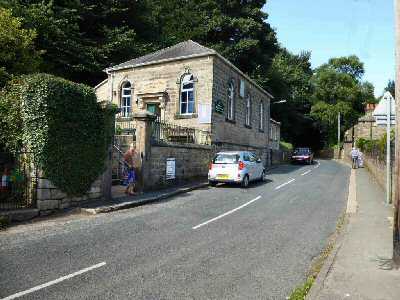
3. Milford School, built to replace a previous school, is one of the oldest primary schools in England that is still in its original location. The village social club is on the corner of Sunny Hill, opposite the school.
4. Overlooking the A6, in a triangular piece of land, is a small memorial garden.
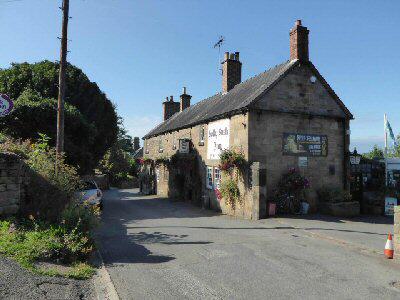
5. The Holly Bush Inn at Makeney dates to the 17th Century and retains its original charm. It was given full marks by the European Bar Guide (EBG) after their representative visited in November 2022.
6. In around 1820, Milford was the first village in the UK to have gas lighting. The gas not used by the mills lit the roads.
7. Milford village remains almost intact and was designated a conservation area in 1976. As you descend Sunny Hill, which is quite steep, you can observe how narrow the valley is and study the village’s layout.
8. Milford May Day has proved to be a top-rated visitor event. It’s a fantastic community event with many traditional festivities, including maypole dancing and other fun activities. For further information, visit: www.milford-makeney.org.
9. The Strutt Arms Public House, after a period of closure, has recently reopened, renamed the Strutt Arms Hotel at the Elephant and Peacock. Under new ownership, it has been transformed into an Indian gastro pub.
10. The best way to find out more about Milford’s rich history is to walk around the village and study the impressive collection of Interpretation Panels and Information Points on display.
MILFORD WALK