INFORMATION
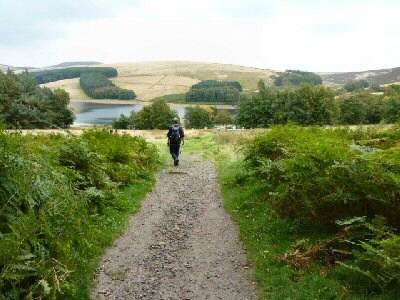
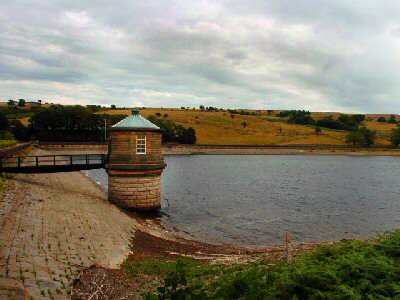
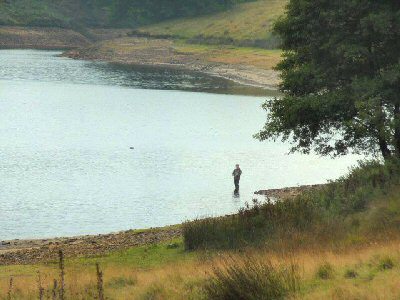
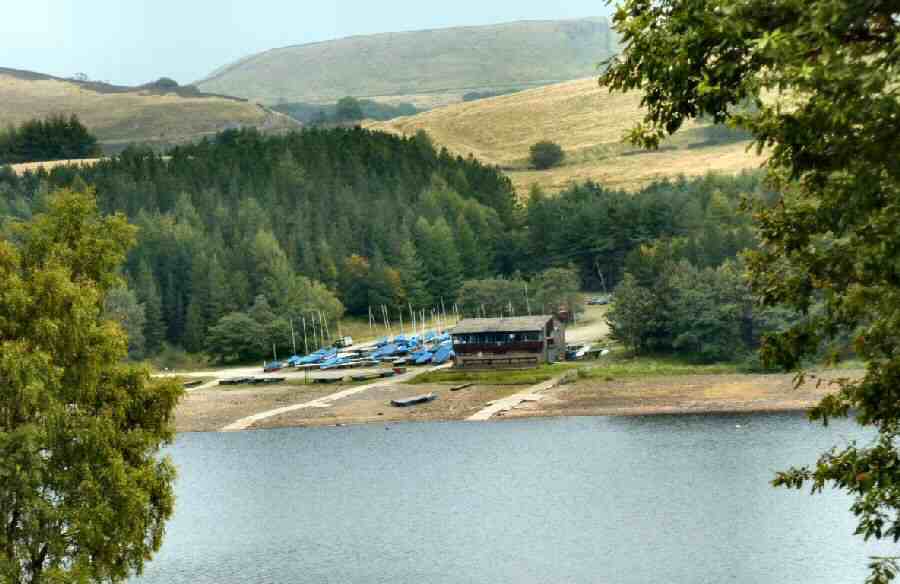
The ruggedly picturesque Goyt Valley, surrounded by heather-clad moors, has been a popular place for visitors since Victorian times. The appearance of the valley changed dramatically in the 1930s when Fernilee Reservoir was constructed and, some thirty years later, the Errwood Reservoir. Now the reservoirs provide leisure facilities in a valley rich in industrial heritage and wildlife.
There are traces of the existence of Neolithic farmers dating to 3,000 BC in the area, farming having always been a predominant activity. What is surprising is that this remote valley once had several other thriving industries. Goyt’s Moss Colliery, situated near Derbyshire Bridge, was quite extensive. There were also several quarries in the valley, a paint mill and a gunpowder factory that reputedly supplied ammunition to Sir Francis Drake, used in the defeat of the Spanish Armada.
Until recent times, the valley has also been an important trade route. The Romans built their roads in the area, and the medieval tracks and hollow ways in the valley were once important packhorse routes. It was from Goytsclough Quarry that Thomas Pickford set up a family business mending roads. It progressed to such an extent that by the 18th century, James Pickford was known as the ‘London to Manchester Waggoner.’ Today, the business still thrives as one of the major removal and storage companies in Europe.
The Cromford and High Peak Railway, built in 1830, replaced packhorses. It linked the Cromford and Peak Forest Canals at Whaley Bridge. In the middle, it rose to over a thousand feet at Ladmanlow. Stretching for thirty-three miles in length, the line was fully opened in 1831, when it transported minerals, corn, coal and other commodities from one canal to the other. The Goyt section was closed in 1892 after the completion of a link to Buxton.
The Cat and Fiddle overlooks the valley from the A537, Macclesfield to Buxton road. Formerly, the second-highest public house in England, standing at 1,690 feet above sea level, is located in one of the wildest and most remote areas in the Peak District. Many are the tales told of the extreme weather conditions experienced; in 1892, it was apparently impossible to open the front door or any of the windows for seven weeks. The pub closed in 2015, and gin and whisky are now distilled on site.
On the western side of the Errwood Reservoir lie the grounds and ruins of Errwood Hall, the former home of the Grimshawe family. Samuel Grimshawe, who had the hall built in the early 1840s, came from a wealthy merchant family from Manchester and was described in the census of 1851 as a ‘Land Proprietor’. In the same year, he declared his conversion to Catholicism, converting part of the upper floor of the hall into a private chapel. The family became dedicated Catholics and were very generous in their support of the church; they also set up wayside shrines and a small chapel in the woods.
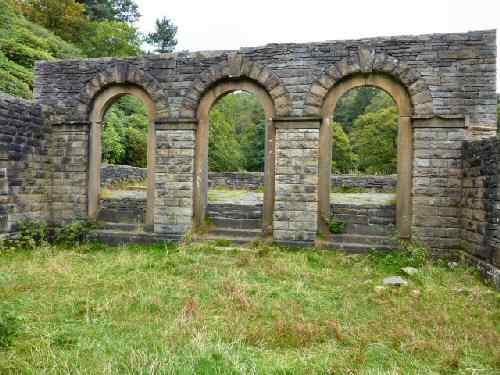
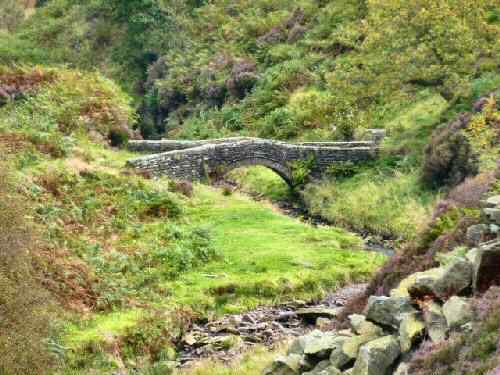
The last of the Grimshawes died in 1930, and the hall was demolished. The ruins remain, the approach to which is beautiful when the rhododendron bushes that line the route are in bloom. The family cemetery survives, and traces of the small hamlet of Goyt’s Bridge are still visible when the water level of the Errwood is low. Fortunately, before the valley flooded, the former packhorse bridge was removed. And rebuilt brick by brick, further up the valley.
In contrast to the vast expanse of moorland, the lower slopes of the river valley contain a variety of forests and woodland. Designated as an area of Special Scientific Interest. It is home to many rich and diverse species of flora and fauna. It is a suitable habitat for wildlife conservation and a great place for visitors to enjoy the freedom of the countryside.
TEN FASCINATING FACTS ABOUT THE GOYT VALLEY
1. Much of Goyt Valley is open and readily accessible to walkers. A maze of excellent, well-signposted public footpaths crosses it. Most of the moorland has been designated an SSSI, in recognition of its national importance. The designation helps to protect the habitat and its valued bird community. Birds found on the moors include birds of prey, golden plover, snipe, curlew, lapwing, skylark, meadow pipit, whinchat and ring ouzel. Wild animals found on the moor include voles, hares and foxes and many others.
2. A Gun Powder Factory that may date back to the 16th century and supplied the ammunition for Sir Francis Drake to fight the Spanish Armada was positioned where the Fernilee Reservoir now is.
3. At the time, a network of tramways and a narrow canal transported the explosive materials required to manufacture gunpowder. During the First World War, the factory was very active but closed soon afterwards.
4. The Cromford and High Peak railway used to pass through the valley, close to where the Fernilee Reservoir now takes up the space. At Whaley Bridge, a short distance to the west, the railway joined up with the London and North Western line.
5. Near Goytsclough Quarry is what remains of the old Paint Mill. It operated in the 19th century when a water wheel crushed locally mined barytes to a powder.
6. Near Derbyshire Bridge are the remains of dozens of old coal mining shafts, which provided coal for homes.
7. The River Goyt flows through the valley and rises high on Axe Edge Moor near The Cat And Fiddle pub (now a whisky and gin distillery), and flows north through Taxal, Whaley Bridge and New Mills before joining the River Tame, near Stockport, to form the River Mersey.
8. There is a local legend that a highwayman called Pym used to lie in wait to ambush those who used the packhorse route, hence the Pym Chair. Contrastingly, it is also claimed that he was a preacher who gave sermons there.
9. The presence of not one but two isolated shrines in the moors above the Goyt Valley is unusual for this country. The first shrine, dedicated to the Blessed Virgin, is on the high-level road before you drop down into the valley. Its erection was initiated by Canon Baldwin of St Anne’s Catholic Church in Buxton. Samuel Grimshawe of Errwood Hall had contributed most of the money needed for the construction of the church in 1860.
10. The Goyt Valley’s other shrine is to be found in a honeypot-shaped building which sits in a deep dip in moorland behind the ruins of Errwood Hall.
GOYT VALLEY – FERNILEE RESERVOIR WALK