INTRODUCTION
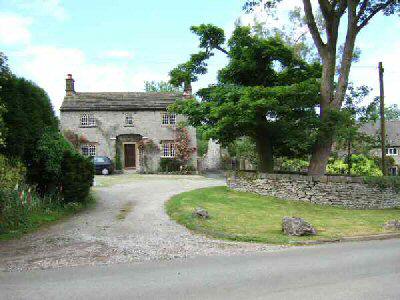
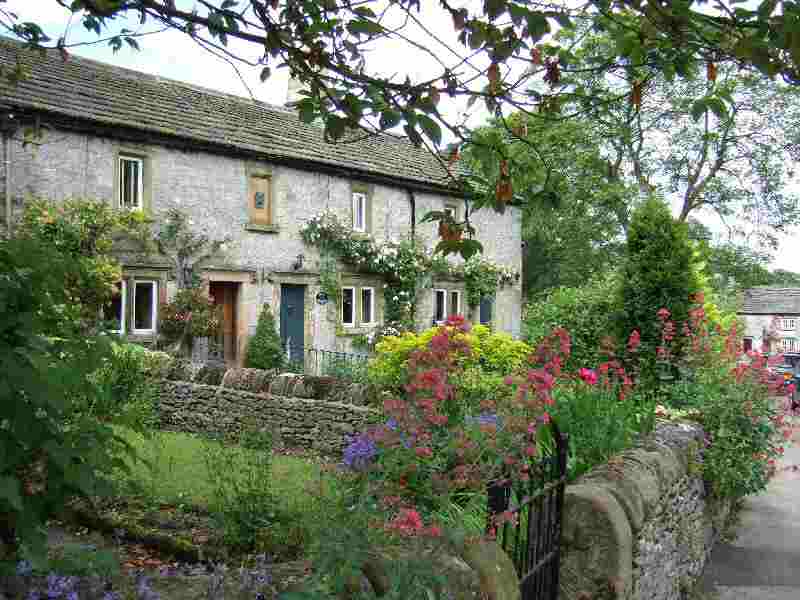
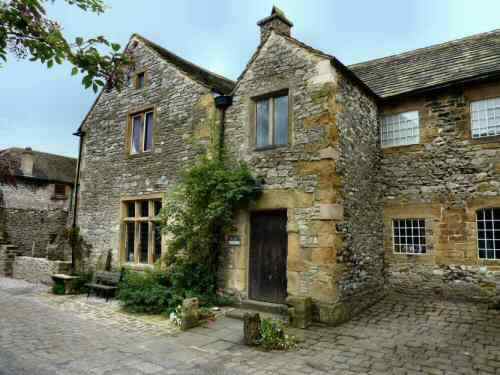
It is hard to find a more attractive, less spoilt village in the whole of the Peak District. It is also surprisingly quiet as it is on an unclassified loop road, and at weekends, walkers often outnumber motorists. The spaciously laid out main street, lined by pretty limestone cottages, was mainly rebuilt in the 1820s by Thomas Bateman.
The village is only a short distance from one of Derbyshire’s loveliest dales, surrounded by excellent walking country. A track leads from the village down to Bradford Dale with its six pools of crystal-clear water, which reflect the shadows of the mature trees along the steep-sided dale. A view of which J B Frith described as “for peaceful loveliness and sheer prettiness, nothing in Derbyshire excels it.”
SIR CHRISTOPHER FULWOOD
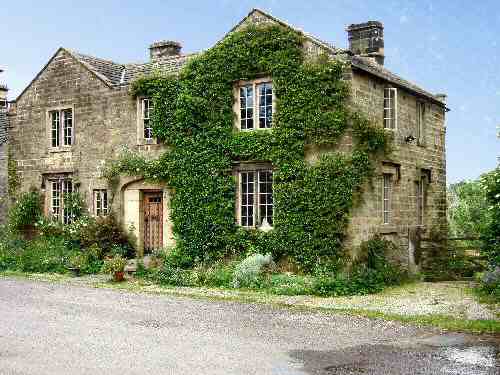
At the top of the dale, Sir Christopher Fulwood was shot, later dying from his injuries, after attempting to hide in a crevice in the cliff, by Roundhead soldiers. An ardent Royalist, Sir Christopher, had raised an army of lead miners to fight in the Civil War, but he was surprised by the soldiers and fled from his home. His fortified manor house, known as Middleton Castle, was never again occupied. Much of the stone used in the construction of Castle Farm and other buildings around the village came from the castle. All that remains is a mound in the field opposite Chapel House.
THOMAS BATEMAN
At the end of the 18th century, Thomas Bateman, whose main family home was at Hartington Hall, acquired Middleton Hall and the accompanying estate. He was a merchant during the American War and attended a meeting in Manchester to discuss the shortage of cotton. He reputedly overheard someone say that four ships laden with cotton were due in the Mersey. Leaving his hat behind to avert suspicion, he left the meeting. He hurried to Liverpool and bought the complete cargo, making himself a rich man.
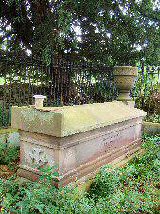
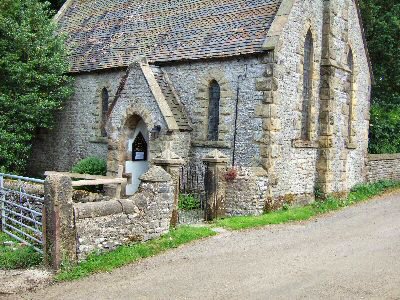
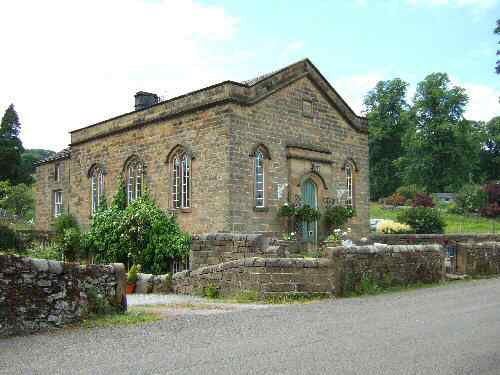
Bateman rebuilt Middleton Hall and the rest of the village, and being a staunch non-conformist, had the Congregational Chapel erected in 1826. It is now a private house, past which a footpath leads to the elaborate tomb of his grandson, who bears the same name.
Following the early death of his parents, the younger Bateman’s upbringing was at Middleton Hall with his grandfather. He later became a famous archaeologist, who, together with his son, William, excavated numerous barrows mainly in Derbyshire and above the Manifold Valley, in Staffordshire.
In total, Bateman excavated over 500 barrows in 20 years, the most prolific year of which was 1845, when 38 barrows were dug. By this time, he was living at Lomberdale Hall and had acquired an extensive collection of artefacts, which were transferred to West Park Museum in Sheffield, on his premature death at the age of 39, in 1861. A fortnight before his death, he had published ‘Ten Years Digging,’ containing detailed notes on some of the excavations.
SQUARE HOUSE
There used to be both a shop and a pub in the village. The shop closed over 50 years ago, and Bateman’s Arms, now the Square House, closed nearly a century ago. It only had a six-day licence and was seen open one Sunday, apparently by Mrs Waterhouse, returning from the church to the hall. Shortly afterwards, it lost its licence.
WELLINGTON BOMBER MEMORIAL
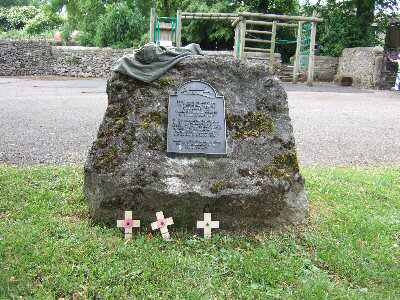
The parish church and the village hall are at opposite ends of the village, and in the middle, by the small recreation ground, is an unusual war memorial. It takes the form of a bronze plaque, erected in 1995 on the 50th anniversary of the end of the Second World War. It depicts a Wellington Bomber, which crashed at nearby Smerrill on 21 January 1944, killing six Royal Australian Air Force crew members.
TEN FASCINATING FACTS ABOUT MIDDLETON-BY-YOULGREAVE
1. Middleton is a great place to visit if you want to get away from the stresses of modern-day life. There are no shops or pubs, but there are bed and breakfast facilities and cottages to rent, as well as camping barns.
2. Middleton is often known as Middleton-by-Youlgreave to distinguish it from nearby Middleton-by-Wirksworth.
3. Thomas Bateman rebuilt most of the village in the 1820s. He incorporated the mullion windows from an earlier period to retain a traditional appearance.
4. In 1977, Middleton-by-Youlgreave produced its first well dressing in living memory, in honour of the Queen’s Silver Jubilee. In 2025, three well dressings were in place: a Village Well Dressing and two Children’s Well Dressings.
5. The annual well dressings have become established on the last Saturday in May before the Spring Bank Holiday, when other supporting events also take place. The dressings remain on view the following week for the enjoyment of visitors.
6. Every summer, the village hosts a music festival showcasing local musicians.
7. The seventeen entrances to the parish are marked with boundary stones, each inscribed with a text chosen by members of the parish. The Parish Council maintains the stones. And the walking routes and meanings of the inscriptions can be found on the designated website for The Sites of Meaning.
8. Diane Kettle’s Backyard, Working Fine Art Studio, is in Middleton-by-Youlgreave, where you can obtain private tuition and even arrange a painting holiday.
9. The chapel of ease of St Michael and All Angels, situated in Middleton, and for many years disused, was restored in 1899.
10. The River Bradford to the east of the village runs the length of Bradford Dale below Middleton to Alport, where it joins the River Lathkill.
MIDDLETON-BY-YOULGREAVE WALK