INTRODUCTION
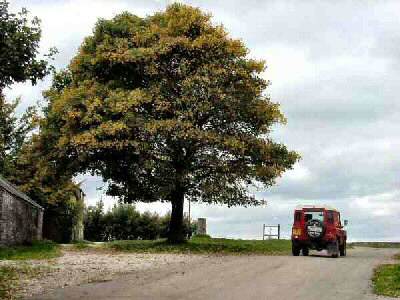
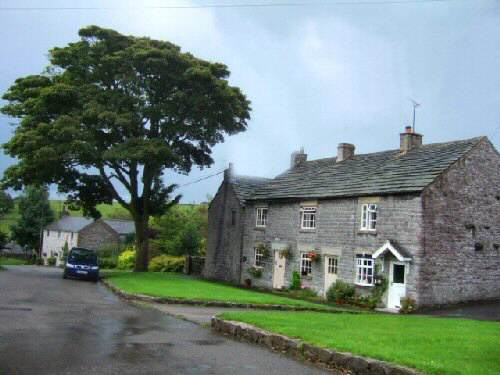
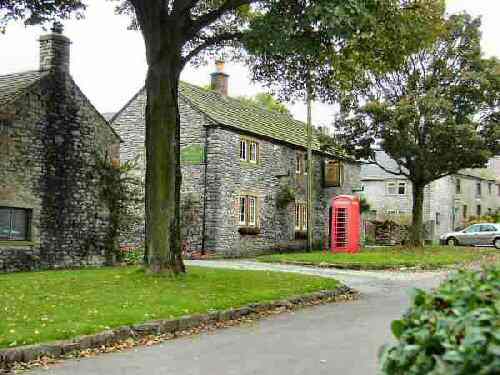
Sheldon is a lovely upland village perched high above the River Wye. It is situated three miles west of Bakewell off the A6, with the villages of Ashford-in-the-Water and Monyash only a short distance away. It has one street with a mixture of old houses and farms on both sides. Mature trees and attractive grass verges add to the charm of this Conservation Village.
The views just outside the village of the Wye Valley and the lower part of Monsal Dale are excellent. A good place to enjoy the panoramic views is close to the children’s play area, where visitors are frequently seen eating their food at the picnic tables provided. On the hillside that descends steeply from Sheldon to the River Wye, lie Shacklow Woods, a vast expanse of trees, which are particularly noted for their beauty in the autumn as the leaves turn golden brown.
THE VILLAGE
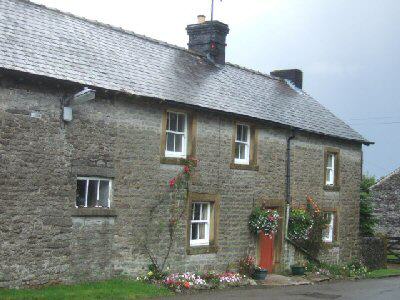
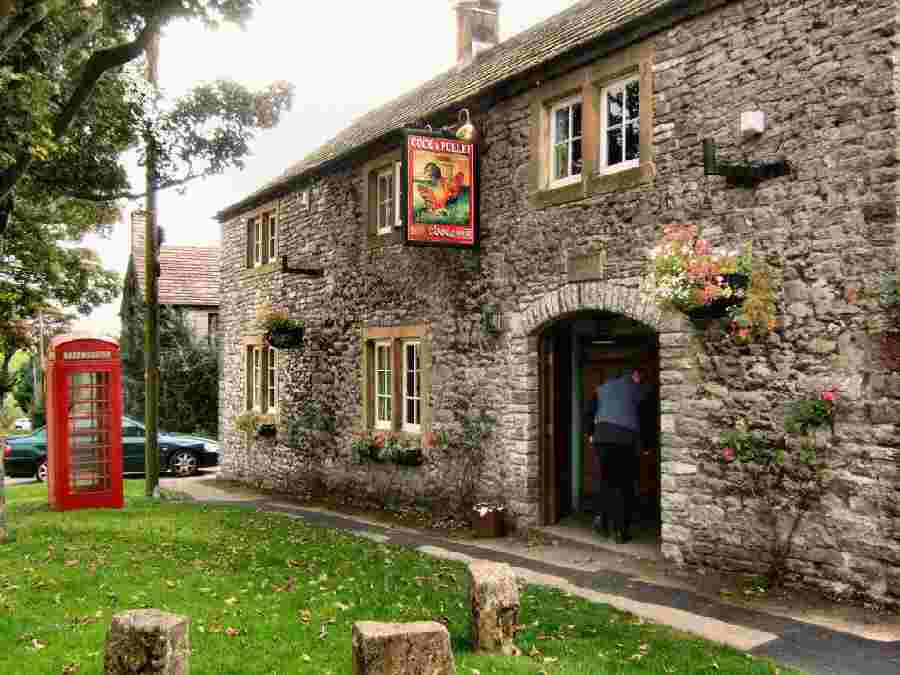
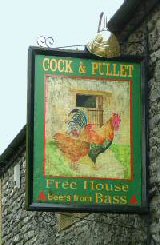
The village is recorded in the Domesday Book. But, the building of the present dwellings came mainly when lead mining was enjoying a prosperous time in the locality. Most of the stone-built houses date from the 18th century, but not the pub. The Cock and Pullet was built in 1995 and must be one of the Peak District’s newest pubs, and is named after the cockerels and pullets that used to run around in front of a barn where the pub is now situated. The village’s previous pub, the Devonshire Arms, which stood next door, closed in 1971 and is now a private house.
LEAD MINING
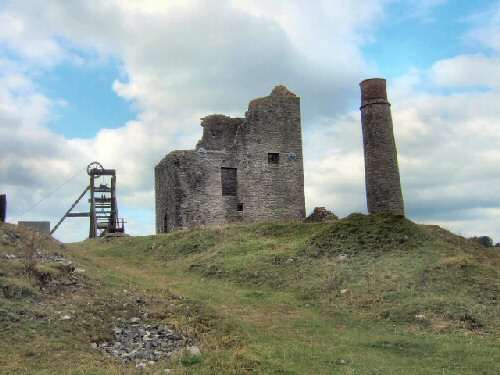
Lead mining flourished around here in the 18th and 19th centuries, and one third of a mile south of Sheldon stands the Magpie Mine. It is now scheduled as an ancient monument, and is the most complete example of a lead mine remaining in the Peak District. It is about 1050 feet above sea level. Footpaths approach it both from Sheldon and the Monyash to Ashford-in-the-Water Road. Members of the public may visit it for external inspection at any reasonable time.
MAGPIE MINE
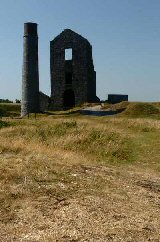
Magpie Mine has a recorded history from 1739, but dates back much further and is said locally to be over 300 years old. Protracted troubles broke out in the 1820s and 1830s between the miners of Magpie, Maypitts and Red Soil mines. The dispute revolved around a vein of lead, and at various times the miners broke through into each other’s workings. Often, when this occurred, one side would light a fire underground and try to smoke the other out. Tragically, in 1833, three Red Soil miners were suffocated to death by a fire lit by the Magpie miners.
Following a year in prison and a lengthy court case at Derby Assizes, five Magpie miners were acquitted of the charge of murder owing to conflicting evidence and the lack of intent. The three widows of the Red Soil miners reputedly put a curse on the mine, and, supposedly, a ghost was seen there in 1946.
In 1842, there were two deaths at the Magpie Mine, and during the next 50 years, the mine had many problems caused by flooding and fire. In 1880, the company operating the mine even changed its name to the Magpie Mining Company, probably in the hope of ridding itself of the curse!
After a period of inactivity, several attempts to revive the mine, the last in the 1950s, took place. However, in 1958, the constant battle with flooding and falling prices forced the closure of the mine. The mine now receives far more visitors than anticipated in 1962, when the tenancy of the Magpie Mine Cottage was taken over as a Field Centre by the Peak District Mines Historical Society.
ST MICHAEL’S AND ALL ANGELS CHURCH
The construction of the Parish Church of St Michael and All Angels at Sheldon took place in the 19th century. The demolition of a former chapel of ease, which stood in the centre of the village and was reputedly the smallest in Derbyshire, supplied most of the materials. In 1753, an unusual wedding took place between a boy of fourteen and an eighty-year-old widow, who came to the altar on crutches! The church was refurbished in 1983, when the bell rang again. The church, although small, is impressive with a beautiful timber ceiling.
TEN FASCINATING FACTS ABOUT SHELDON
1. The village is recorded in the Domesday Book. But, the building of the present dwellings came mainly when lead mining was enjoying a prosperous time in the locality – most of the stone-built houses date from the 18th century.
2. According to the census of 1861, a group of Cornish miners migrated to the village, increasing the population by 25 per cent.
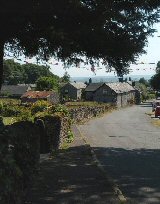
3. Sheldon has a population of less than 100 people, with the main social centres being the village hall, church, playing fields and the public house. It is too small to have a parish council, so administrative matters are dealt with by its parish meeting, formed from village residents as well as the elected chairperson.
4. The village was ‘dry’ for more than 20 years following the closure of the Devonshire Arms, before the Cock & Pullet opened its doors in 1995. After the award of Conservation status, the villagers requested the restoration of the elongated greens. The main emphasis was to reverse the deterioration of the greens and improve the street scene. Today, mature trees and attractive grass verges add to the attractiveness of the village.
5. The Hartington Memorial Hall was presented to the inhabitants of the village in memory of William John Robert Cavendish, Marquess of Hartington, Major of Coldstream Guards, who was tragically killed in action in Belgium on 10 September 1944. Had he lived, he would have become the Duke of Devonshire instead of his younger brother Andrew. Only four years later, his wife was killed in an air crash. She was the sister of John F. Kennedy, the late President of the USA.
6. The green opposite the former Devonshire Arms has its own mysterious legend. In 1601, villagers said that they had seen a duck fly into a tree and disappear. Some 300 years later, when it was cut down and its trunk cut into planks, the imprint of the shape of a duck could be seen.
7. This has led to the suggestion that this is where the term ‘duck-boards’ originated! The wood was reputedly used to make a mantelpiece for Great Batch Hall in Ashford.
8. On the hillside that descends steeply from Sheldon to the River Wye, lies Shacklow Woods, a vast expanse of trees, which are particularly noted for their beauty in the autumn as the leaves turn golden brown.
9. Shacklow Woods covers an area of approximately 100 hectares. The wood is renowned for its diverse flora and fauna, making it a popular destination for nature enthusiasts and hikers.
10. After the war, a party of speleologists exploring Magpie Mine reported seeing a man with a candle who disappeared without a trace, as well as capturing on film a second spectre apparently standing on nine feet of water!
SHELDON AND MONYASH WALK