INTRODUCTION
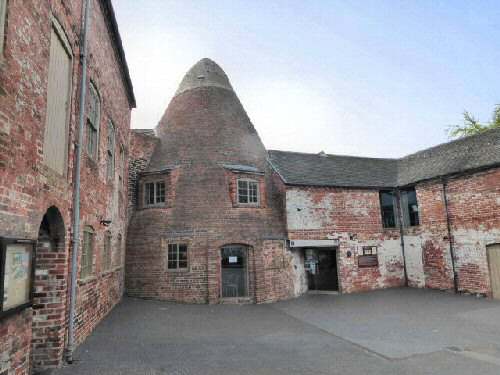
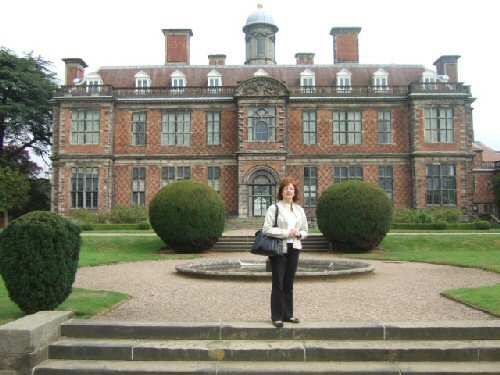
The historic village of Tutbury, nestling on the Derbyshire/ Staffordshire border, contains much to interest the visitor. From a ruined castle to a splendid 15th-century former coaching inn, from a lovely walk along the Mill Fleam to the weir, to a wide range of antique and gift shops.
TUTBURY CASTLE
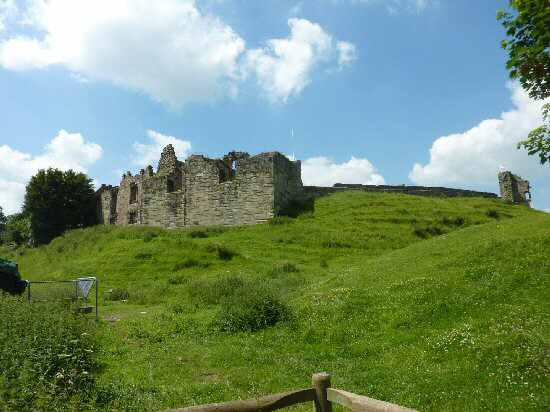
The hill on which Tutbury Castle stands was probably once the home of an Iron Age Fort. The Saxons had a sizeable fort at Tutbury, and the Normans took full advantage of its good defensive location. It became a thriving commercial and agricultural town, and its courts had jurisdiction over several hundred square miles and more than 100 villages. Now mostly in ruins, Tutbury Castle retains the impressive John of Gaunt’s Gateway as its entrance. Mary, Queen of Scots, spent many years of her captivity in the High Tower, complaining bitterly of the cold and damp conditions. The castle closed permanently to visitors in 2024.
BULL BAITING
Bull running was an annual custom in the village until the Duke of Devonshire banned it in the 18th century. Minstrels, the entertainers of those days, were summoned to Tutbury from Staffordshire and neighbouring counties. Before the Prior released a bull, they attended a church service and then a banquet. The poor bull had its horns cut off, ears cropped, body smeared with soap, tail cut to a stump, and beaten pepper blown up its nose. The minstrels then chased it through the streets. If the bull managed to escape across the bridge into Derbyshire, he remained the property of the Prior. If caught, he became the property of the minstrels.
ST MARY’S PRIORY CHURCH
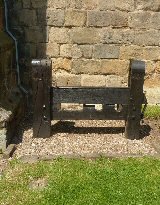
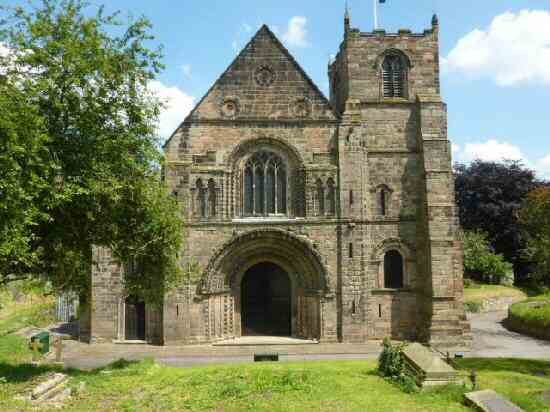
St Mary’s Priory Church dates to 1089; it has a splendid, much-admired Norman doorway. Outside is a very interesting sundial, but the stocks are a reproduction. The graveyard around the church provides reminders of the massive underground explosion at nearby Fauld in 1944, when 68 people died, including Italian prisoners of war.
On the morning of the explosion, there were over 4,000 tons of bombs and ammunition stored at Fauld mine. The blast devastated the area and could be heard from as far away as London. The farm above the mine and its occupants disappeared completely—the destruction of a reservoir containing over six million gallons of water delayed rescue attempts.
RIVER FIND
In early June 1831, workers engaged in excavations in the River Dove to improve the performance of the nearby cotton mill. They found great hoards of silver coins on the riverbed. News spread quickly. Soon, crowds arrived to try to benefit from the find, and fights and quarrels broke out. But, the Duchy of Lancaster asserted the rights of the Crown and moved in to prevent further searches. No one can be certain why the coins were in the river. The most likely explanation is that the Priory moved them to avoid capture by enemy forces, hid them in the river, and never retrieved them.
TUTBURY MILL
Tutbury Mill once stood close by the bridge; originally, it was a cotton mill. However, in 1888, after being in operation for just over 100 years, it moved to Rocester, near Uttoxeter. The old mill was converted to grind and mill locally mined gypsum. It is now a recreation and picnic site.
THE VILLAGE
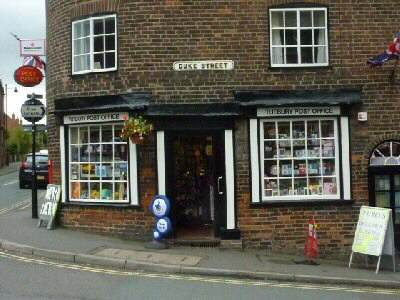
The village museum on Duke Street contains an exciting collection of photographs, old maps, documents, artefacts, tools and memorabilia relating to the history of Tutbury. It displays a piece of a 36-foot-long rope (the longest in England), once used to drive the machinery to manufacture plaster at J C Staton’s Tutbury Plaster Mill. The museum is on the ground floor of the Charity House, known locally as the ‘Old Soup Kitchen’. During the depression, the poor people of the village could obtain soup and bread there for a half-penny a pint. It is staffed entirely by volunteers.
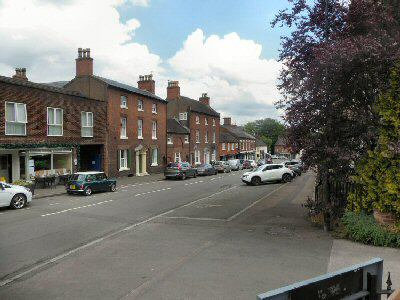
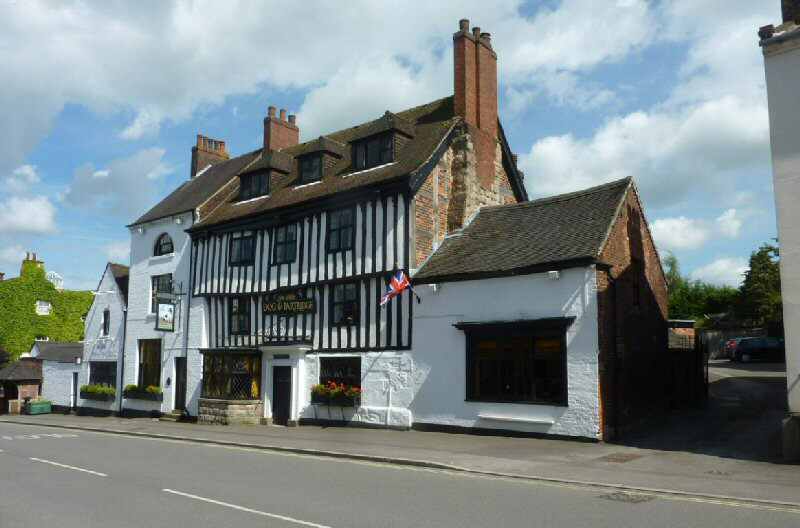
The expansive main street of the village has some fine examples of Georgian and Regency properties. The Dog and Partridge is particularly prominent, with its half-timbered frontage, bow windows and stained glass. Inside, it has a wealth of oak beams and is in an excellent state of preservation, with much of the original building remaining intact. Built in the 15th century, it became a famous coaching inn, where the Red Rover stopped to change horses on its journeys to and from London to Liverpool.
Nowadays, visitors from afar often make the journey by car or train. Tutbury and Hatton Railway Station is just across the River Dove in Derbyshire. It opened as Tutbury Railway Station in September 1848, closed in 1966, and reopened in 1989 under its present name.
TEN FASCINATING FACTS ABOUT TUTBURY
1. Nestle factory on the other side of the River Dove from Tutbury advertises its factory as a global ‘Coffee Centre of Excellence,’ which has seen substantial extensions and improvements to the site in recent years.
2. The factory can produce 170,000 jars of instant coffee every 24 hours.
3. The corn mill, about half a mile outside Tutbury, was recorded in the Domesday Book of 1086 and is the oldest recorded surviving mill in the area, now given over for residential purposes.
4. Tutbury Crystal once stood on the site of the first glassworks set up by Henry Jackson in the early 19th century. The world-famous Webb Corbett lead crystal factory took over the business but closed in 1980.
5. Following the closure of the Webb Corbett factory, two companies emerged – Tutbury Crystal and Georgian Crystal. However, manufacturing for the former was moved to the Potteries in 2005 and shortly afterwards to Brierley Hill. Georgian Crystal was finally closed in 2011.
6. On High Street, where a jeweller’s shop is, the Shoulder of Mutton once stood. The monks of the Priory used it to accommodate visiting guests. The Court met regularly in the back room.
7. Ashleigh House in High Street was once a school for ‘young ladies and, for many years, a café, where the not-quite-so-young women sometimes made a nostalgic return.
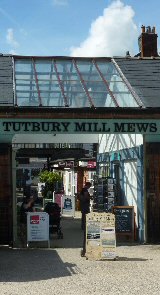
8. There is an extensive range of crafts, gifts and clothes in the Mill Mews at the bottom end of High Street.
9. Apart from shops selling the basic requirements for everyday living, several other specialist shops dotted around the village attract a steady stream of visitors.
10. Sudbury Hall and the National Museum of Childhood, a National Trust property, are only a short distance away. The hall includes superb plasterwork ceilings and Grinling Gibbons carvings.
TUTBURY AND ROLLESTON PARK WALK