INTRODUCTION
Willington is situated midway between Derby and Burton, with Twyford a short distance to the east. Willington is close to the A38 and the new A50, and it is hardly surprising that it is usually busy with traffic. It has been the hub for transport for many years and has an absorbing history. On the other hand, Twyford, on a no-through road, is calm and peaceful.
Evidence of habitation in the area has been found long before the Industrial Revolution. In 1970, traces of a settlement were revealed that dates back to 2,000 BC. It was created by the Beaker People and named after the distinctive drinking vessels they used, often found at burial sites.
RIVER TRENT
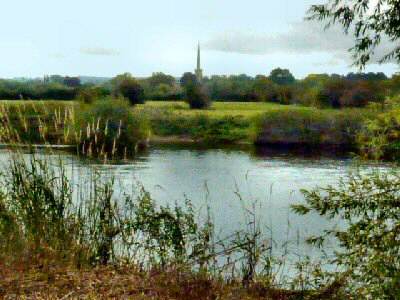
The River Trent passes south of Willington, which was an important inland port during the 17th and 18th centuries. The arrival of the Trent and Mersey Canal in 1777 replaced the river as the primary form of transport. Later, rail and road took over as the leading transport providers.
An Act of Parliament of 1699 made the Trent navigable above Shardlow as far as Burton. As navigation was less reliable further up the river, Willington’s prosperity increased, and a settlement grew up close to the river. No buildings from that period remain.
WILLINGTON BRIDGE
The bridge is the only one over the River Trent between Swarkestone and Burton, and it was originally a toll bridge. Walkers had to pay one old penny to cross at the toll house on the Willington side of the bridge. Before the bridge existed, the only means of crossing the river to Repton was by Ford or ferry. The Ford was east of Willington Hall, and the ferry was west of the present bridge. Both were closed when the bridge opened in 1839.
Fifty-nine years later, removing tolls caused much jubilation. However, the toll house remained until 1958, when an out-of-control motor vehicle demolished it. There is a viewing platform at the side of the bridge, built as part of the centenary celebrations for removing the tolls.
GRAND TRUNK CANAL
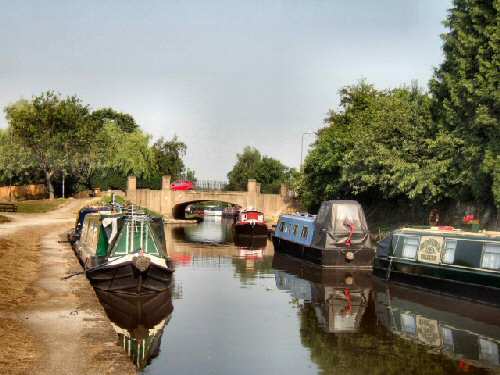
The Trent and Union Canal was built in 1777 and was initially called the ‘Grand Trunk Canal’. The builder was James Brindley from Derbyshire. At that time, Willington was the scene of much activity on and around the canal. A thriving wharf developed between the river and the canal. Today, a marina exists by the canal bridge.
HISTORIC BUILDINGS
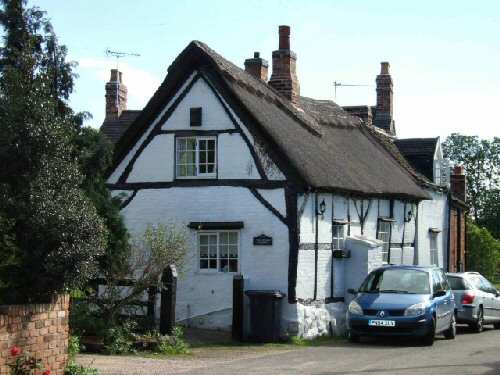
Several interesting old properties are on the River Trent side of the village. Trentside Cottage in Bargate Lane, formerly Wharf Lane, is probably the oldest house in the village, parts of which date back to the 15th century. The premises on the corner of the lane were formerly the village smithy. The two cottages that follow down Bargate Lane are Grade II listed.
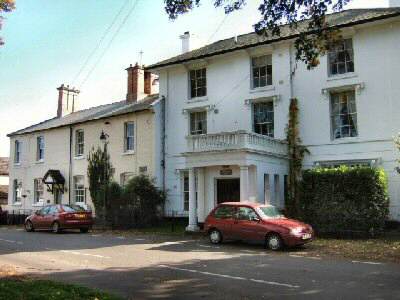
Willington Hall, in Hall Lane, is another Grade II listed building used during the First World War to hold prisoners of war. The columns to the entrance porch are said to be marked by the grooves cut by the barbed wire to prevent escape.
St Michael’s Church is relatively modest but has one of Derbyshire’s largest and most prominent “Welcome” signs. It has a Norman tympanum over the south door, but most of the building is early 19th century.
POWER STATIONS
The most prominent landmark in Willington came into being in the 1950s with the erection of the power station. It was, in fact, two almost entirely independent generating units with separate management and staff. Logically, the two stations were named Willington’ A’ and Willington’ B’, the former occupying the site closest to the Willington to Swarkestone Road. The five cooling towers of the power station could be seen for many miles, so much so that they were used as a “sighting point” by pilots approaching East Midlands Airport, 15 miles away.
After just over 41 years of electricity generation, the final unit of Willington Power Station closed on 31 March 1999. Demolition commenced later in the year for most of the site. However, the most distinctive features, the cooling towers, were left standing.
TEN FASCINATING FACTS ABOUT WILLINGTON AND TWYFORD
1. After 800 years, beavers are back in Derbyshire. In 2021, at Willington Wetlands Nature Reserve. The beaver family enjoys over 40 hectares of wetland habitat within a special beaver-proof fence.
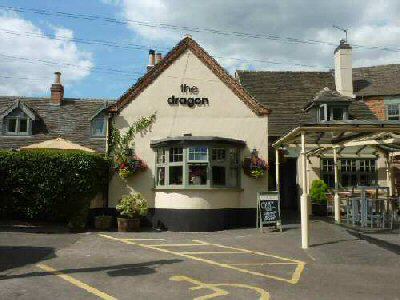
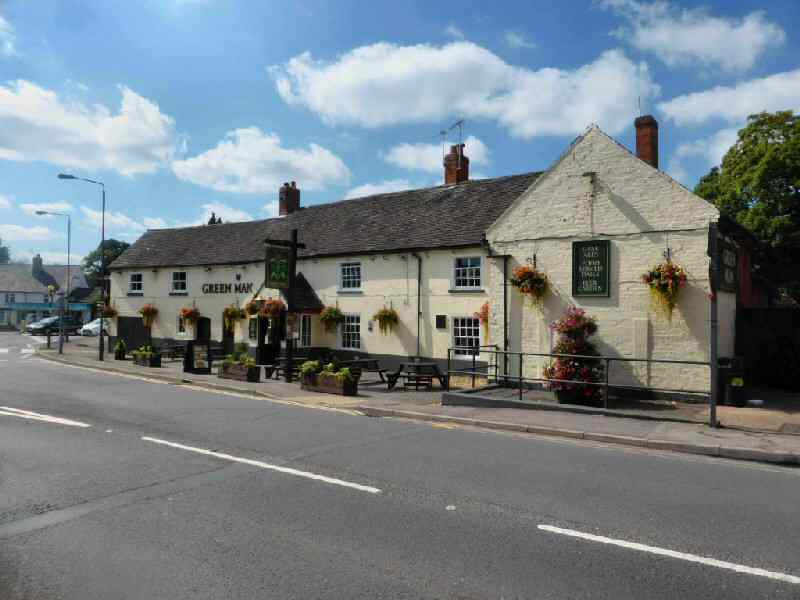
2. The village has shops, a school, a post office, a doctor’s surgery, and sporting facilities. There are three excellent pubs, the Green Man and the Green Dragon (now ‘The Dragon’), that date to the canal era and the more recent Rising Sun to the arrival of the railway age.
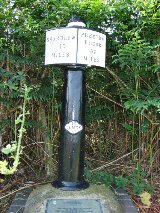
3. James Brindley from Derbyshire was the engineer responsible for building the Trent and Mersey Canal. However, he died before completing the final piece in his canal network that revolutionised trade in the country. Hugh Henshall, his brother-in-law, finished the work. A milestone marks every mile along the route to Preston Brook.
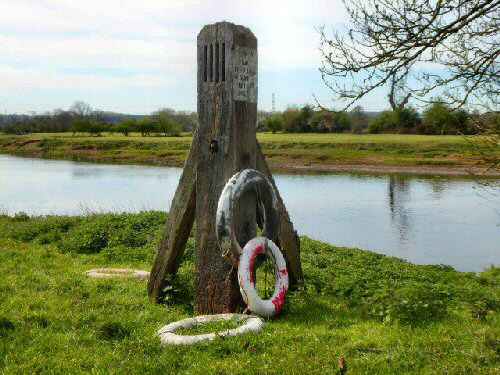
4. The Ford across the River Trent is claimed to date from the 1600s, and in later years, it had a stone pavement under the water. The ferryman had his cottage nearby when the ferry service was operating.
5. Willington Railway Station was closed by Dr Beeching in 1964 but reopened 32 years later as an uncrewed station on what was intended to be part of the Ivanhoe line to Leicester. To date, this has not happened.
6. In the 1880s, the Baptist Chapel used the railway station waiting room for Sunday services because the chapel was full of Sunday School children. Before the building of the Baptist Church, their baptisms took place at the Ford on the River Trent.
7. Derbyshire Wildlife Trust purchased the large lakes at the end of Meadow Lane in 2005 and turned them into a wildlife reserve.
8. During the Second World War, the village was the home to many evacuees from Birmingham and London.
9. In 1662, the Hearth Tax Returns record two large houses within Twyford, each with seven hearths. The site of one of these is likely to have been Twyford Hall, situated close to the river at the end of Ferry Lane. The other house, partially demolished in the 19th century, is now referred to as Old Hall Cottage, a grade II* listed building.
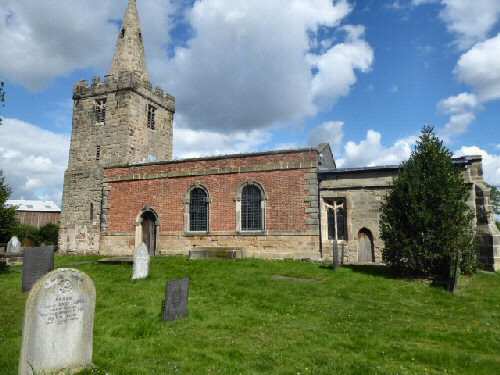
10. St Andrew’s Church, built by the Knights of St John for travellers crossing Twyford Ferry, is relatively small. The Norman chancel arch is the main surviving part from this time. It started life as a chapel of ease to the main church at Barrow-on-Trent, which would have provided a parish priest to preside over church services. It is somewhat unusual as it seems to be mainly of brick construction. But the bricks only serve as an outer covering, with the internal walls being of stone.
WILLINGTON TRENT AND MERSEY WALK